Forsythia Care & Identification Guide
The magnificent Forsythia (Forsythia suspensa), commonly known as the Weeping Golden Bell, is a highly spectacular deciduous shrub celebrated for its brilliant, bright yellow flowers that erupt along bare arching branches in early spring before its leaves emerge. Originating from sunny valley cliffs and thickets of East Asia, this highly resilient wood perennial acts as a classic botanical herald of spring. To promote its massive, golden flower display and keep its arching branches strong, it requires full sun, exceptionally loose well-drained soil, and active pruning post-bloom.





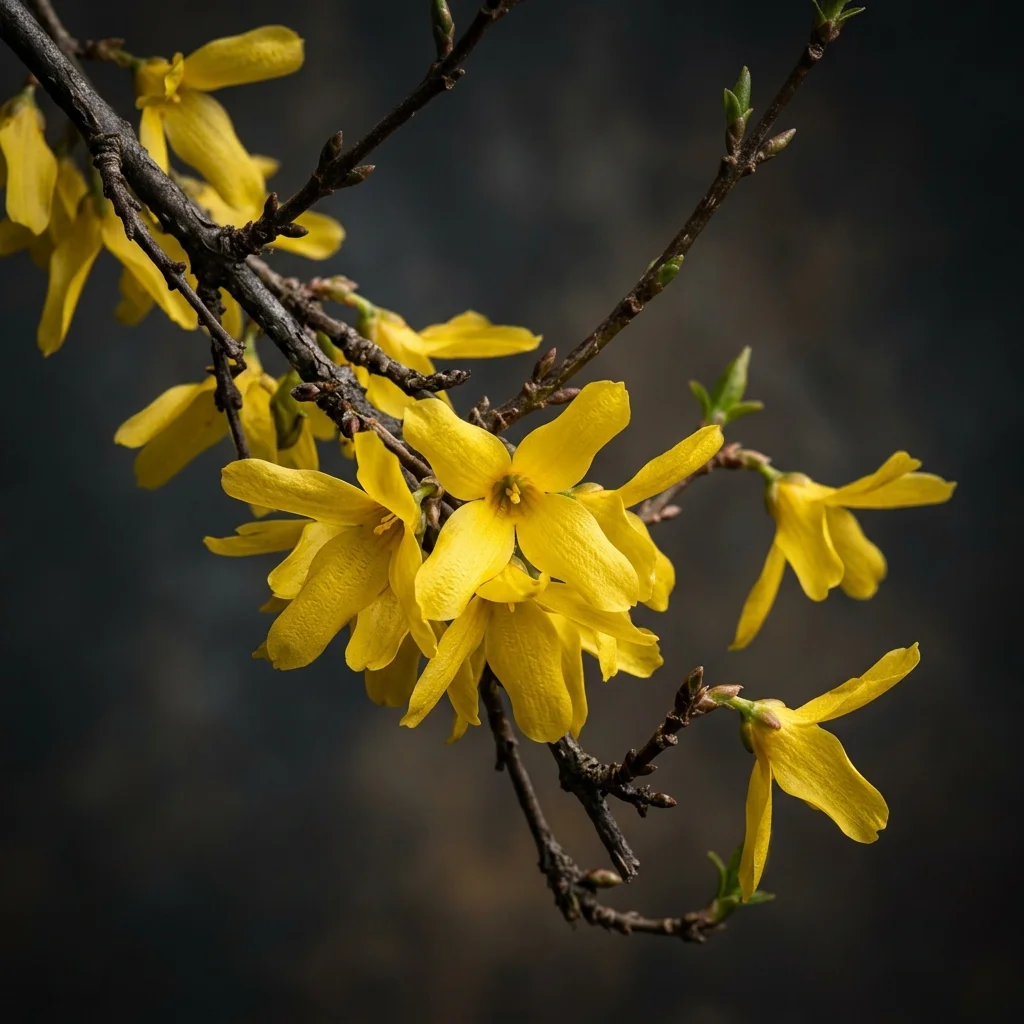
How to Identify Forsythia
Identify Forsythia (Forsythia suspensa) immediately by its distinctive leaf arrangements, wood structures, and flowers. Recognizing its definitive visual traits is key to distinguishing it from other similar species.
-
✔
Distinctive Features: Vibrant, four-lobed bell-shaped golden-yellow flowers bursting in massive clusters along leafless arching woody branches.
-
✔
Typical Coloration: Brilliant lemon-yellow to bright gold, with narrow, serrated medium-green leaves emerging after the petals drop.
-
✔
Potential Confusions: Sometimes confused with Winter Jasmine, but distinguished by its much larger size, upright arching woody habit, and thicker, woody stems rather than green trailing vines.
Complete Care & Cultivation Guide
Follow our detailed scientific care guide to keep your Forsythia thriving and gorgeous all year round.
Frequently Asked Questions
Why is my Forsythia not blooming in spring?
The primary cause is pruning too late in summer or autumn. Forsythia sets its flower buds on 'old wood' in mid-summer. Pruning late cuts off all the flower buds. Always prune immediately after spring blooms fade.
Is Forsythia toxic to cats and dogs?
No, Forsythia suspensa is completely non-toxic and pet-safe, offering a beautiful, vibrant, and highly safe border shrub for homes with pets.
Can I grow Forsythia indoors?
No, it is a large hardy outdoor woody shrub that requires winter freezing to bloom. However, you can cut bare flower stems in late winter and bring them indoors in water; they will bloom beautifully inside (forcing).
What causes the rough round balls on my Forsythia stems?
Those are Phomopsis galls, a fungal infection that deforms wood. Prune away infected branches immediately at the base, and sterilize your shears between cuts to prevent spreading.