Firethorn Care & Identification Guide
Firethorn (Pyracantha coccinea), commonly known as Scarlet Firethorn, is an exceptionally robust, heavily armed evergreen shrub native to southern Europe and western Asia. Globally celebrated for its spectacular autumn display of glowing orange-red berries and dense, sharp woody thorns, it is one of the most popular choices for safety screens and security barriers. Botanically, it is a highly versatile plant that tolerates heavy pruning and shearing, making it a favorite for formal hedges. TOXICITY WARNING: While the ripe berries are technically non-toxic and eaten by birds, the seeds inside contain cyanogenic glycosides which are mildly toxic to pets and children if chewed.





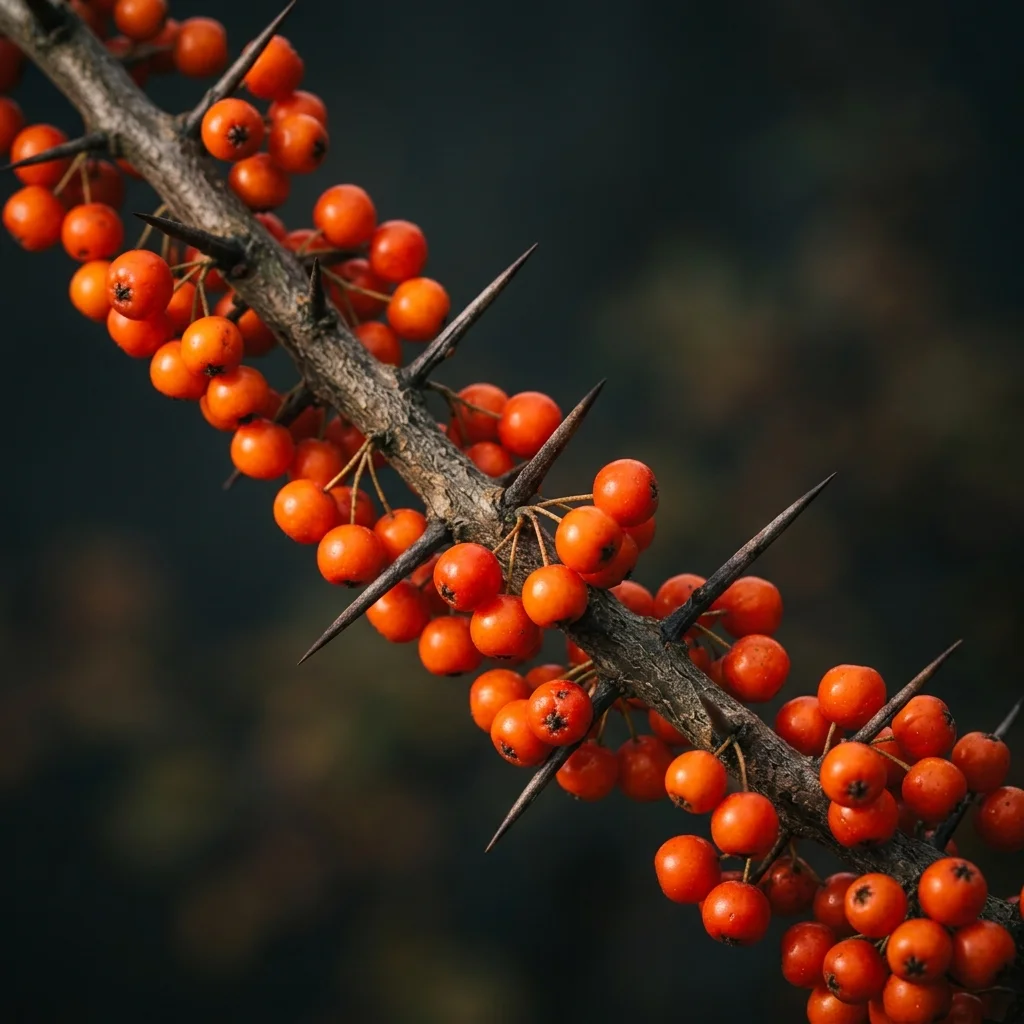
How to Identify Firethorn
Identify Firethorn (Pyracantha coccinea) immediately by its distinctive leaf arrangements, wood structures, and flowers. Recognizing its definitive visual traits is key to distinguishing it from other similar species.
-
✔
Distinctive Features: Dense, interlocking branches armed with sharp woody thorns, packed with thousands of glowing, round orange-red berries set against dark-green oval leaves.
-
✔
Typical Coloration: Glowing orange-red berries, dark-green oval leaves, and dark charcoal-gray thorny twigs.
-
✔
Potential Confusions: Sometimes superficially confused with Cotoneaster due to the small red-orange berries, but Firethorn is easily distinguished by its sharp woody thorns, evergreen foliage, and serrated leaf margins.
Complete Care & Cultivation Guide
Follow our detailed scientific care guide to keep your Firethorn thriving and gorgeous all year round.
Frequently Asked Questions
Why is it called the Firethorn?
The name is a literal translation of the Greek 'Pyracantha,' referring to its brilliant, glowing fire-like orange-red berries and extremely sharp, defensive woody thorns.
Is Firethorn toxic to cats and dogs?
The ripe flesh of the berries is safe, but the seeds, leaves, and bark contain cyanogenic glycosides which are mildly toxic to pets and cause severe stomach upset if chewed.
Does Firethorn make a good security barrier?
Yes! Its dense, interlocking branches, packed with sharp, rigid woody thorns, create an impenetrable natural barrier that deters both animals and intruders.
How do I care for my Firethorn in winter?
It is highly cold-hardy, but protect the evergreen leaves from dry, freezing winter winds by applying a thick layer of pine bark mulch around the shallow roots.