Fatsia Care & Identification Guide
Fatsia (Fatsia japonica), commonly known as the Japanese Aralia or Paperplant, is a highly spectacular evergreen woodland shrub native to Japan, South Korea, and Taiwan. Renowned for its bold, architectural foliage, it features massive, deeply lobed, glossy eight-pointed palmately-divided leaves with prominent light green veins. Adapted to thrive in cool, deeply shaded coastal forest understories, Fatsia is one of the absolute best evergreen shrubs for extremely dark, damp, or shaded northern gardens. In late autumn and winter, it produces exotic, ball-like clusters of starry white flowers that provide a vital nectar source for late-season pollinators.





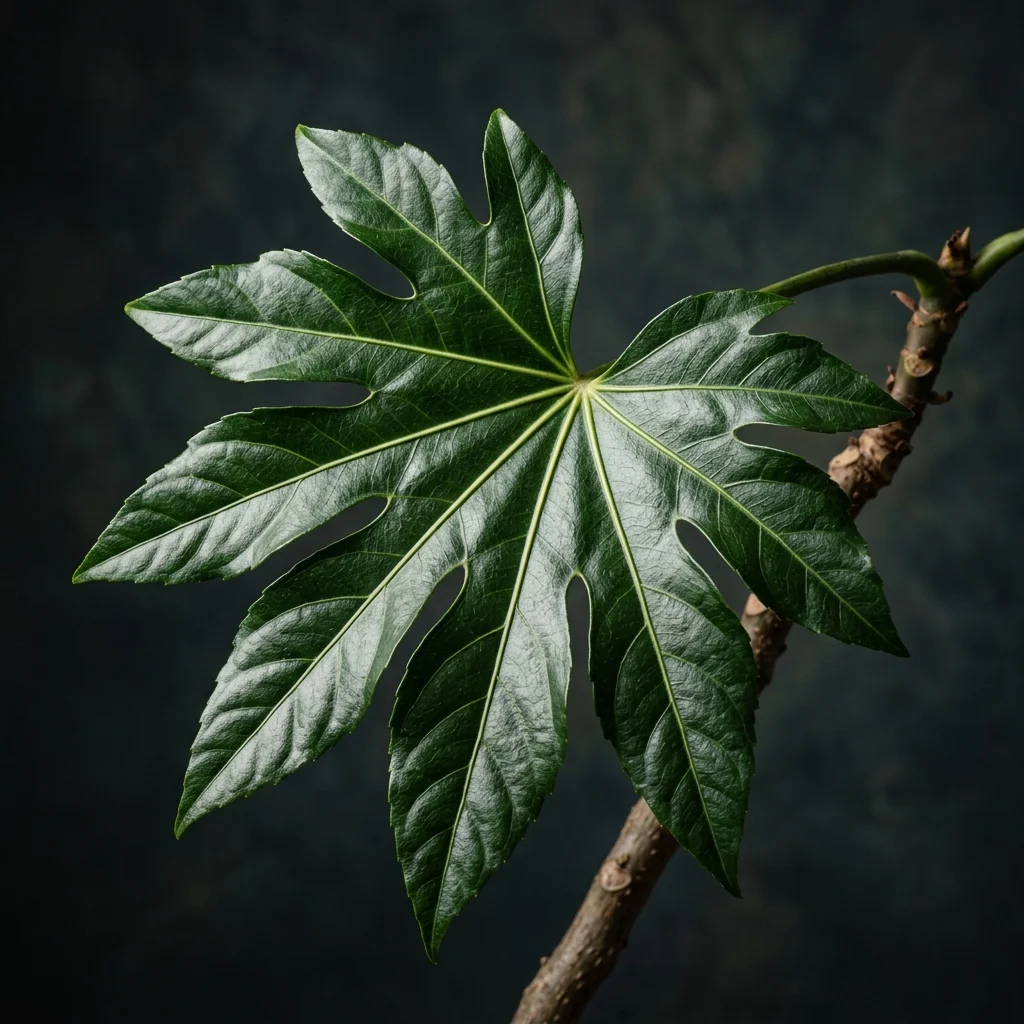
How to Identify Fatsia
Identify Fatsia (Fatsia japonica) immediately by its distinctive leaf arrangements, wood structures, and flowers. Recognizing its definitive visual traits is key to distinguishing it from other similar species.
-
✔
Distinctive Features: Massive, deeply-lobed palmately divided leaves resembling giant eight-pointed green hands, with a glossy leather sheen and prominent creamy-white leaf veins.
-
✔
Typical Coloration: Extraordinarily deep, glossy forest-green foliage, exotic creamy-white globose flower clusters, and blackish winter berries.
-
✔
Potential Confusions: Sometimes confused with Schefflera or castor oil plant (Ricinus communis) due to the large lobed leaves, but Fatsia is strictly evergreen and distinguished by its deep, finger-like leaves and completely non-toxic nature.
Complete Care & Cultivation Guide
Follow our detailed scientific care guide to keep your Fatsia thriving and gorgeous all year round.
Frequently Asked Questions
Why are the leaves of my Fatsia turning yellow and bleaching?
Bleaching and yellowing leaves are almost always caused by receiving too much direct sunlight. Fatsia is a shade-loving woodland plant; move it to a shaded, north-facing location immediately.
Is Fatsia safe for cats and dogs?
Yes! Fatsia japonica is completely non-toxic to dogs, cats, and humans. It is an exceptionally safe, bold, and leafy plant for pet-friendly home gardens.
Does Japanese Aralia produce flowers?
Yes! In late autumn and early winter, it produces highly exotic, globe-like clusters of small, creamy-white flowers that look like miniature stars, followed by decorative black berries.
Can I grow Fatsia as an indoor houseplant?
Yes! It makes a fantastic, low-maintenance indoor foliage plant. Place it in a cool room, away from heaters, in a spot that receives bright indirect or low light.