Daphne Care & Identification Guide
Daphne (Daphne odora), widely known as the Winter Daphne or Fragrant Daphne, is an exceptionally elegant, evergreen ornamental shrub native to dry, rocky woodlands of China and Japan. Globally celebrated for its highly fragrant, early spring flowers that open while snow is still melting, it fills winter gardens with an intensely sweet, citrus-floral aroma. Botanically, it features thick, glossy dark-green leaves frequently bordered by beautiful cream-gold variegation. HIGHLY TOXIC WARNING: All parts of the Daphne shrub contain daphnin (a toxic coumarin glycoside) and mezerein. Ingestion of the bright red berries, bark, or leaves causes severe gastrointestinal bleeding, throat swelling, kidney failure, and death in both humans and pets.





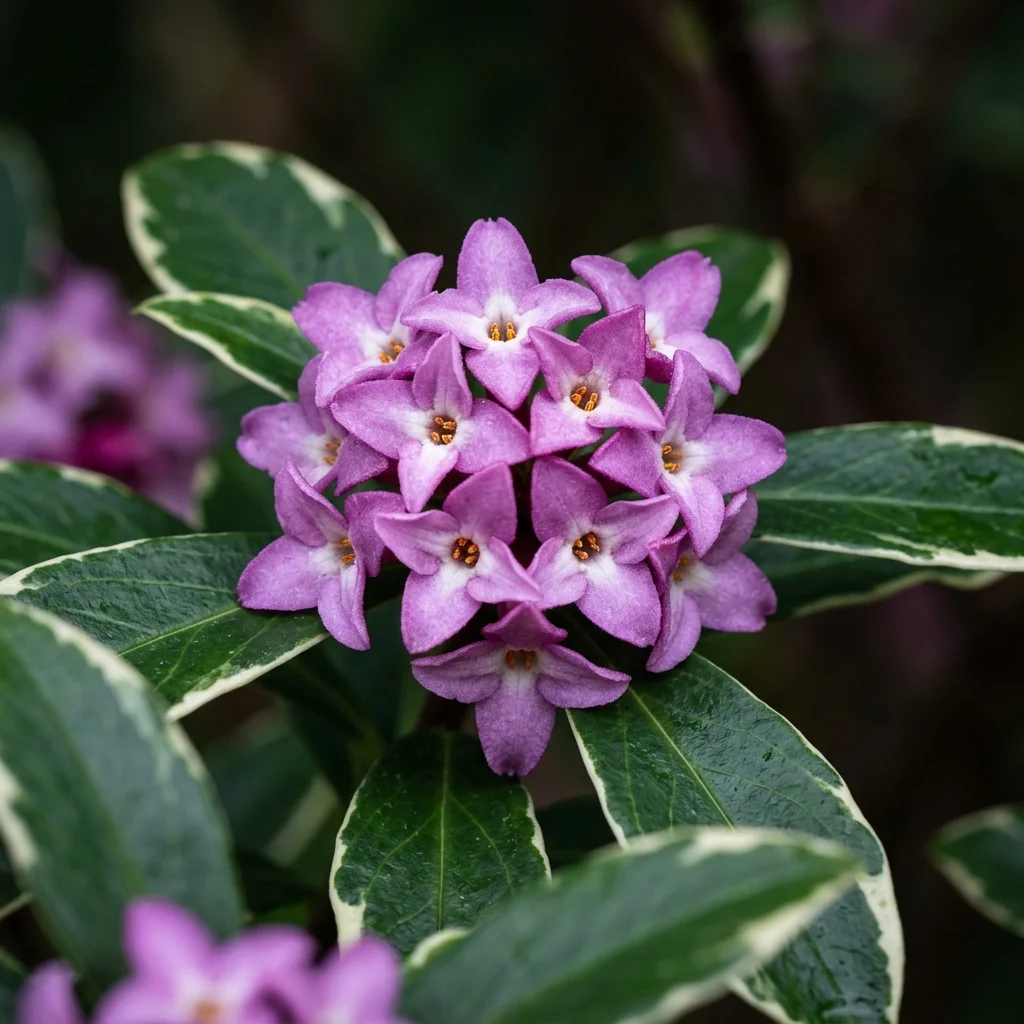
How to Identify Daphne
Identify Daphne (Daphne odora) immediately by its distinctive leaf arrangements, wood structures, and flowers. Recognizing its definitive visual traits is key to distinguishing it from other similar species.
-
✔
Distinctive Features: Dense, rounded clusters of highly fragrant, four-lobed purplish-pink star flowers with white centers, surrounded by shiny, variegated dark-green leaves with gold margins.
-
✔
Typical Coloration: Purplish-pink flower buds opening to pure white centers, shiny deep green leaves with creamy gold edges, and woody stems.
-
✔
Potential Confusions: Can be confused with Skimmia or Lilac due to the clusters of pink-purple starry flowers, but Daphne is easily distinguished by its thick variegated evergreen foliage and its incredibly intense winter citrus scent.
Complete Care & Cultivation Guide
Follow our detailed scientific care guide to keep your Daphne thriving and gorgeous all year round.
Frequently Asked Questions
Why is my Winter Daphne suddenly wilting and dying?
This is likely 'Daphne sudden collapse,' which is almost always caused by root rot (Phytophthora) from overwatering or compacted soil. Once root rot sets in, the plant wilts and collapses rapidly.
Are the bright red berries of Daphne toxic to dogs?
Yes! All parts of Daphne odora, especially the red berries, bark, and leaves, are extremely toxic to dogs, cats, and humans. Ingestion can cause severe mouth blistering and internal bleeding.
Does Daphne have a very strong scent?
Yes! It is widely considered one of the most fragrant shrubs in the world, releasing an intensely sweet, citrusy, orange-blossom-like fragrance that can be smelled from yards away in late winter.
Can I grow Daphne indoors?
It is difficult due to its sensitivity to dry indoor heating and root disturbance. It is much more successful when grown in patio pots or outdoor borders with cool morning sun.