Crape Myrtle Care & Identification Guide
The magnificent Crape Myrtle (Lagerstroemia indica) is an absolute masterpiece of the summer landscape, celebrated for its massive, crinkly flower clusters and spectacular peeling cinnamon-bark. Hailing from warm riverbanks of East Asia, this structural deciduous shrub is highly prized by landscape designers. To support its prolific summer flower show, brilliant autumn copper leaves, and smooth trunk textures, it requires absolute full sun, highly aerated well-drained loam, and proper pruning that avoids the destructive horticultural practice known as 'Crape Murder'.





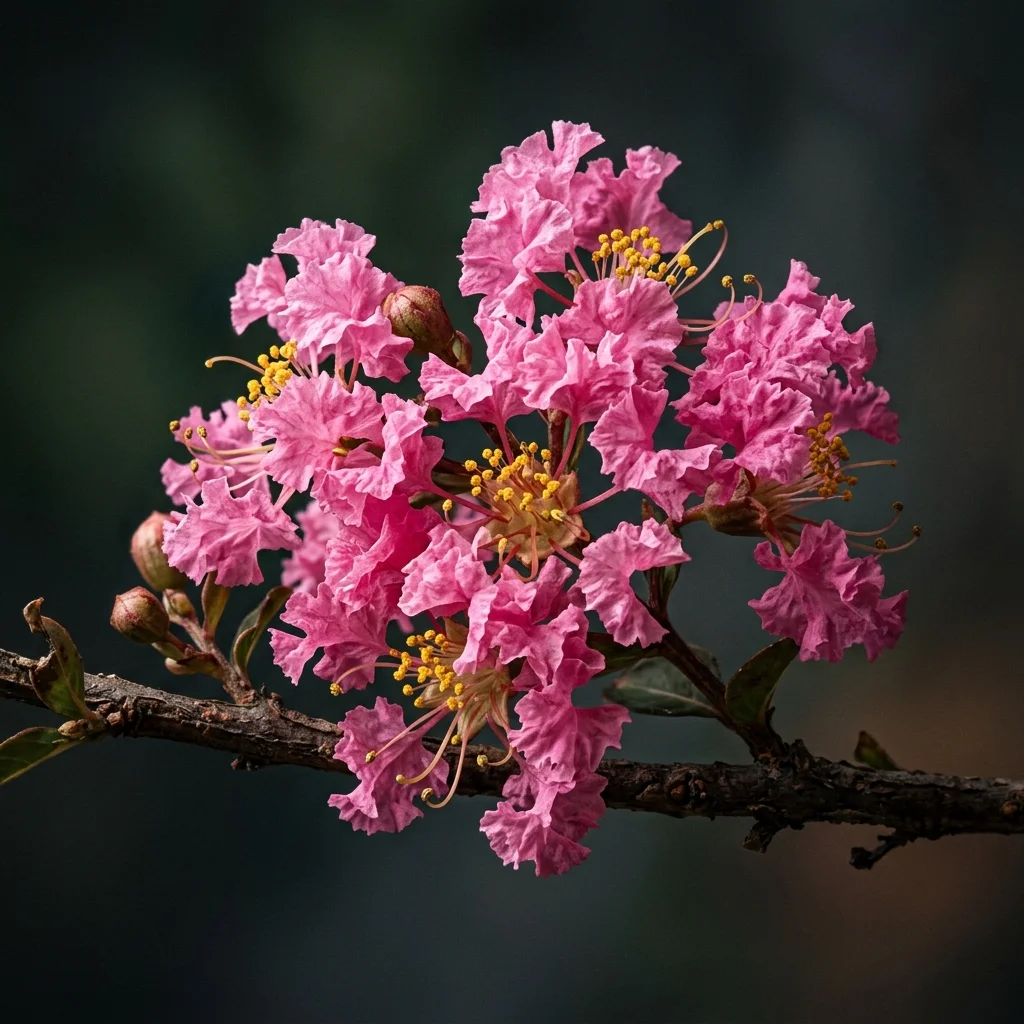
How to Identify Crape Myrtle
Identify Crape Myrtle (Lagerstroemia indica) immediately by its distinctive leaf arrangements, wood structures, and flowers. Recognizing its definitive visual traits is key to distinguishing it from other similar species.
-
✔
Distinctive Features: Colossal clusters of extremely crinkly, paper-like petals resembling crepe paper, rising on woody twigs above a smooth, peeling trunk.
-
✔
Typical Coloration: Vibrant rose-pink, cherry red, deep purple, or pure white, with glossy dark green leaves turning bright copper in autumn.
-
✔
Potential Confusions: Sometimes confused with Lilac due to dense flower panicles, but easily distinguished by its crinkled paper petals, late-summer blooming habit, and smooth exfoliating trunk bark.
Complete Care & Cultivation Guide
Follow our detailed scientific care guide to keep your Crape Myrtle thriving and gorgeous all year round.
Frequently Asked Questions
Why is the bark on my Crape Myrtle peeling off?
Do not panic! Peeling or exfoliating bark is a natural, highly prized aesthetic feature of mature Lagerstroemia indica. The outer bark sheds in summer to reveal a smooth, stunning cinnamon-colored inner trunk.
Is Crape Myrtle toxic to domestic pets?
No, Lagerstroemia indica is completely non-toxic and pet-safe for cats, dogs, and horses, making it an exceptionally beautiful and safe ornamental choice.
Why is my Crape Myrtle not blooming in summer?
The primary causes are insufficient direct sunlight (it needs at least 6 hours of full sun) or pruning too late in spring, which accidentally cuts off the newly forming flower buds.
What is the black powder coating my Crape Myrtle leaves?
This is Sooty Mold, a fungus that grows on the sticky honeydew excreted by aphids. Control the aphids using organic insecticidal soap, and the mold will wash away naturally with rain.