Butterfly Bush Care & Identification Guide
The magnificent Butterfly Bush (Buddleja davidii) is a highly spectacular fast-growing deciduous shrub celebrated for its massive, honey-scented flower spikes that act as an absolute magnet for bees and butterflies. Originating from sunny riverbanks and rocky valleys of central China, this resilient woody perennial thrives in clay or gravelly soils where other plants struggle. To maximize its spectacular late-summer blooming clusters and prevent invasive self-seeding, it requires full direct sunlight, well-draining dryish soils, and annual early-spring pruning.



How to Identify Butterfly Bush
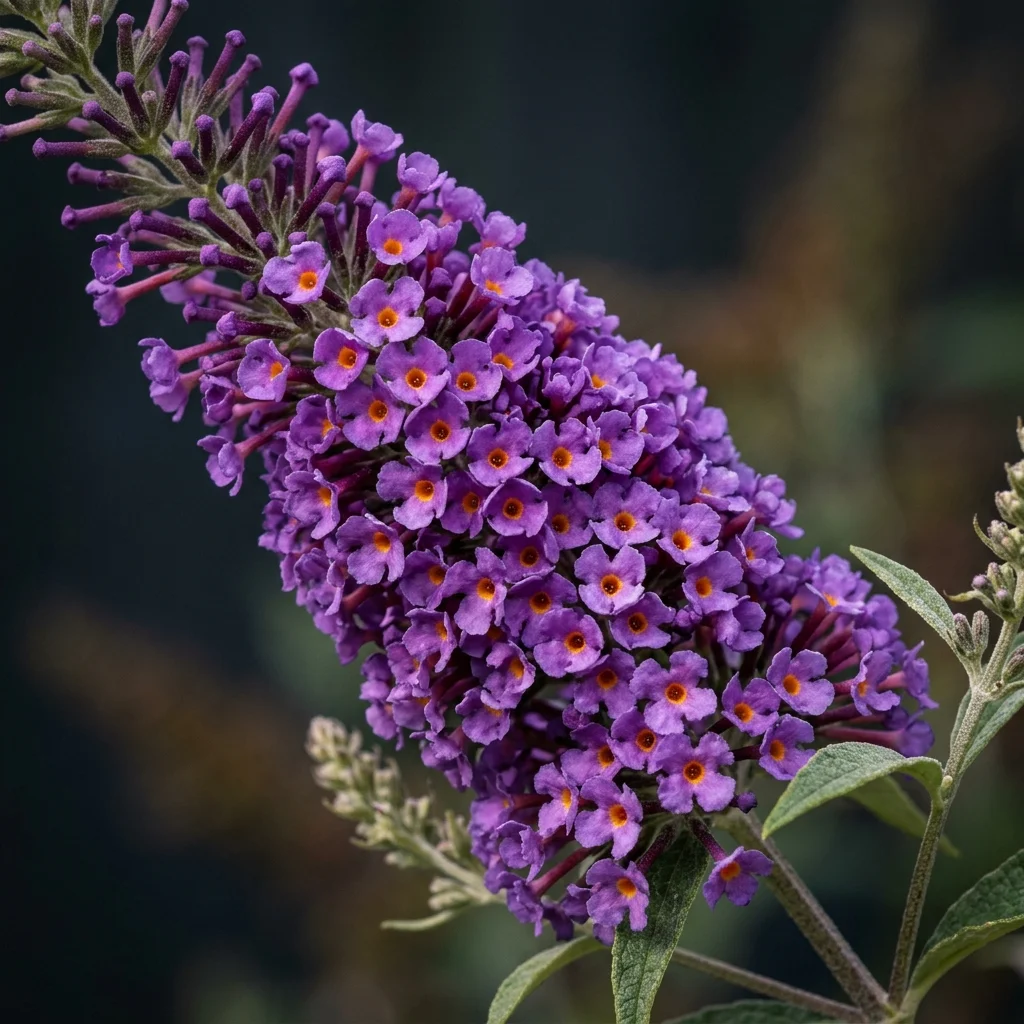
Identify Butterfly Bush (Buddleja davidii) immediately by its distinctive leaf arrangements, wood structures, and flowers. Recognizing its definitive visual traits is key to distinguishing it from other similar species.
-
✔
Distinctive Features: Massive, cone-like flower spikes measuring 8-12 inches long, consisting of thousands of tiny honey-scented blossoms with bright orange throats.
-
✔
Typical Coloration: Vibrant shades of lavender-purple, deep magenta, royal blue, or pure white, contrasted by long, lance-shaped grayish-green leaves.
-
✔
Potential Confusions: Often confused with Lilac (Syringa vulgaris) due to blossom shapes, but distinguished by its late-summer flowering schedule and fuzzy silver-undersided leaves rather than smooth heart-shaped leaves.
Complete Care & Cultivation Guide
Follow our detailed scientific care guide to keep your Butterfly Bush thriving and gorgeous all year round.
Frequently Asked Questions
Why is my Butterfly Bush not attracting butterflies anymore?
Ensure the plant is in full, direct sun, which warms the blossoms and stimulates nectar flow. Also, avoid chemical pesticides in your garden, which are highly lethal to butterflies and their caterpillar larvae.
Is Butterfly Bush invasive?
Yes, Buddleja davidii is considered invasive in several temperate regions because it produces millions of light, wind-dispersed seeds. Select sterile cultivars (like the 'Lo & Behold' series) or deadhead flowers before they go to seed.
How far back should I cut my Butterfly Bush in spring?
Perform a rejuvenation prune by cutting all woody branches down to about 12 to 18 inches from the ground in early spring. This promotes extremely vigorous, massive flowering stalks by summer.
Why are my Butterfly Bush leaves curling and turning yellow?
This is typically a sign of spider mite infestation or waterlogged roots. Check the leaf undersides for fine webs and silver mottling, and ensure the soil drains rapidly.