Bougainvillea Shrub Care & Identification Guide
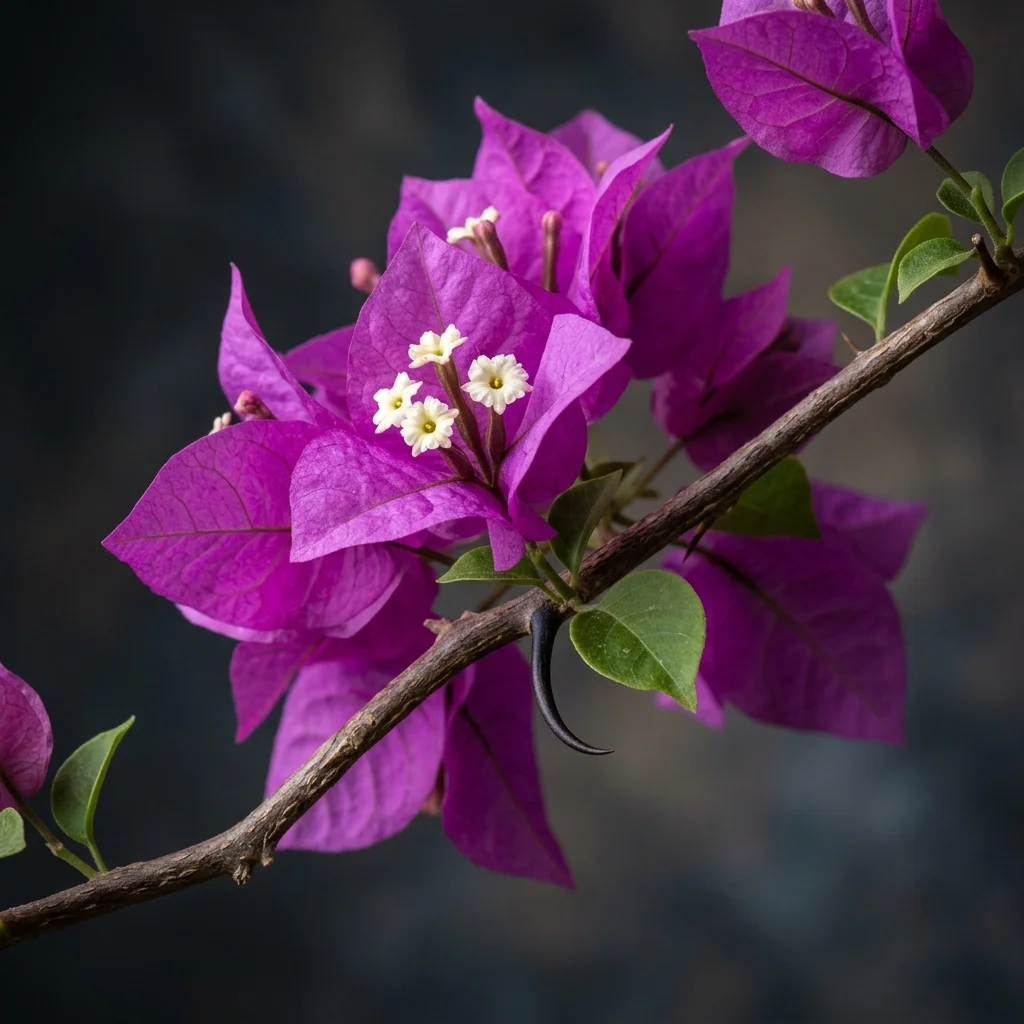
The Bougainvillea Shrub (Bougainvillea spectabilis), commonly known as Great Bougainvillea or Paperflower, is an exceptionally vibrant, scrambling evergreen tropical shrub native to Brazil. Globally celebrated for its spectacular display of brilliant purple-magenta papery bracts that surround its tiny white flowers, it is a highly popular choice for hot, sunny walls and hedges. Underneath this breathtaking floral beauty lies a formidable defense: its woody stems are armed with sharp, curved hook-like thorns hidden at the leaf axils, designed to climb vertical structures and deter climbing animals. TOXICITY WARNING: While mildly toxic if ingested in large quantities, the sharp thorns present a physical hazard, and its milky sap can cause mild skin irritation and contact dermatitis.




How to Identify Bougainvillea Shrub
Identify Bougainvillea Shrub (Bougainvillea spectabilis) immediately by its distinctive leaf arrangements, wood structures, and flowers. Recognizing its definitive visual traits is key to distinguishing it from other similar species.
-
✔
Distinctive Features: Vibrant purple-magenta leaf-like papery bracts surrounding small white tubular flowers, with sharp, curved hook-like thorns hidden at the leaf axils.
-
✔
Typical Coloration: Brilliant purple-magenta papery bracts, tiny white flowers, apple-green leaves, and gnarled brownish thorny stems.
-
✔
Potential Confusions: Sometimes superficially confused with Clerodendrum or Mandevilla due to the colorful climbing habit, but Bougainvillea is easily distinguished by its papery leaf-like bracts and sharp curved hook thorns.
Complete Care & Cultivation Guide
Follow our detailed scientific care guide to keep your Bougainvillea Shrub thriving and gorgeous all year round.
Frequently Asked Questions
Why are my Bougainvillea flowers not colorful?
The colorful parts are actually modified leaves called bracts. If they remain green or fade, it is almost always due to insufficient sunlight. Provide absolute full sun to trigger the vibrant magenta pigments.
Is Bougainvillea toxic to cats and dogs?
Ingesting the leaves or bracts can cause mild gastrointestinal upset, drooling, vomiting, and diarrhea. Additionally, the sharp hook-like thorns present a physical hazard, and the sap can cause skin irritation.
How often should I water my Bougainvillea Shrub?
Water thoroughly, then let the soil dry out completely before watering again. Bougainvillea blooms best when subjected to slight water stress; constant moisture will result in green leaves and no flowers.
Can I grow Bougainvillea as a free-standing shrub?
Yes! Naturally a scrambling vine, you can easily train it into a dense, free-standing shrub by regularly pruning the long trailing shoots and staking the main stems.