Blueberry Shrub Care & Identification Guide
The Blueberry Shrub (Vaccinium corymbosum), specifically the Highbush Blueberry, is the famous deciduous fruit-bearing shrub native to North American acidic bogs and woodlands. The ancestral parent of almost all modern commercial blueberries, it is celebrated for its delicious, glaucous-blue berries packed with antioxidants and anthocyanin compounds. Botanically, it has evolved a highly specialized, shallow fibrous root system that lacks root hairs, relying entirely on symbiotic mycorrhizal fungi in strongly acidic, organic peat soils to absorb essential nutrients. In addition to its summer berries, the shrub turns a spectacular, blazing fire-red in autumn.





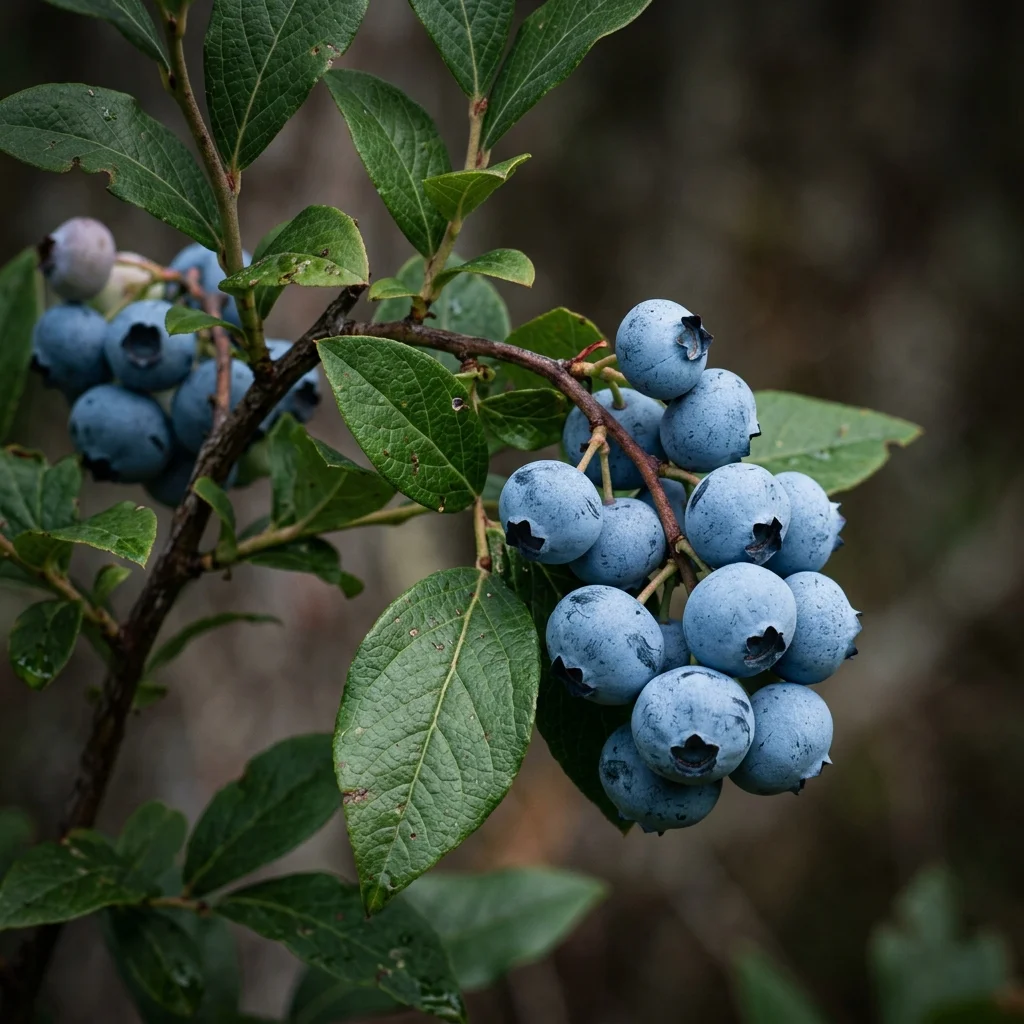
How to Identify Blueberry Shrub
Identify Blueberry Shrub (Vaccinium corymbosum) immediately by its distinctive leaf arrangements, wood structures, and flowers. Recognizing its definitive visual traits is key to distinguishing it from other similar species.
-
✔
Distinctive Features: Clusters of nodding, white-to-pink urn-shaped flowers in spring, followed by dense clusters of powdery glaucous blue berries in summer, on upright woody branches with oval green leaves.
-
✔
Typical Coloration: Glaucous-blue berries with crown-like calyces, rich green leaves that turn glowing fire-red in autumn, and reddish twigs.
-
✔
Potential Confusions: Often confused with Huckleberry (Gaylussacia) due to similar fruit and leaves, but easily distinguished by its soft, tiny-seeded berries (Huckleberry has 10 hard nutlets) and the lack of golden resin glands on the leaf undersides.
Complete Care & Cultivation Guide
Follow our detailed scientific care guide to keep your Blueberry Shrub thriving and gorgeous all year round.
Frequently Asked Questions
Why is my Blueberry Shrub not producing berries?
Common causes are insufficient sunlight (needs full sun), late frost killing spring buds, high soil pH (needs pH 4.5-5.2), or lack of pollination. Planting two different varieties nearby increases cross-pollination and yields larger berries.
Is the Blueberry Shrub toxic to cats and dogs?
No! Vaccinium corymbosum foliage and berries are completely non-toxic to dogs, cats, and humans. The ripe blue berries are highly healthy and packed with vitamins.
Can I water my blueberries with tap water?
Avoid tap water if possible, as it is often alkaline and will slowly raise the soil pH over time, causing iron chlorosis. Use rainwater, distilled water, or add a drop of vinegar to tap water to lower its pH.
What is the powdery white coating on blueberries?
It is called 'bloom,' a completely natural waxy layer produced by the plant to protect the ripe berries from moisture loss, insects, and decay. It is a sign of fresh, high-quality fruit.