Dwarf Arborvitae Shrub Care & Identification Guide
The magnificent Dwarf Arborvitae Shrub (Thuja occidentalis), known as the White Cedar, is an legendary, extremely popular evergreen conifer, celebrated for its golden-green foliage spray and absolute resilience to heavy structural shearing. Native to moist forests and limestone valleys of eastern North America, this slow-growing subshrub features beautiful golden-green flat scale-like leaves. **WARNING: All parts of Thuja occidentalis contain volatile oils (such as Thujone)**, which cause severe vomiting and neurological tremors in pets if ingested.




How to Identify Dwarf Arborvitae Shrub
Identify Dwarf Arborvitae Shrub (Thuja occidentalis) immediately by its distinctive leaf arrangements, wood structures, and flowers. Recognizing its definitive visual traits is key to distinguishing it from other similar species.
-
✔
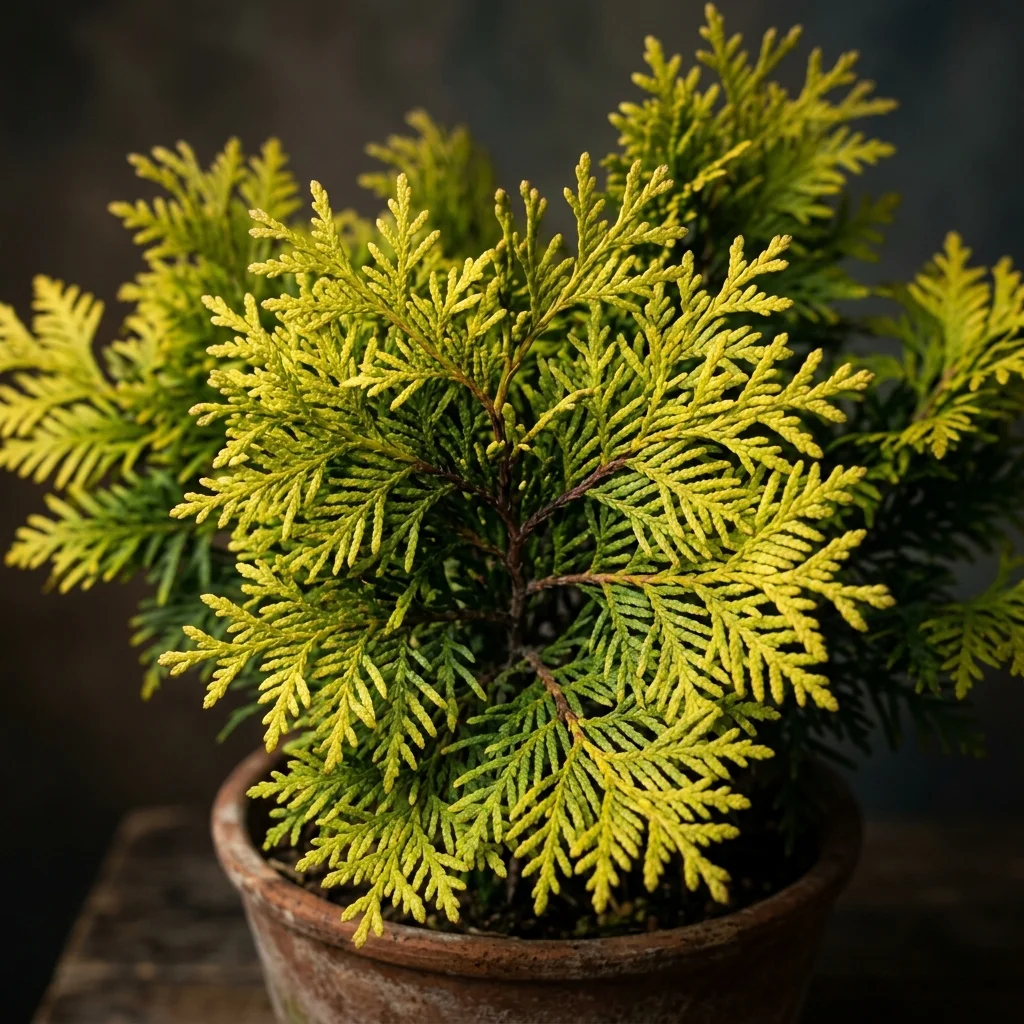
Distinctive Features: Dense, compact mounds of bright golden-green scale-like leaves spray out in flat fan-like layered patterns, forming a dense evergreen pyramid.
-
✔
Typical Coloration: Rich bright golden-green foliage turning soft bronze-green in winter, with rigid light green stems.
-
✔
Potential Confusions: Sometimes confused with Cupressus (Cypress) cultivars, but distinguished by its flat fan-like scale-like leaves and pine-pineapple fragrance when crushed.
Complete Care & Cultivation Guide
Follow our detailed scientific care guide to keep your Dwarf Arborvitae Shrub thriving and gorgeous all year round.
Frequently Asked Questions
Why is my golden Arborvitae turning bronze-brown in winter?
This is a natural physiological process called 'winter bronzing'. Thuja occidentalis naturally shifts its pigments to bronze-brown in freezing weather to protect itself from freezing wind and high winter ultraviolet rays. It will rapidly turn bright golden-green in early spring.
Is Arborvitae toxic to cats and dogs?
Yes! All parts of Thuja occidentalis contain toxic volatile oils, primarily thujone. Ingestion of needles by pets causes severe vomiting, diarrhea, abdominal pain, extreme drooling, weakness, and potential neurological seizures.
What does Thuja occidentalis foliage smell like?
When crushed, the scale-like leaves release a highly pleasant, sweet, and complex botanical aroma. It has notes of fresh pine, pineapple, and spicy herbal camphor.
When is the best time to prune my Dwarf Arborvitae?
Always prune in late spring or early summer after the initial growth surge. This allows the plant to heal rapidly and grow fresh golden fans to cover the cuts before winter.