Wood Ear Identification & Cultivation
The Wood Ear Mushroom, or Jelly Ear, is a highly unique gelatinous fungus native to temperate hardwood forests. Growing in clusters on decaying deciduous branches, this rubbery, ear-shaped mushroom is famous for its semi-translucent, brown structure and crunchy, cartilaginous bite. A staple in traditional Asian culinary and medicinal cultures, it is widely cultivated on sawdust logs.





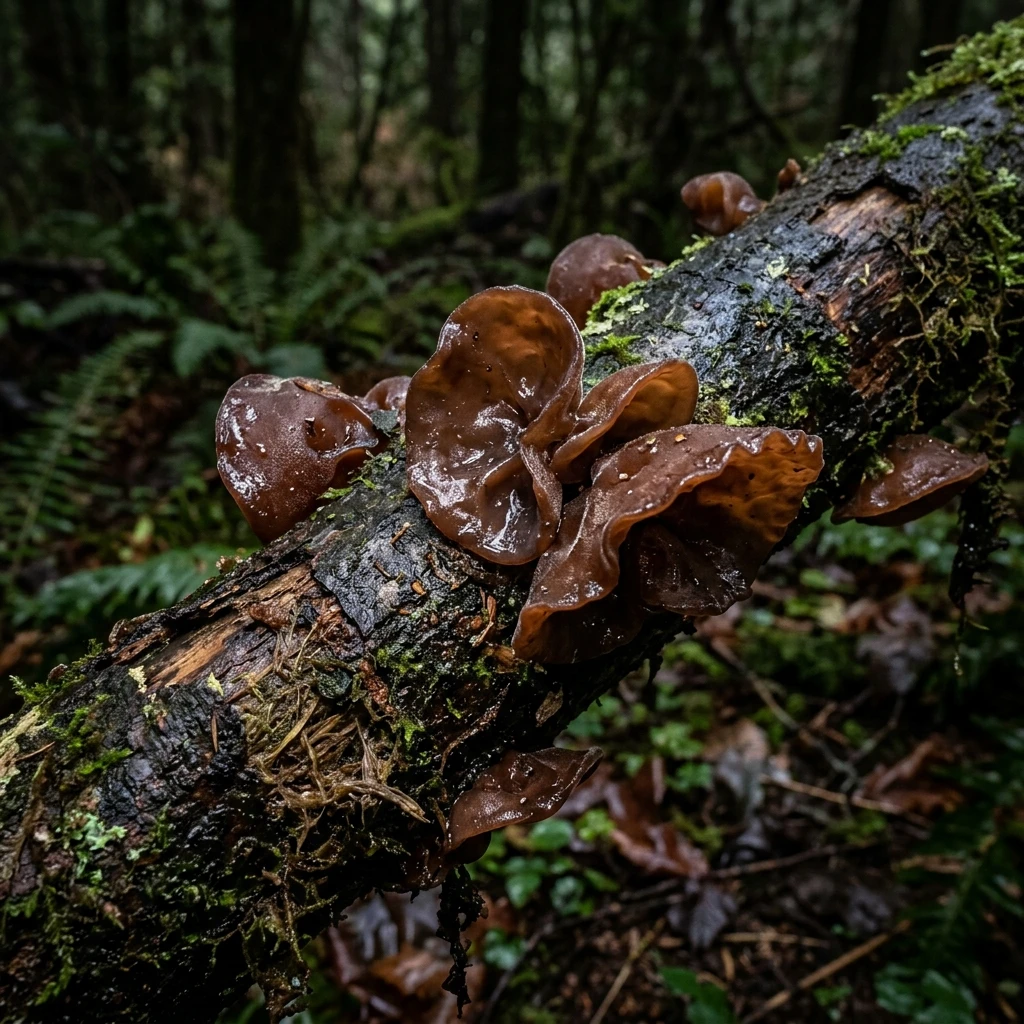
How to Identify Wood Ear
A brown, gelatinous, ear-shaped or cup-shaped fungus growing on decaying hardwood, with a velvety outer surface.
-
✔
Ear-shaped Body: Rubbery, gelatinous cup-like structure that closely resembles a human ear.
-
✔
Velvety Outer Skin: Outer surface is covered in extremely fine, greyish-brown velvety hairs.
-
✔
Semi-Translucent Flesh: Thin, elastic, brown flesh that is semi-translucent when held against light.
Complete Scientific Cultivation & Identification
Follow our professional mycological parameters and identification guidelines for safe foraging.
Common Diseases & Wild Contamination
Dry Shriveling
Symptoms: Symptoms: The soft brown ears shrink, turn extremely hard, black, and brittle on the log.
White Mold Contamination
Symptoms: Symptoms: White powdery mold patches growing on the damp rubbery folds during high-humidity storage.
Frequently Asked Questions
Why is Wood Ear so popular in Chinese cooking?
Wood Ear has a highly unique cartilaginous, crunchy texture that is highly valued in Chinese cuisine. It easily absorbs the flavors of broths, vinegars, and spices, adding a satisfying crunch to dishes.
What are the health benefits of Wood Ear?
Wood Ear is a powerful medicinal mushroom. It acts as a natural blood thinner (anti-coagulant), helps regulate blood sugar, lowers bad cholesterol, and is rich in iron and dietary fiber.
How do you rehydrate dried Wood Ear?
Place the dried mushrooms in a large bowl of warm water. They will absorb water and expand to 5 to 8 times their dried size in about 15 to 20 minutes. Rinse thoroughly to remove woodland grit before slicing.
Can pregnant women eat Wood Ear?
Because Wood Ear has strong anti-coagulant (blood-thinning) properties, it is traditionally recommended to consume it in moderation during pregnancy, and avoid it prior to any surgical procedures.