Turkey Tail Identification & Cultivation
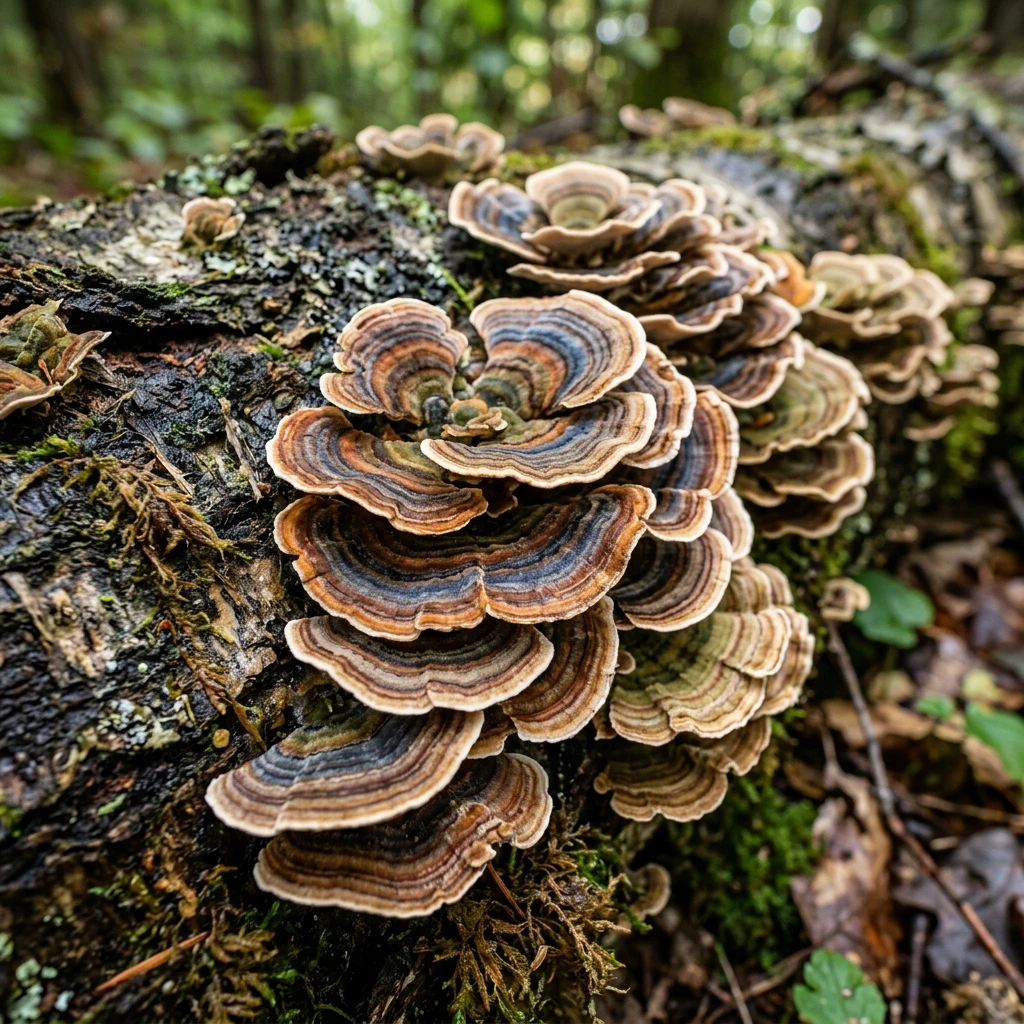
Turkey Tail is an exceptionally common and visually stunning wood-decaying bracket fungus distributed globally. Famous for its overlapping, fan-shaped brackets marked by striking concentric bands of brown, grey, blue, and cream, it resembles the colorful tail of a wild turkey. Widely revered in both Eastern and Western medicine, it is a powerhouse of active immunotherapeutic polysaccharides.





How to Identify Turkey Tail
A thin, leathery, fan-shaped bracket marked by colorful concentric stripes and a white pore underside.
-
✔
Concentric Stripes: Thin cap covered in highly colorful, velvet concentric bands of brown, blue, black, and cream.
-
✔
White Pore Underside: Under cap is a pure white-to-cream surface covered in tiny, distinct microscopic pores.
-
✔
Velvety Hair: Cap surface is densely covered in fine, velvety hairs, giving it a soft, fabric-like texture.
Complete Scientific Cultivation & Identification
Follow our professional mycological parameters and identification guidelines for safe foraging.
Common Diseases & Wild Contamination
Green Algae Growth
Symptoms: Symptoms: Bright green film covering the velvety top concentric stripes in damp forests.
Insect boring
Symptoms: Symptoms: Small holes in the leathery brackets; fine white powder dropping out during storage.
Frequently Asked Questions
What is the difference between True and False Turkey Tail?
True Turkey Tail (Trametes versicolor) has a velvety top and a pure white underside covered in microscopic pores. False Turkey Tail (Stereum ostrea) has a smooth, completely pore-less, parchment-like orange-brown underside.
What are PSK and PSP?
They are active proteoglycans extracted from Turkey Tail mycelium. PSK is a clinically approved drug in Japan (Krestin) used alongside chemotherapy to boost patient survival rates by stimulating immune cells.
How do you prepare Turkey Tail tea?
Simmer 20 grams of dried Turkey Tail in 1 liter of boiling water for 1 hour. Strain the tough leathery mushrooms. The tea has a mild, earthy, and pleasant flavor and can be sweetened with honey.
Can Turkey Tail be found in winter?
Yes! Turkey Tail is a highly durable bracket fungus that persists year-round. It can be easily found and harvested throughout the winter months, even in snowy conditions.