Split Gill Identification & Cultivation
The Split Gill is a tiny, highly unique and incredibly resilient wood-decaying fungus distributed on every continent except Antarctica. Thriving on dry, decaying hardwood logs exposed to direct sunlight, it is named for its fascinating blade-like gills that split longitudinally and roll inward to protect the spore-producing tissues during dry weather. Celebrated for its unique medicinal polysaccharides, it is also harvested as a protein source in tropical regions.





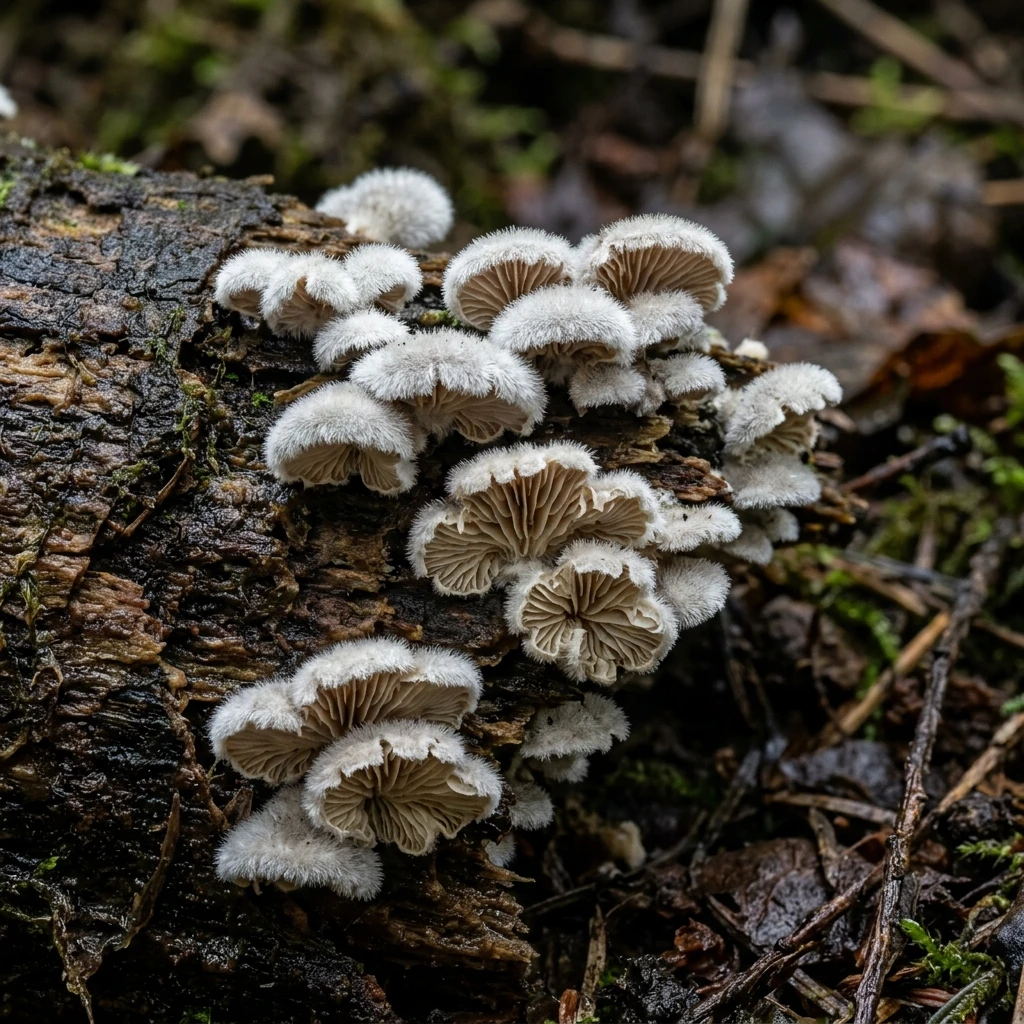
How to Identify Split Gill
A tiny, fuzzy white, fan-shaped bracket mushroom growing on logs, featuring gills that split along their edges.
-
✔
Fuzzy White Cap: Tiny, fan-shaped or shell-shaped bracket covered in dense, fuzzy white-to-grey hairs.
-
✔
Splitting Gills: Gills underneath are grey-pink, split longitudinally down the center, and roll inward when dry.
-
✔
Resilient Bracket: Lacks a stem, growing in dense shelf clusters directly on sunny, exposed wood.
Complete Scientific Cultivation & Identification
Follow our professional mycological parameters and identification guidelines for safe foraging.
Common Diseases & Wild Contamination
Drying closed state
Symptoms: Symptoms: Gills turn extremely hard, shriveled, and roll tightly closed, cap turns dull grey-brown.
Dust Accumulation
Symptoms: Symptoms: White velvety hair on caps turns dusty brown and dirty in indoor grow facilities.
Frequently Asked Questions
Why do the gills of this mushroom split?
The split-gill mechanism is an evolutionary adaptation to dry climates. When it is dry, the split gills roll closed to protect the spore-producing tissues. When it rains, they unroll to disperse spores.
What are the medicinal properties of Split Gill?
It produces schizophyllan, a powerful immunotherapeutic polysaccharide. Schizophyllan is widely used in medicine to boost T-cells, support immune health, and assist during cancer chemotherapy treatments.
How many sexes does Split Gill have?
It is famous for having over 23,328 distinct mating types (sexes). This genetic complexity prevents inbreeding and ensures high adaptability and survival across diverse global environments.
Is Split Gill mushroom safe to grow at home?
Yes, but with caution. Because it is highly resilient, inhalation of massive amounts of spores in poorly ventilated indoor grow rooms can cause rare allergic reactions or sinus colonization in immunocompromised individuals. Always wear masks when harvesting indoors.