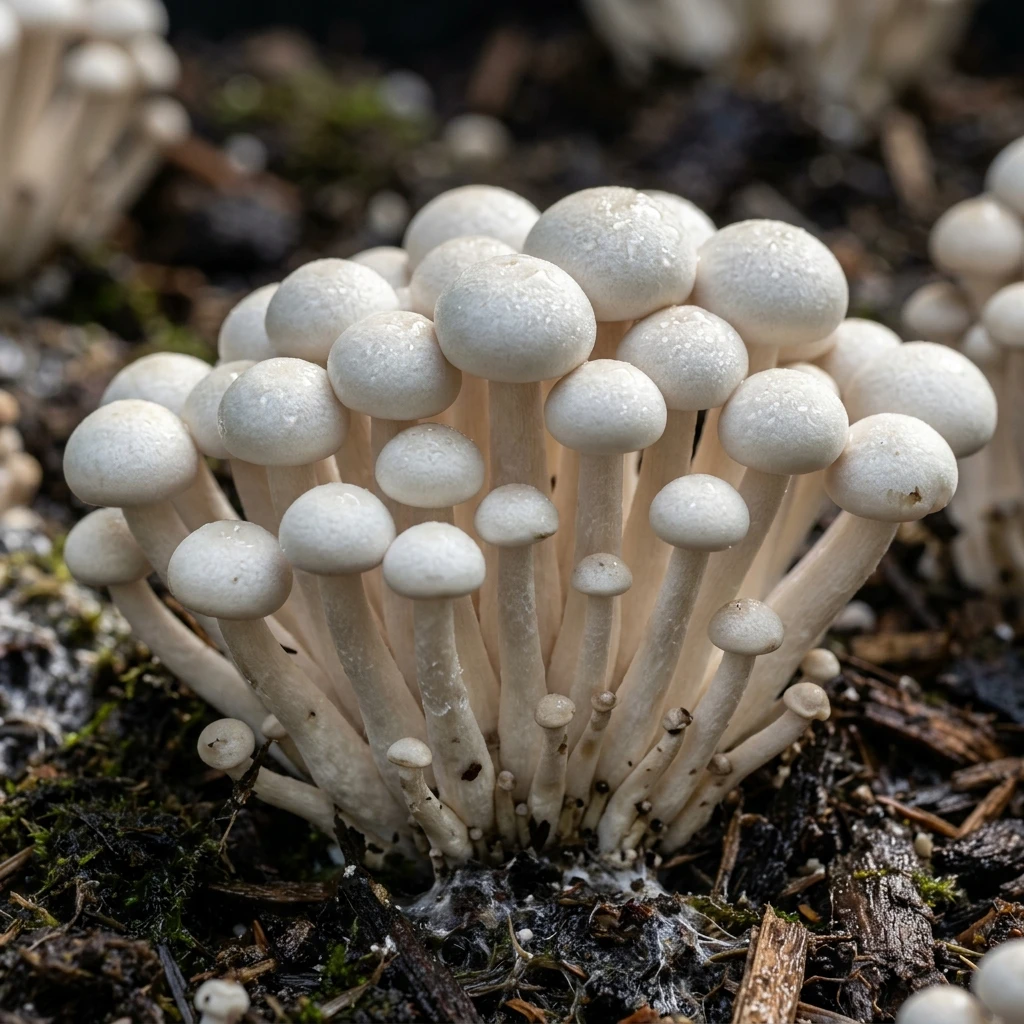
Hypsizygus tessulatus

Shimeji Identification & Cultivation

Shimeji, or Beech Mushroom, is a highly popular edible fungus native to East Asia. Thriving in dense, beautiful clusters on decaying beech trees, this mushroom is cultivated commercially in sterilized bottles. Known as 'Buna-shimeji' (brown) and 'Bunapi-shimeji' (white), it is celebrated for its firm texture and rich, nutty flavor that emerges after thorough cooking.


Environment Icon
Environment Sterilized Sawdust Bottles / Beech Logs
Humidity Icon
Humidity High Humidity (85-95%)
Substrate Icon
Substrate Sterilized Hardwood Sawdust Blocks
Cap Diameter Icon
Cap Diameter 2cm - 5cm cap cluster
Edibility Icon
Edibility Edible
Botanical macro photography of Shimeji (Hypsizygus tessulatus) - Plant AI care database

How to Identify Shimeji

A dense, spherical cluster of small, smooth-capped mushrooms with slender white stems and fine gills.

  • Marbled Spherical Caps: Small, smooth, round caps (brown or white) featuring a distinct marbled watermark pattern when young.
  • Slender White Stems: Thin, elongated, and elegant stems that fuse together into a dense, solid base cluster.
  • Crowded White Gills: Gills are white, extremely narrow, crowded, and attach directly to the top of the slender stem.
💡 Foraging Tip: Raw Shimeji tastes extremely bitter and is hard to digest. Always cook them thoroughly to break down the bitter compounds.

Complete Scientific Cultivation & Identification

Follow our professional mycological parameters and identification guidelines for safe foraging.

Grows on dead beech trees in East Asia. Commercially cultivated in sterilized plastic bottles filled with oak/beech sawdust and agricultural bran.
Requires high humidity (85-95%) during incubation and initial pinning. Mist the growing cluster regularly to prevent cap margins from drying.
Requires low, indirect ambient light. Dark cultivation produces long stems, but some light is necessary to develop the rich marbled brown pigment on Buna-shimeji.
The caps are 2 to 5 cm, round, smooth, convex. Gills are white, crowded, adnexed (slightly attached) to the stem.
Produces a pure white spore print. Cultivated commercially by inoculating liquid mycelium spawn into sterilized sawdust bottles using automated lines.
Flesh is white, crisp, firm, and lacks color change when cut. Stems are slender, curved, fusing into a single base block, with no ring or volva.
Harvest Buna-shimeji by slicing the entire cluster off the sawdust bottle base. Best harvested when the caps are still closed and rounded.
Must be cooked thoroughly. Sautéing, boiling in hot pots (shabu-shabu), or stir-frying removes the raw bitterness, yielding a delicious, crunchy texture and sweet nutty-crab flavor.
Rich in ergosterol (vitamin D precursor), dietary fiber, and active beta-glucans that boost natural killer cell activity and aid immune response.
CRITICAL WARNING: Highly safe when commercial. When foraging wild, ensure they are growing in dense clusters on beech logs. Avoid confusing with toxic brown lawn mushrooms.
When preparing Shimeji, do not pull them apart one by one. Slice the very bottom of the fused stem block off, and the mushrooms will separate into perfect, elegant small pieces.

Are your Shimeji mushrooms turning slimy or growing fuzzy mold?

Trim the base, keep them in breathable packaging, and avoid storing them in airtight plastic bags.

Identify My Mushroom

Common Diseases & Wild Contamination

Bacterial Wet Rot

Symptoms: Symptoms: The dense base of the cluster turns soft, watery, dark brown, and smells sour.

Action: Action: Cut off the rotten base immediately. Use only the firm, dry upper stems and caps. Ensure the storage box has ventilation holes.

Mycelial Overgrowth

Symptoms: Symptoms: Fine white fuzzy threads growing at the base of the stems, resembling mold.

Action: Action: This is harmless. It is Buna-shimeji's own mycelium growing in search of oxygen. Wipe with a dry towel and cook normally.

Frequently Asked Questions

Why are Shimeji mushrooms so bitter when raw?

Raw Shimeji contains high levels of unique bitter compounds called terpenes and lectins. These compounds protect the mushroom in the wild. Cooking completely breaks down these bitter molecules, revealing a sweet, nutty taste.

What is the difference between Buna-shimeji and Bunapi-shimeji?

Buna-shimeji (Brown Beech) is the wild-type brown heirloom variety. Bunapi-shimeji (White Beech) is a UV-irradiated albino mutant selected by a Japanese mushroom company, prized for its snow-white color.

Do you need to wash Shimeji?

No. Commercial Shimeji is grown in sterile sawdust bottles and is very clean. Simply wipe off any sawdust clinging to the base stem with a dry paper towel before cooking.

How do you store a Shimeji cluster?

Keep the cluster intact. Wrap it in a dry paper towel, place it in a paper bag or a ventilated container, and store in the refrigerator. Consume within 7 to 10 days.

Understand nature safely. Identify mushrooms instantly!

Get Started for Free