Shiitake Identification & Cultivation
Shiitake is the king of Asian mushrooms and the second most cultivated edible fungus in the world. Native to East Asia, this wood-decay polypore grows on decaying oak and chestnut logs, producing broad, brown caps decorated with delicate white flocking scales, celebrated for its rich, smoky, and intensely savory umami flavor.





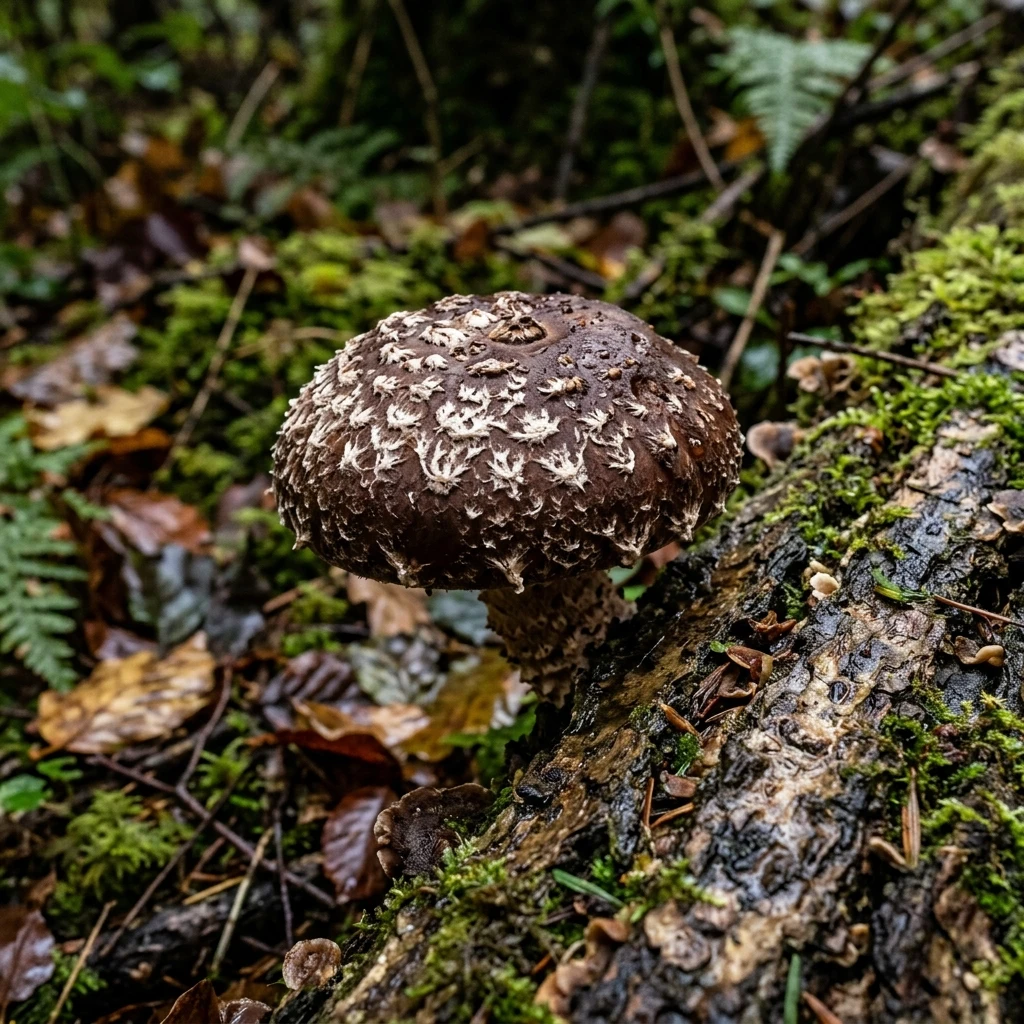
How to Identify Shiitake
A brown umbrella cap with white scales along the margins, cream-colored gills, and a tough fibrous stem.
-
✔
Umbrella Brown Cap: Convex to flat brown cap, often showing beautiful white flocking scales or white cracks (flower shiitake).
-
✔
Serrate Cream Gills: White-to-cream gills that are crowded and have slightly uneven or serrated edges.
-
✔
Fibrous Tough Stem: A highly tough, fibrous, cream-colored stem that attaches centrally or slightly off-center to the cap.
Complete Scientific Cultivation & Identification
Follow our professional mycological parameters and identification guidelines for safe foraging.
Common Diseases & Wild Contamination
Green Trichoderma Mold
Symptoms: Symptoms: Powdery green mold appearing on the bark of shiitake logs or spawn holes.
Soggy Gill Rot
Symptoms: Symptoms: Gills turn dark brown, soft, slimy, and leak moisture.
Frequently Asked Questions
Why does Dried Shiitake taste better than Fresh?
The drying process breaks down ribonucleotides and turns guanylic acid into highly potent flavor enhancers, concentrating and doubling the umami taste profile.
What is 'Flower Shiitake' (Donko)?
Donko is the highest grade of Shiitake. Grown in cold, dry winter conditions, the outer cap cracks into gorgeous white floral patterns, producing thick, dense, chewy flesh.
Is Shiitake safe to eat undercooked?
Never eat raw or undercooked Shiitake. underextracted lentinan can cause a rare toxic skin reaction called 'Shiitake Dermatitis', producing highly itchy red streaks. Always cook shiitake thoroughly.
How do you boost Vitamin D in Shiitake?
Place fresh shiitake mushrooms gills-up under direct sunlight for 2 to 4 hours. The ergosterol in the gills will absorb UV light and convert it into massive amounts of bioavailable Vitamin D.