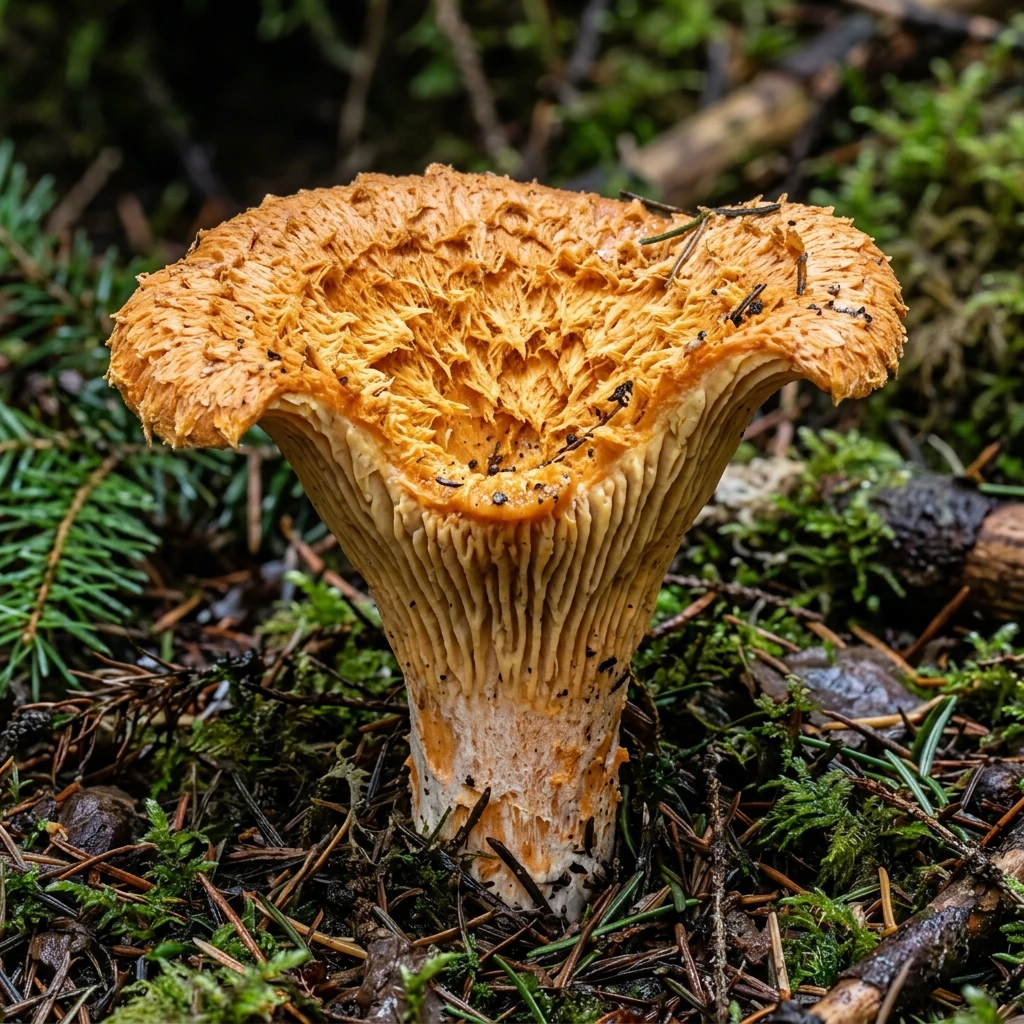
Scaly Chanterelle
Scientific Name: Turbinellus floccosus
The Scaly Chanterelle, or Woolly Chanterelle, is a large, spectacular, and highly toxic wild fungus native to coniferous forests across North America and East Asia. Instantly recognizable by its striking, deep vase- or trumpet-like shape and brilliant orange-yellow color, it is a magnificent forest sight. The inside of its deep orange funnel is heavily covered in thick, shaggy scales, while the underside features blunt, yellow-green ridges. Despite its beauty, it contains severe toxic acids that cause intense gastrointestinal distress.
How to Identify
A large, bright orange trumpet-shaped mushroom with a shaggy, scaly funnel interior and blunt yellow ridges underneath.
- Deep Shaggy Funnel: A large, trumpet-shaped cap, 5 to 15 cm wide, with a deeply hollow center packed with thick, orange-red scales.
- Blunt Ridges: The outer underside consists of blunt, shallow, heavily wrinkled ridges (not sharp gills) that are pale yellow-to-cream.
- Solid Rooting Base: A thick, solid, fleshy stem that tapers down, rooting deeply into coniferous needle litter.
Detailed Mycology Profile & Safety Guide
Click on any dimension to expand detailed field guides, substrate requirements, and safety warnings.
Is your Scaly Chanterelle growing moldy or decaying?
Take a photo with the Plant AI app to instantly diagnose fungal diseases, green mold, or wood decay, and get expert botanical recommendations in 1 second.
Scan Mushroom NowCap Bleaching and Fading
Symptoms: The brilliant orange scales turn a dull yellow-cream, making the mushroom look pale.
Action: Action: This is natural sun and rain bleaching. Old specimens rapidly lose their bright orange pigments. The toxins remain fully active; never forage pale specimens.
Soggy Rot
Symptoms: The deep funnel traps rainwater, causing the center to turn black, slimy, and rot.
Action: Action: Discard. The trumpet shape easily pools water. In wet autumns, the rotted center attracts mold and forest beetles. Leave them to decompose.
Frequently Asked Questions
Why is it called 'Scaly Chanterelle'?
It is named 'Scaly Chanterelle' because its large, trumpet-like orange cap has a deeply hollow center that is heavily covered in rough, shaggy, woolly scales, resembling orange shingles.
Is the Scaly Chanterelle lethal?
It is rarely fatal to healthy adults, but it is highly toxic. Ingesting it causes extremely severe, exhausting gastrointestinal illness with intense vomiting, nausea, and dehydration that can last for several days.
How do you tell it apart from the edible Golden Chanterelle?
The edible Golden Chanterelle (Cantharellus cibarius) is small (3-8 cm), solid, fleshy, smells like sweet apricots, and has a flat or slightly depressed cap with no scales. The toxic Scaly Chanterelle is huge (up to 15 cm wide), deeply hollowed like a vase, has zero apricot smell, and is packed with prominent orange scales inside the funnel.
What toxin does it contain?
It contains norcaperatic acid. This compound is chemically similar to citric acid but acts as an inhibitor of the citric acid cycle in human cells, leading to severe localized irritation and toxicity in the digestive tract.