Poria Identification & Cultivation
Poria, known as 'Fuling' in Asian herbalism, is a highly revered subterranean medicinal fungus native to pine forests. It grows entirely underground as a giant, hard, coconut-like woody sclerotium parasitic on decaying pine roots. Prized for over two millennia, this dense white fungal mass is heavily studied today for its powerful anti-inflammatory, spleen-supporting, and water-balancing properties.




How to Identify Poria
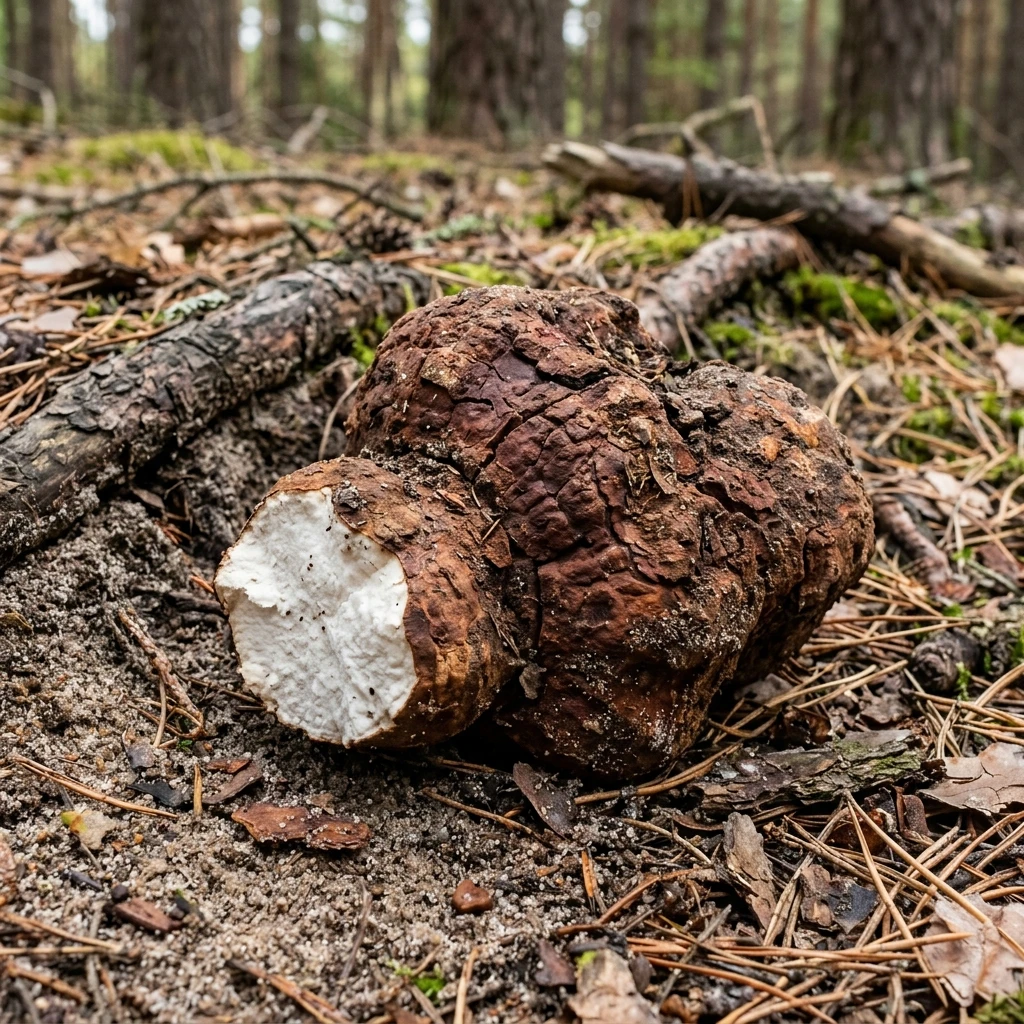
A large subterranean, rough dark brown potato-like sclerotium with dense, hard pure-white interior flesh.
-
✔
Potato-like Sclerotium: Bulging, subterranean sclerotium measuring up to 30 cm, covered in a rough, dark brown-to-black bark.
-
✔
Solid White Interior: Cutting the hard conk exposes an exceptionally dense, rock-hard pure white crumbly interior flesh.
-
✔
Pine Host Association: Grows strictly underground, parasitizing the root systems of dead or decaying Pine trees.
Complete Scientific Cultivation & Identification
Follow our professional mycological parameters and identification guidelines for safe foraging.
Common Diseases & Wild Contamination
Underground Soil Rot
Symptoms: Symptoms: The hard white interior turns soft, slimy, watery, and develops a sour smell.
Sanding Contamination
Symptoms: Symptoms: Sandy grit embedded deep within the cracks of the rough dark brown exterior bark.
Frequently Asked Questions
Why is Poria called the 'Dampness-Draining' herb?
In traditional Asian herbalism, Poria (Fuling) is the most famous kidney and spleen tonic. It effectively drains metabolic dampness, treats fluid retention, edema, and supports optimal digestion.
What does Poria taste like?
It is completely tasteless and odorless, which makes it an outstanding addition to daily cooking, easily blending into rice porridge, chicken soups, or sweet cakes without altering the flavor.
How do you cultivate Poria commercially?
Cultivators pack pine wood logs pre-inoculated with Wolfiporia cocos mycelium into sandy, well-drained trenches underground. The trenches are covered with soil, and the sclerotia are harvested 1 to 2 years later.
How do you store dried Poria sheets?
Keep them in a tightly sealed glass container in a cool, dry, and dark place. Adding a desiccant pack keeps the white sheets crisp, preventing moisture absorption and yellow mold decay.