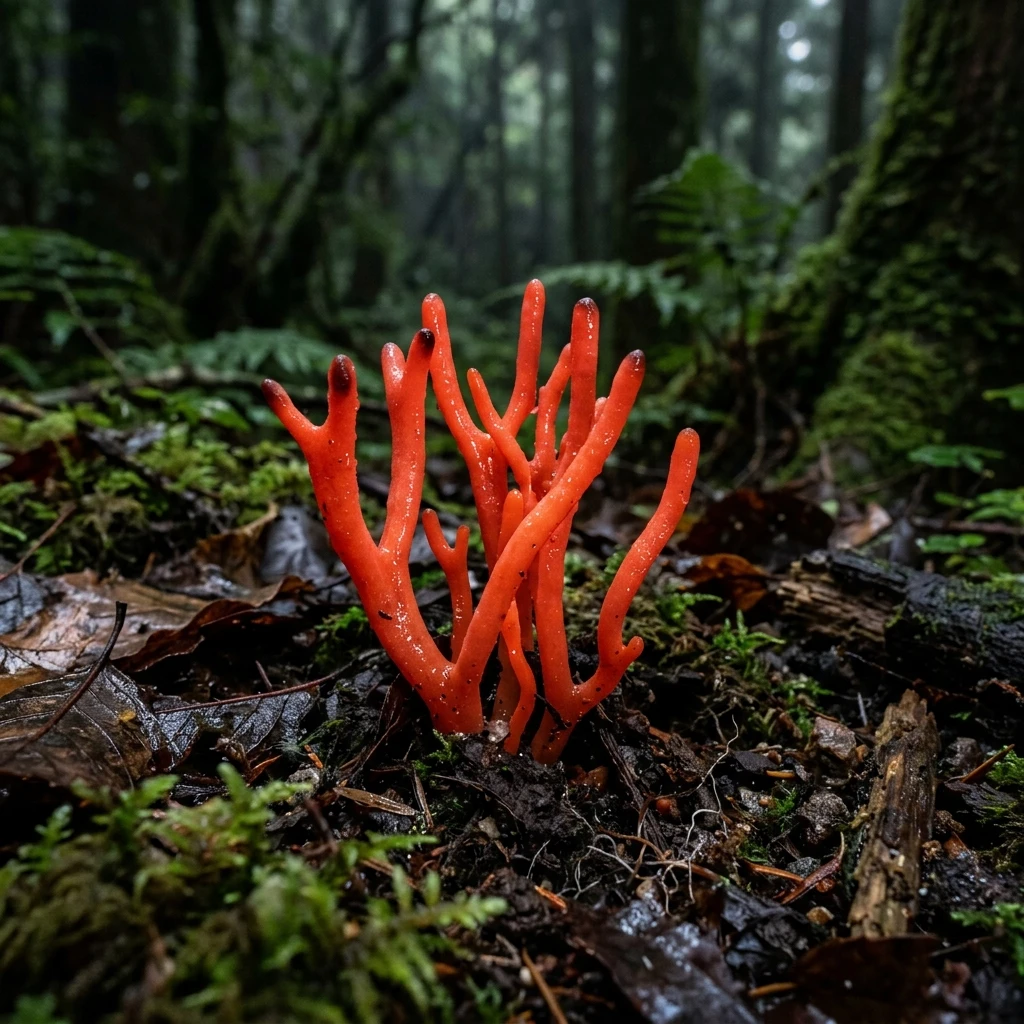
Poison Fire Coral
Scientific Name: Podostroma cornu-damae
The Poison Fire Coral is an extremely rare, bizarre, and exceptionally deadly fungus native to the humid forests of East Asia and northern Australia. Emerging vertically from damp soil near decaying oak roots, this unique orange-red fungus looks exactly like aquatic fire coral. It is the only known mushroom in the world whose powerful trichothecene toxins can be absorbed through the skin, causing severe contact dermatitis and fatal multi-organ failure if consumed.
How to Identify
A bright orange-red, club-like or finger-like branched stroma emerging vertically from the soil.
- Coralloid Branches: Distinctly bright orange-red or crimson cylindrical stalks that look like aquatic fire coral.
- Contact Dermatitis: Merely touching this fungus can trigger skin inflammation, redness, and severe peeling.
- Lethal Mycotoxins: Contains highly toxic trichothecene mycotoxins that cause systemic organ failure within days if consumed.
Detailed Mycology Profile & Safety Guide
Click on any dimension to expand detailed field guides, substrate requirements, and safety warnings.
Is your Poison Fire Coral growing moldy or decaying?
Take a photo with the Plant AI app to instantly diagnose fungal diseases, green mold, or wood decay, and get expert botanical recommendations in 1 second.
Scan Mushroom NowTip Blackening
Symptoms: The bright orange-red branched tips turn black, shriveled, and dry.
Action: Action: This is natural decay. The mushroom has reached maturity and is releasing white spores, with the warty coral-like branches drying out and decomposing back into the soil.
Color Fading
Symptoms: The bright red stalks turn a dull yellowish-orange or pale pinkish-brown.
Action: Action: Do not touch. Fading is caused by dry weather or over-exposure to sun. It remains exceptionally toxic and must never be handled or ingested.
Frequently Asked Questions
Why is it called the 'Poison Fire Coral'?
It is named 'Poison Fire Coral' because its bright orange-red, cylindrical, branched stalks look exactly like marine fire coral, and it carries some of the most lethal toxins in the fungal kingdom.
Can touching this mushroom really make you sick?
Yes. It is the only known mushroom whose toxins (trichothecenes) can penetrate human skin. Touching it can cause painful skin peeling, swelling, and localized contact dermatitis.
What happens if someone eats it?
Within hours, it triggers severe abdominal pain, vomiting, peeling skin on the face, hair loss, and acute bone marrow suppression. This leads to internal bleeding, liver failure, kidney failure, and death within days.
How do you distinguish it from edible Cordyceps?
Cordyceps grows as a single, slender, dark brown or bright orange shoot emerging directly from a buried insect mummy. Poison Fire Coral forms branched, bright crimson, coral-like fingers growing directly out of oak-root soil.