Pleurotus ostreatus

Oyster Mushroom Identification & Cultivation

The Pearl Oyster Mushroom is a highly popular, fast-growing edible fungus prized for its elegant shell-like cap, velvety greyish-white color, and mild, sweet anise-like aroma. Widely distributed across temperate woodlands, this wood-decaying saprophyte plays a vital ecological role in breaking down hardwoods and is highly responsive to indoor cultivation.


Environment Icon
Environment Decaying Hardwood / Straw Mulch
Humidity Icon
Humidity High Humidity (80-90%)
Substrate Icon
Substrate Decaying Hardwood Logs / Straw
Cap Diameter Icon
Cap Diameter 5cm - 20cm
Edibility Icon
Edibility Edible
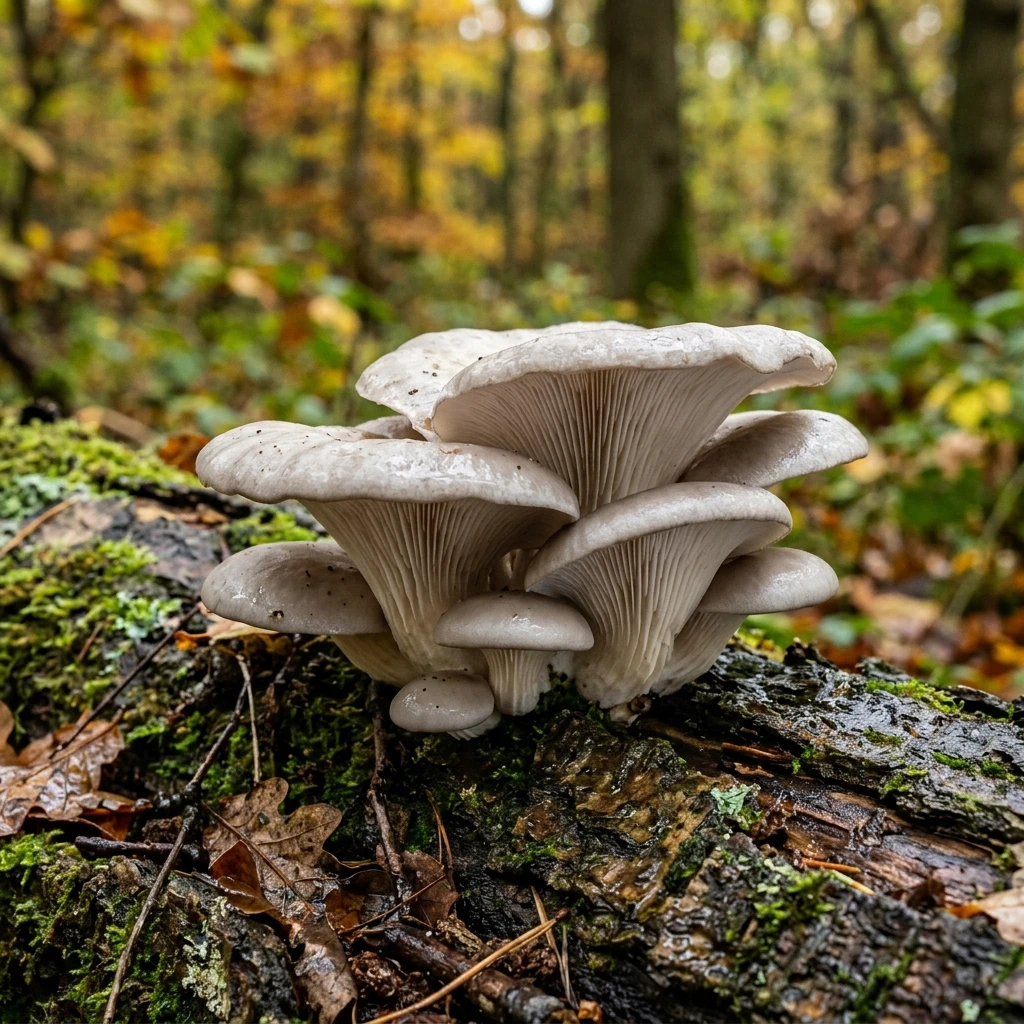
Botanical macro photography of Oyster Mushroom (Pleurotus ostreatus) - Plant AI care database

How to Identify Oyster Mushroom

A fan-shaped, shelf-like greyish-white capped mushroom with thick, white gills that extend down the short lateral stem.

  • Fan-shaped Cap: Elegant, oyster-shaped or shell-shaped cap with a smooth, grey-to-ivory velvety surface.
  • Decurrent Gills: Sharp blade-like white gills that run directly down the short, off-center lateral stem.
  • Anise Fragrance: A very subtle, sweet aroma resembling aniseed or fresh licorice.
💡 Safety Tip: Oyster mushrooms always grow on wood (never directly on soil). Check the growing substrate to ensure safe foraging in temperate woodlands.

Complete Scientific Cultivation & Identification

Follow our professional mycological parameters and identification guidelines for safe foraging.

Grows on dead or decaying hardwood trees (Oak, Beech, Maple). In commercial cultivation, it thrives on pasteurized wheat straw, cotton waste, or hardwood sawdust bags.
Requires very high humidity (80-90%) and abundant fresh air exchange (FAE). Low fresh air causes mushrooms to develop long, leggy stems and tiny caps.
Requires moderate ambient light to trigger the development of greyish-brown pigment in the cap. Completely dark cultivation results in pale, white mushrooms.
The cap is 5 to 20 cm, shelf-like, smooth. Gills are white, crowded, and run deeply down the side-stem (decurrent).
Produces a white to lilac-grey spore print. Oyster mushrooms are extremely aggressive colonizers and reproduce rapidly via spores and active mycelium.
Flesh is thick, white, firm, and fibrous. The stem is extremely short, thick, lateral (growing from the side), and completely lacks a ring or volva.
Harvest in clusters by cutting the base attachment point near the wood with a sharp knife. Forage when the cap margins are still slightly rolled under.
A highly sought-after edible. Mild, slightly sweet flavor with a tender, meaty texture. Perfect for stir-fries, soups, tempura, or sautéed in olive oil.
Naturally contains **statins** (such as lovastatin) which help regulate blood cholesterol, alongside polysaccharides that support cardiovascular health.
CRITICAL WARNING: In North America, watch out for the toxic 'Jack-O'-Lantern' (Omphalotus) which is bright orange, lacks decurrent folds, and grows in clusters. Always verify lateral stem morphology.
Because oyster mushrooms release a massive amount of spores as they mature, indoor growers must harvest them early before the caps completely flatten to protect indoor air quality.

Are your Oyster Mushrooms growing long stems and tiny caps?

Increase fresh air ventilation immediately, maintain high humidity, and provide indirect ambient light.

Identify My Mushroom

Common Diseases & Wild Contamination

High Carbon Dioxide Stunting

Symptoms: Symptoms: Extremely long, thick stems with tiny, underdeveloped shell caps.

Action: Action: Increase fresh air exchange (FAE). Oyster mushrooms are highly sensitive to carbon dioxide accumulation and require fresh air to form caps.

Green Mold Contamination

Symptoms: Symptoms: Emerald green powdery patches appearing on the sawdust cultivation block.

Action: Action: Isolate contaminated bags immediately. Spray infected zones with a dilute hydrogen peroxide solution to suppress Trichoderma spread.

Frequently Asked Questions

Why do Oyster mushrooms smell like anise?

Oyster mushrooms naturally synthesize benzaldehyde and other volatile organic compounds that give them their characteristic sweet, almond-like and anise-like (licorice) fragrance.

Can Oyster mushrooms eat plastic?

Yes! Oyster mushrooms produce powerful extracellular enzymes (laccase, peroxidase) that can break down complex hydrocarbons, including certain plastics and petroleum pollutants, in bioremediation projects.

How do you prep Oyster mushrooms for cooking?

Cut off the tough, woody central base of the cluster. Wipe the caps clean with a dry cloth. Tear the fan-shaped caps vertically into strips instead of slicing them to maintain their beautiful texture.

How long do they last in the fridge?

Oyster mushrooms have a short shelf life. Store them in a paper bag in the vegetable crisper drawer and consume them within 3 to 5 days.

Understand nature safely. Identify mushrooms instantly!

Get Started for Free