Morel Identification & Cultivation
Morel is a highly prized, gourmet wild mushroom famous for its distinctive honeycomb-like ribbed cap and rich, earthy, nutty flavor. Native to hardwood forests across North America and Europe, this elusive spring-fruiting delicacy is heavily sought after by professional foragers and mycologists for its outstanding culinary value and mysterious symbiotic growth habit.




How to Identify Morel
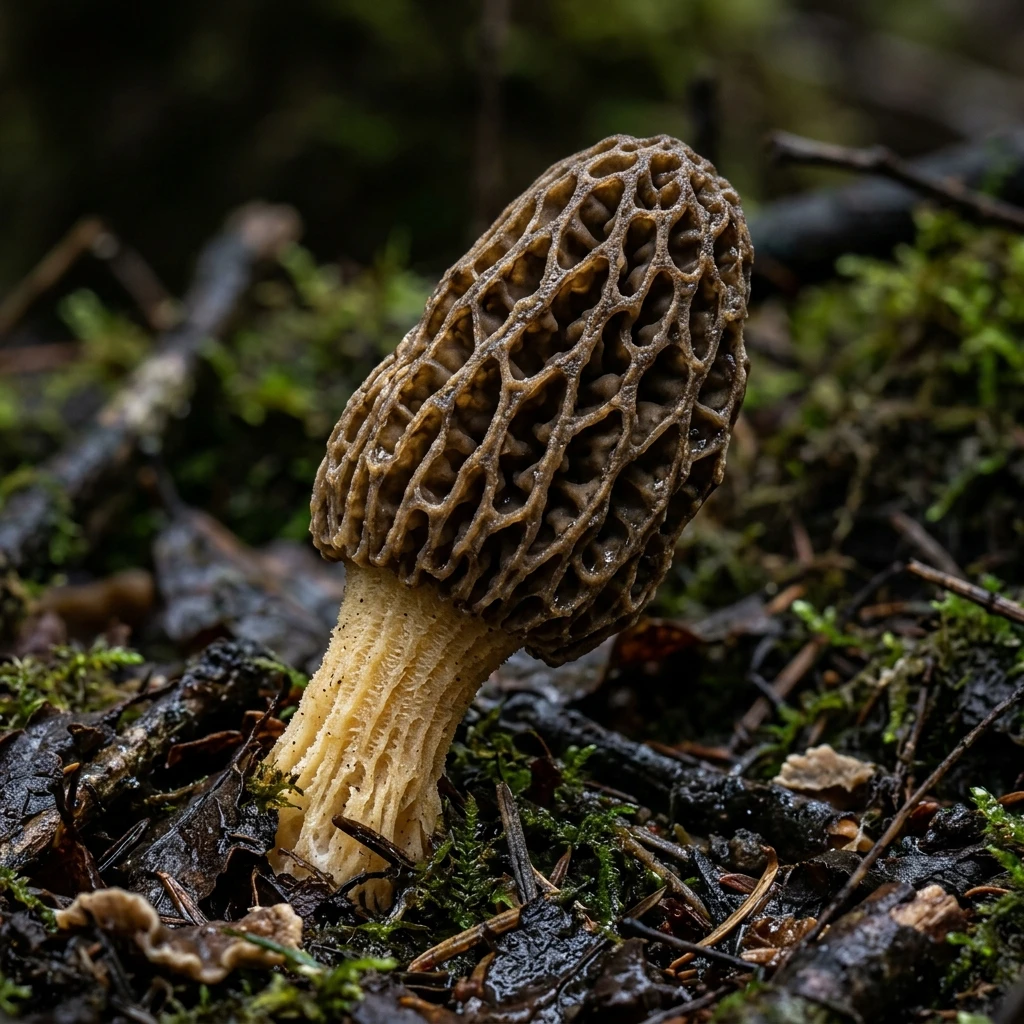
An upright, hollow mushroom with a brownish honeycomb ribbed cap and a pale, textured furrowed stem.
-
✔
Honeycomb Cap: Distinctive hollow cap marked by deeply pitted yellowish-brown to grey ridges resembling a bee's honeycomb.
-
✔
Hollow Interior: The entire mushroom—both cap and stem—is completely hollow from top to bottom.
-
✔
Stem Attachment: The base of the ribbed cap attaches directly to the textured cream-colored stem without any overlap or skirt.
Complete Scientific Cultivation & Identification
Follow our professional mycological parameters and identification guidelines for safe foraging.
Common Diseases & Wild Contamination
Bacterial Decay
Symptoms: Symptoms: The honeycomb pits turn soggy, brown, and emit a rotting smell.
Insect Infestation
Symptoms: Symptoms: Small holes in the stem and cap; tiny white larvae present inside the hollow cavity.
Frequently Asked Questions
Why must Morels always be cooked thoroughly?
Raw morels contain heat-labile toxins (including small amounts of hydrazine compounds) that cause severe gastrointestinal distress. Cooking completely decomposes these compounds, making the mushroom safe and delicious.
How do you distinguish a True Morel from a False Morel?
True Morels have a honeycomb cap with distinct pits, and are completely hollow inside. False Morels have a brain-like, lobed cap (not pitted) and contain cottony white fibers inside, rather than being completely hollow.
Can Morels be cultivated at home?
Morels are notoriously difficult to cultivate because of their complex symbiotic relationship with tree roots and reliance on sclerotia formation. While indoor kit cultivation is advancing, wild foraging remains the primary source.
What is the best way to clean wild Morels?
Brush off loose dirt with a soft dry brush. Cut in half lengthwise to check for bugs inside, then quickly rinse under cold water right before cooking. Avoid soaking them, as they absorb water like sponges.