Maitake Identification & Cultivation
Maitake, also known as Hen of the Woods or 'Dancing Mushroom', is a massive, highly prized edible and medicinal fungus native to temperate forests. Growing in large, overlapping, fan-shaped clusters at the base of mature oak trees, this polypore is celebrated globally for its rich, earthy flavor, fibrous texture, and powerful health-supporting properties.





How to Identify Maitake
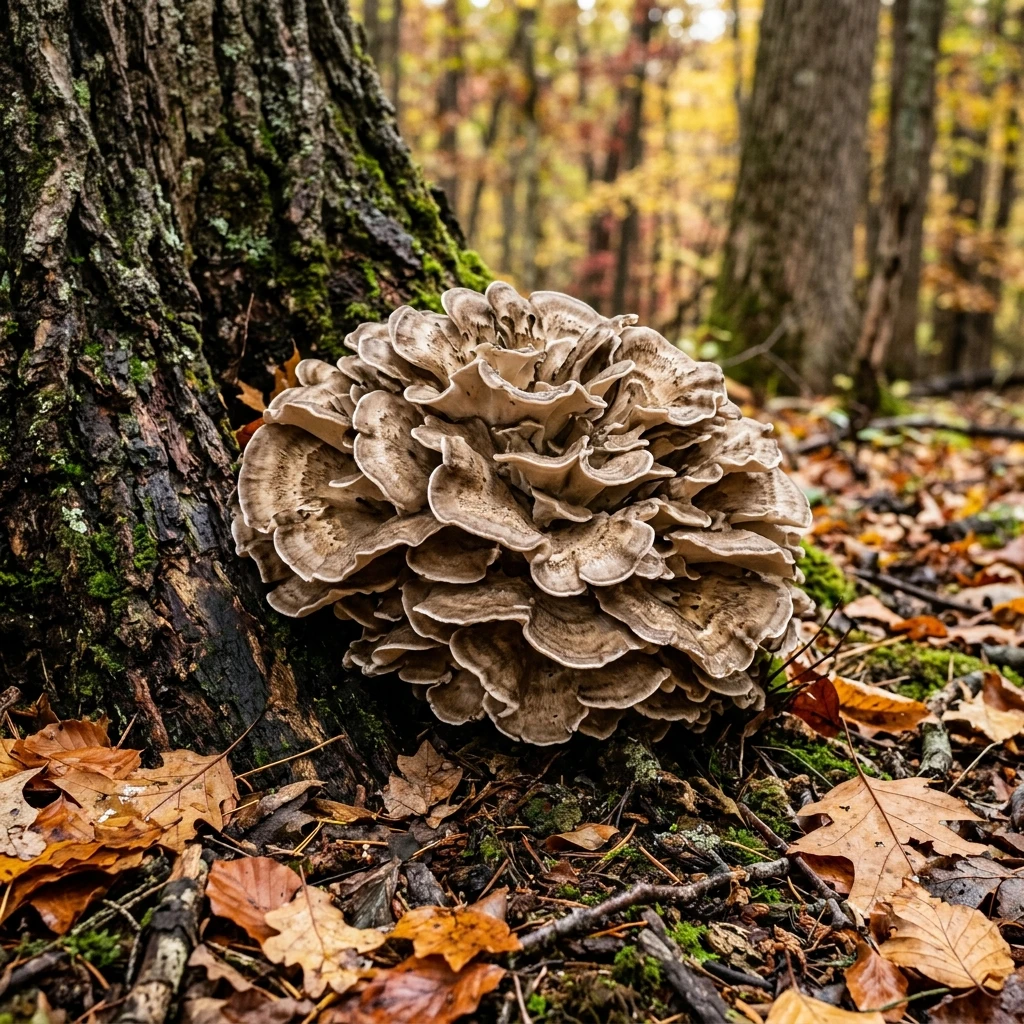
A large, heavy, rosette-like cluster of overlapping greyish-brown fan-shaped caps with white pore undersides.
-
✔
Overlapping Fronds: Massive cluster composed of dozens of overlapping, leaf-like or fan-shaped greyish-brown caps.
-
✔
White Pore Surface: Gills are completely absent. The underside of each cap features a dense white pore layer.
-
✔
Fused Branching Stem: All the fan-shaped caps branch out from a thick, central, white compound stem base.
Complete Scientific Cultivation & Identification
Follow our professional mycological parameters and identification guidelines for safe foraging.
Common Diseases & Wild Contamination
Insect Infestation
Symptoms: Symptoms: Tiny woodland bugs and centipedes crawling inside the dense, overlapping leaf-like rosettes.
Woody Aging
Symptoms: Symptoms: Fronds become dry, fibrous, extremely tough, and lose their rich umami aroma.
Frequently Asked Questions
Why is Maitake called 'Hen of the Woods'?
The mushroom cluster resembles the ruffled feathers of a nesting hen sitting at the base of an oak tree, hence the popular English name.
What are the health benefits of Maitake?
Maitake is a legendary medicinal mushroom. It is heavily studied for its ability to regulate blood glucose, lower cholesterol, support weight management, and boost white blood cell activity.
How do you cultivate Maitake at home?
You can purchase pre-inoculated sawdust blocks. Keep them in a humid, shaded room (humidity > 85%) and mist daily. Fruiting bodies will emerge from sliced openings in the plastic bag.
How do you store a large Maitake cluster?
Tear into smaller clusters, wrap in dry paper towels, and store in a cardboard box or paper bag in the fridge for up to a week. For long-term storage, sauté in butter and freeze.