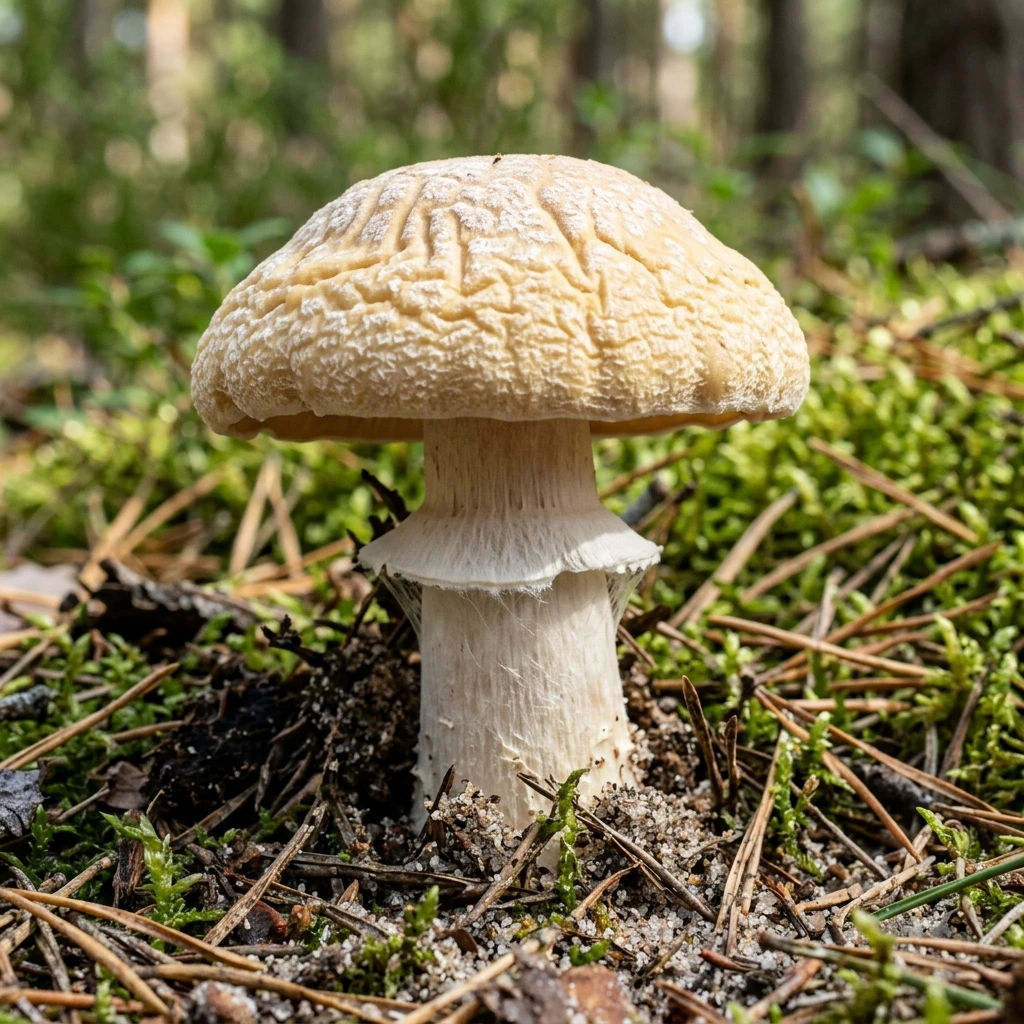
Gypsy Mushroom
Scientific Name: Cortinarius caperatus
The Gypsy Mushroom, also known as the Wrinkled Cortinarius, is a highly popular, prized, and choice wild edible mushroom native to coniferous and mixed sandy forests across the Northern Hemisphere. Growing in mycorrhizal symbiosis with Pine and Blueberry plants, it represents a premier autumn foraging prize. Instantly recognizable by its warm, dull ochre-yellow cap covered in a highly unique, fine, silvery-white powdery coating of wrinkles, its robust pale stem with a distinct waxy ring and cortina web vestige near the top, and its deeply rich, sweet, and nutty flavor.
How to Identify
An ochre-yellow cap covered in fine silvery-white powdery wrinkles, with a waxy ring on a thick stem, growing strictly under pine trees.
- Wrinkled Silver Cap: A convex cap, 5 to 12 cm, dull ochre-yellow, covered in a highly unique fine, silvery-white powdery layer of wrinkles.
- Stem Ring & Cortina: A thick white stem featuring a distinct waxy ring near the top, often with faint, thread-like cortina web residues.
- Cinnamon-Brown Gills: Gills underneath are clay-colored when young, turning a rich cinnamon-brown as the spores mature.
Detailed Mycology Profile & Safety Guide
Click on any dimension to expand detailed field guides, substrate requirements, and safety warnings.
Is your Gypsy Mushroom growing moldy or decaying?
Take a photo with the Plant AI app to instantly diagnose fungal diseases, green mold, or wood decay, and get expert botanical recommendations in 1 second.
Scan Mushroom NowSheen Loss (Rain Wash)
Symptoms: The warm yellow cap loses its fine silvery-white powdery coating, turning smooth and dark ochre after heavy rains.
Action: Action: This is natural. The fragile powder coating easily washes away. The mushroom remains safe to eat, provided the stem ring is still present.
Stem Gnat Tunneling
Symptoms: The thick robust stem base is riddled with tiny brown tunnels and feels soft.
Action: Action: Slice off the stem. Fungus gnats love *Cortinarius* stems. Sauté only the firm, clean caps which are usually free of tunnels.
Frequently Asked Questions
Why is it called the 'Gypsy Mushroom'?
Its common name 'Gypsy' comes from its historically nomadic-like abundance in sandy woodlands, and its warm, ochre-yellow, wrinkled cap which was poetically compared to a sun-weathered gypsy's skin.
How do you tell it apart from toxic Webcaps?
The toxic Webcaps (in the same family *Cortinarius*) do not have a distinct waxy ring on the stem and lack the unique silvery-white powdery wrinkles on the cap. The Gypsy Mushroom has a very clear, persistent waxy ring and wrinkled cap.
Does it have a sweet taste?
Does it have a sweet taste?
Yes! The Gypsy Mushroom has an exceptionally sweet, mild, and nutty flavor that is highly valued by gourmet chefs. It is considered one of the finest wild mushrooms for simple sautés.
Where does it grow?
It grows strictly on the ground in sandy, acidic soils under Pine trees, very often nestled directly inside wild Blueberry or Huckleberry bushes, with which it shares a symbiotic underground network.