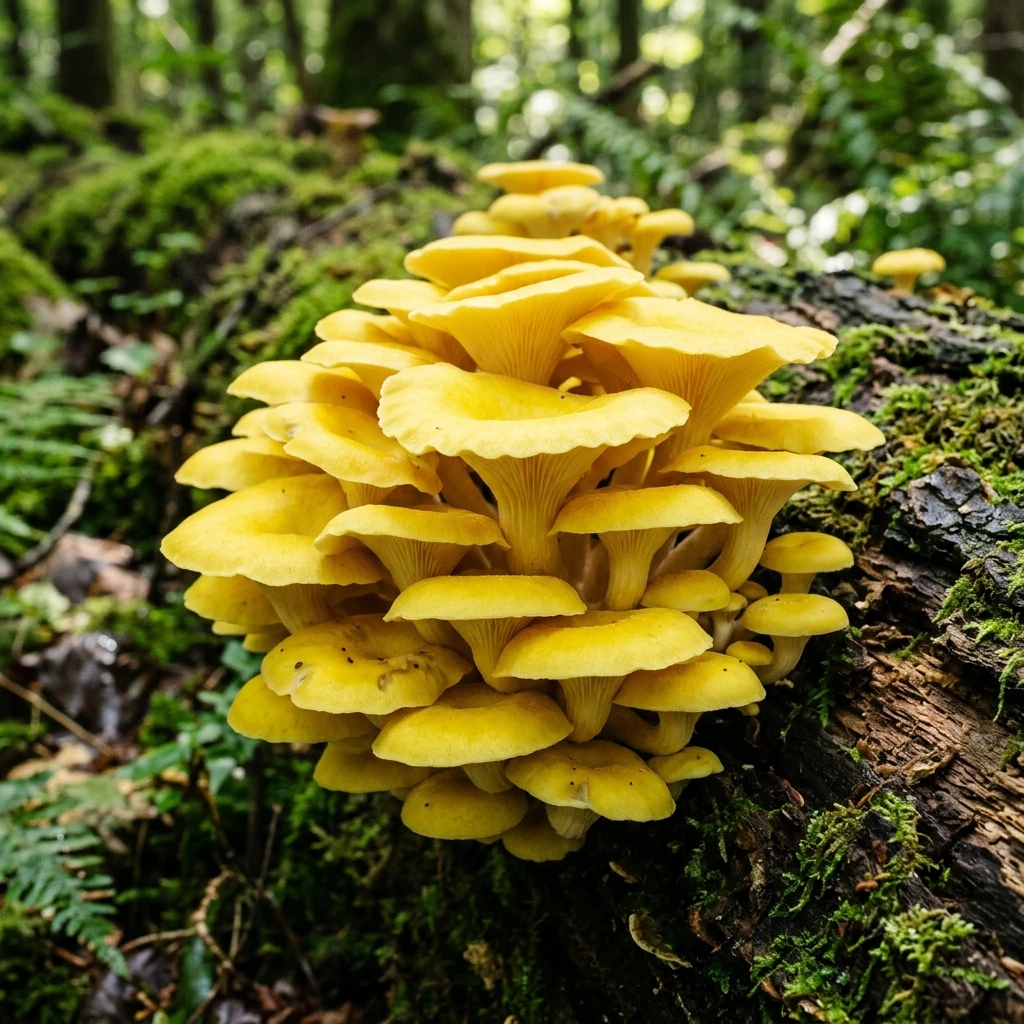
Pleurotus citrinopileatus

Golden Oyster Identification & Cultivation

The Golden Oyster Mushroom is an incredibly beautiful and vibrant edible fungus native to subtropical forests in Eastern Asia. Famous for its brilliant, bright golden-yellow caps and funnel-shaped margins, this wood-decaying saprophyte grows in large, dense clusters on decaying hardwoods, offering a delicate texture and a pleasant peppery, nutty flavor.


Environment Icon
Environment Hardwood Forests / Elm Woods
Humidity Icon
Humidity High Humidity (80-90%)
Substrate Icon
Substrate Decaying Elm / Hardwood Logs
Cap Diameter Icon
Cap Diameter 2cm - 8cm cap
Edibility Icon
Edibility Edible
Botanical macro photography of Golden Oyster (Pleurotus citrinopileatus) - Plant AI care database

How to Identify Golden Oyster

A bright golden-yellow, funnel-shaped capped mushroom growing in dense clusters with decurrent white gills.

  • Bright Golden Cap: Striking, lemon-yellow to golden cap that turns funnel-shaped with a depressed center.
  • Pure White Gills: Gills are white, extremely narrow, crowded, and run down the off-center stem.
  • Dense Rosette Clusters: Grows in highly packed, beautiful clusters comprising dozens of small yellow caps.
💡 Cooking Tip: Golden Oysters cook very quickly. Pan-fry them on medium heat until the yellow edges turn crispy and golden; avoid boiling as they lose their delicate yellow color.

Complete Scientific Cultivation & Identification

Follow our professional mycological parameters and identification guidelines for safe foraging.

Grows on dead elm and other hardwood trees. Highly responsive to indoor cultivation on sterilized sawdust blocks or outdoor straw beds.
Requires high humidity (80-90%) to prevent the thin, delicate yellow caps from drying out and cracking. Maintain continuous misting.
Requires abundant indirect light to develop its striking golden-yellow caps. Low light produces pale, washed-out white mushrooms.
The cap is 2 to 8 cm, bright yellow, smooth. Gills are white, crowded, and run decurrently down the stem.
Produces a white to pale pinkish-lilac spore print. Golden oysters are aggressive colonizers and spread mycelium rapidly.
Flesh is thin, white, fragile in the cap, and fibrous in the stem. Stems are white, off-center, lacking a ring or volva.
Harvest the entire cluster by slicing the base. Gather when the caps are still bright yellow and convex; overmature caps turn pale and brittle.
A delicious edible. Mild peppery and nutty cashew-like flavor when cooked. Perfect for sautéing, stir-fries, risottos, and pasta dishes.
Contains high concentrations of glycoprotein complexes and ergothioneine, showing strong antioxidant, anti-inflammatory, and immune-supporting properties.
CRITICAL WARNING: Highly safe. Its striking yellow color makes it extremely easy to identify. Avoid gathering pale, decaying clusters showing white mold.
Golden Oysters are highly fragile and crumble easily during transport. Handle with care, and dry-sauté them in a hot skillet first before adding butter to preserve their structural integrity.

Are your Golden Oysters turning pale, white or drying out?

Provide bright indirect light, raise ambient humidity, and protect from dry heating vents.

Identify My Mushroom

Common Diseases & Wild Contamination

Light Deprivation Paleness

Symptoms: Symptoms: The caps turn pale off-white, lose their golden color, and stems grow excessively long.

Action: Action: Move the cultivation block to an area with brighter indirect sunlight. Golden Oysters require light to synthesize their yellow carotenoid pigments.

Cap Edge Cracking

Symptoms: Symptoms: The edges of the yellow caps turn dry, curled upwards, and develop cracks.

Action: Action: Raise the relative humidity immediately. Protect the growing mushrooms from dry drafts or direct heating drafts.

Frequently Asked Questions

Does the yellow color stay after cooking?

The bright yellow cap color will fade slightly to a light beige-yellow when cooked, but pan-searing them quickly on high heat preserves the maximum color and creates a delicious crispy edge.

What does a Golden Oyster mushroom taste like?

It has a mild, savory taste with a pleasant cashew-nutty aroma and a slightly peppery finish. The texture is tender and slightly crispy in the cap.

How fast do Golden Oysters grow?

They are incredibly fast growers. Once pinheads emerge, they can reach full harvest size in just 3 to 4 days, requiring close monitoring during the final fruiting phase.

How do you store them?

Because they are thin and fragile, they have a short shelf life. Store them in a ventilated paper bag in the fridge and consume within 3 days for peak quality.

Understand nature safely. Identify mushrooms instantly!

Get Started for Free