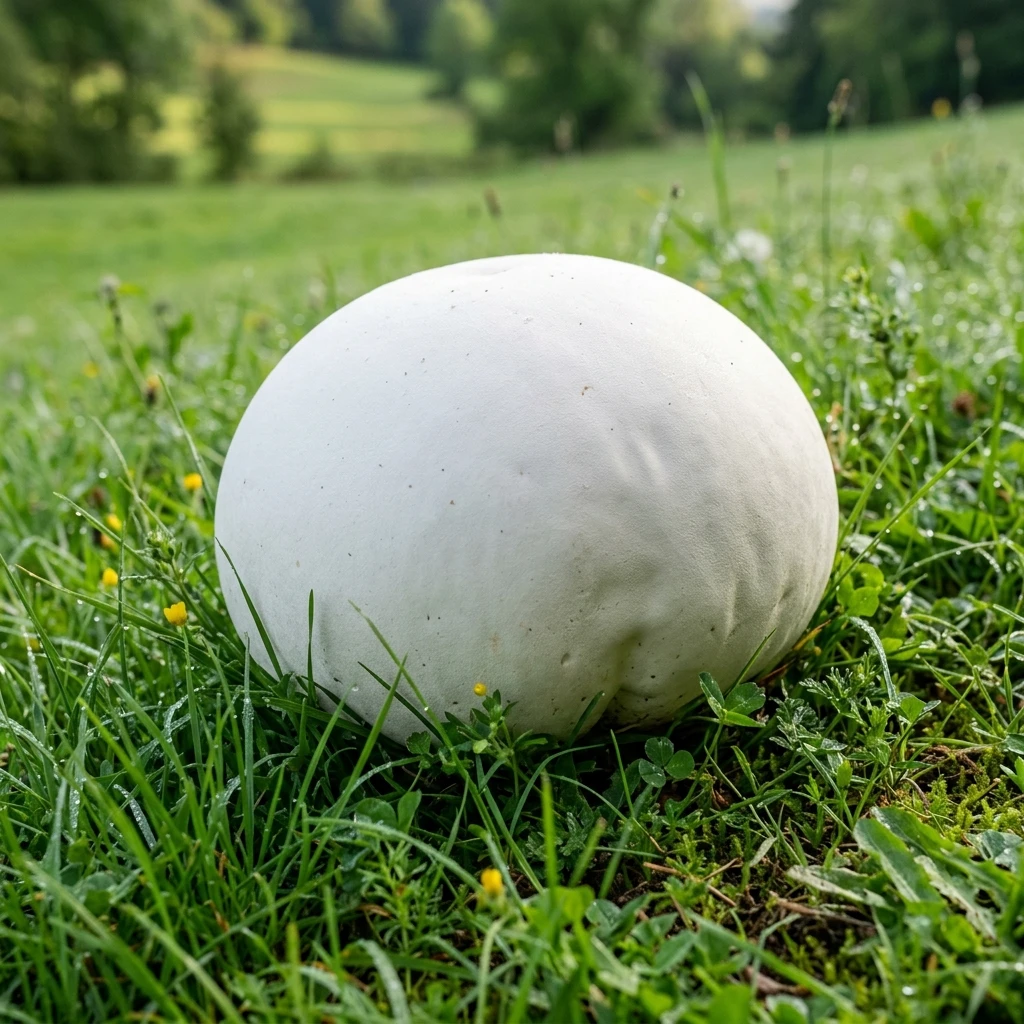
Giant Puffball
Scientific Name: Calvatia gigantea
The Giant Puffball is an iconic, spectacular, and highly popular wild edible mushroom famous for its massive size, growing as large as a soccer ball or even bigger. Found in fertile grassy fields, pastures, and deciduous forest edges across North America and Europe, it lacks a cap, gills, or stem, appearing as a massive, smooth white sphere on the soil. Highly prized by foragers, it yields huge, delicious white slabs when sliced.
How to Identify
A massive, smooth white sphere growing directly on grass, lacking a stem, with a solid white interior.
- Soccer-Ball Size: Massive, round or oval white body measuring 10 to 50 cm in diameter, growing directly on pasture soil.
- Smooth White Skin: The skin is smooth, soft like kid leather, pure white, turning yellowish-brown in maturity.
- Slab-like Interior: Slicing it reveals a massive, uniform, pure white flesh like a block of tofu or cream cheese.
Detailed Mycology Profile & Safety Guide
Click on any dimension to expand detailed field guides, substrate requirements, and safety warnings.
Is your Giant Puffball growing moldy or decaying?
Take a photo with the Plant AI app to instantly diagnose fungal diseases, green mold, or wood decay, and get expert botanical recommendations in 1 second.
Scan Mushroom NowInternal Yellowing
Symptoms: The massive white flesh shows yellow-green patches or turns spongy and brown.
Action: Action: DO NOT EAT. The puffball has begun the maturation process to produce spores. The flesh is no longer palatable and can cause stomach cramps. Use only when 100% pure white.
Soggy Flesh
Symptoms: The puffball feels waterlogged, soft, and mushy after heavy rains, with a sour odor.
Action: Action: Discard. Heavy autumn rains can oversaturate the spongy flesh, causing it to rot rapidly. Harvest only firm, dry specimens.
Frequently Asked Questions
How big can a Giant Puffball grow?
They typically grow to the size of a soccer ball (15 to 30 cm), but they can easily reach over 50 cm in diameter and weigh more than 10 kilograms, making them some of the largest fruiting bodies in the world.
How do you distinguish it from a Poison Puffball?
The toxic Pigskin Poison Puffball (Scleroderma citrinum) is much smaller (2-10 cm), has a hard, thick, scaly yellow-brown skin, and its interior turns dark purple-black very quickly, whereas the Giant Puffball is massive, soft-skinned, and pure white inside.
Can you freeze Giant Puffball?
Yes. Because they are so massive, you often have more than you can eat. You can slice the fresh white flesh into slabs, sauté them lightly in butter, and freeze them in sealed bags for winter stews and soups.
Is it safe to eat raw?
No. Like most wild mushrooms, it should always be cooked before consumption. Raw puffball flesh is highly spongy, difficult to digest, and lacks the delicious savory flavor that develops during cooking.