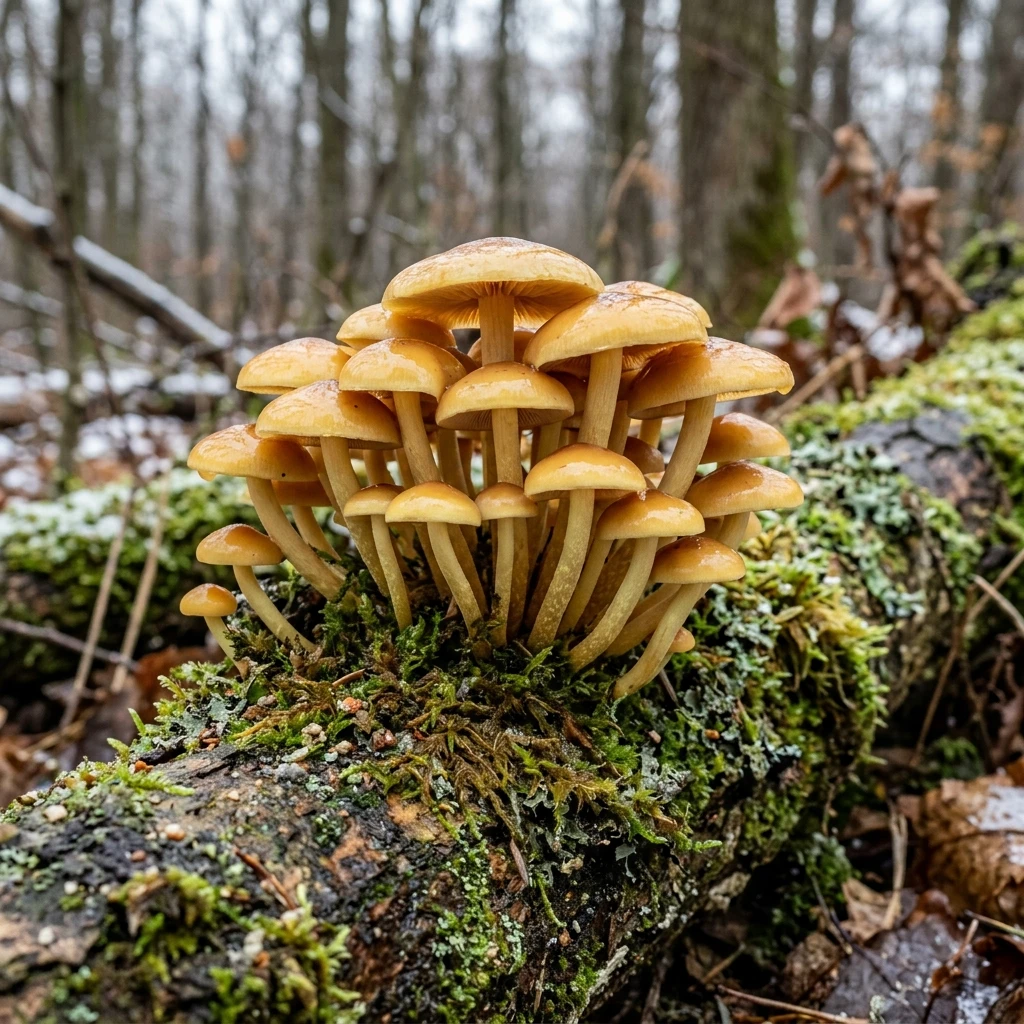
Flammulina velutipes

Enoki Identification & Cultivation

Enoki, or Velvet Shank, is a highly popular and versatile mushroom native to temperate regions across Asia, Europe, and North America. While wild enoki features a sticky orange-brown cap and a dark, velvety stem, the cultivated version is grown in complete darkness with high CO2 to produce long, thin, pure-white noodle-like clusters, highly prized for their crunchy texture and sweet, mild flavor.


Environment Icon
Environment Decaying Hardwood Logs / Indoor Glass Jars
Humidity Icon
Humidity High Humidity (80-90%)
Substrate Icon
Substrate Dead Elm/Willow Wood / Sawdust
Cap Diameter Icon
Cap Diameter 2cm - 10cm
Edibility Icon
Edibility Choice Edible
Botanical macro photography of Enoki (Flammulina velutipes) - Plant AI care database

How to Identify Enoki

Cultivated: Long, thin white noodle-like stems with tiny dome caps. Wild: Sticky orange-brown caps with dark velvety stems.

  • Cultivated Form: Long, slender, pure-white noodle-like stems growing in dense clumps, topped with tiny, pinhead-sized white caps.
  • Wild Velvet Stem: Stout, tough stem that is yellowish at the top and turns dark brownish-black and velvety-hairy at the base.
  • Sticky Cap (Wild): Sticky or slimy yellowish-orange to reddish-brown convex cap that flattens with age.
💡 Safety Tip: Wild Enoki must never be confused with the deadly 'Funeral Bell' (Galerina marginata), which has a brown spore print, a ring on the stem, and lacks the velvety black base.

Complete Scientific Cultivation & Identification

Follow our professional mycological parameters and identification guidelines for safe foraging.

Wild Enoki grows in dense clusters on decaying hardwood logs (Elm, Willow, Aspen). Cultivated Enoki is grown in bottles filled with hardwood sawdust and rice bran.
Requires high humidity (>80%) and cool temperatures (10°C - 15°C) to fruit. They are cold-weather specialists, often fruiting under snow in winter.
Cultivated: Grown in complete darkness to prevent color development and keep them snow-white. Wild: Shaded forest floors, where light matures the orange-brown cap.
Caps are small, 2 to 7 cm (wild) or 1 cm (cultivated). Gills are pale yellow to white, crowded, and slightly attached to the stem.
Produces a pure white spore print. Easily cultivated using liquid mycelium inoculated into specialized cultivation bottles.
Flesh is thin, white, and elastic. Cultivated stem is long, tender, and white. Wild stem is tough, fibrous, sheathed in dark velvety hair, and lacks any ring.
Cultivated: Cut the entire bunch at the base above the growing media. Wild: Cut the clusters off the logs, discarding the tough, velvety stem base.
A highly popular edible. Known for its crunchy, elastic texture and mild, sweet flavor. Famous in East Asian hot pots, sukiyaki, ramen, and wrapped in grilled bacon.
Contains proflamin and flammulin, active polysaccharides shown to enhance immune function, lower blood pressure, and exhibit anti-allergic properties.
CRITICAL WARNING: The deadly 'Funeral Bell' (Galerina marginata) grows on the same logs in winter. The Funeral Bell has a brown spore print, a distinct ring on the stem, and lacks the velvety base.
Always verify wild enoki with a white spore print to completely rule out Galerina. For cooking, cut off the bottom 1 inch of the cultivated bunch and wash briefly.

Is your Enoki turning slimy, yellow or losing its crunch?

Keep refrigerated in breathable bags, keep moisture away, and trim off muddy bases before cooking.

Identify My Mushroom

Common Diseases & Wild Contamination

Soggy Slime Decay

Symptoms: Symptoms: White stems turn yellow, wet, slimy, and develop an acidic, sour smell.

Action: Action: Discard immediately. Enoki is highly perishable; high moisture inside plastic packaging accelerates bacterial rot.

Mite Contamination

Symptoms: Symptoms: Tiny, microscopic woodland mites crawling between the crowded gills.

Action: Action: Soak wild enoki in salted cold water for 5 minutes. Cultivated enoki is sterile and rarely has pest issues.

Frequently Asked Questions

Why is Cultivated Enoki white and Wild Enoki brown?

Cultivated Enoki is grown in complete darkness (preventing photosynthesis and melanin production) and in high CO2 environments (which stimulates stem elongation and keeps caps tiny). Wild Enoki grows in natural light and normal air, developing standard orange caps.

How do you perform a spore print for Wild Enoki?

Cut the cap off the stem, place it gills-down on a dark sheet of paper or a glass slide, cover with a cup, and wait 2 to 6 hours. Enoki will leave a distinct white powdery spore print.

Is Enoki safe to eat raw?

No. Enoki contains mild thermolabile cytolytic proteins that can irritate the stomach. Always cook enoki thoroughly (boiling in hot pots or sautéing) before consumption.

How do you keep Enoki crunchy in hot pots?

Add them during the last 1 to 2 minutes of boiling. Overcooking turns Enoki rubbery and stringy, while a quick blanch preserves their perfect crunchy bite.

Understand nature safely. Identify mushrooms instantly!

Get Started for Free