Cordyceps Identification & Cultivation
Cordyceps, or the Chinese Caterpillar Fungus, is a highly prized and legendary parasitic medicinal fungus native to the high-altitude alpine meadows of the Tibetan Plateau. Operating as an entomopathogenic parasite, it infects ghost moth caterpillars underground, mummifying the host larvae before sprouting a slender, dark brown blade-like stroma in spring. Widely celebrated as the ultimate physical energy and longevity tonic, it represents one of the most expensive natural materials on Earth.





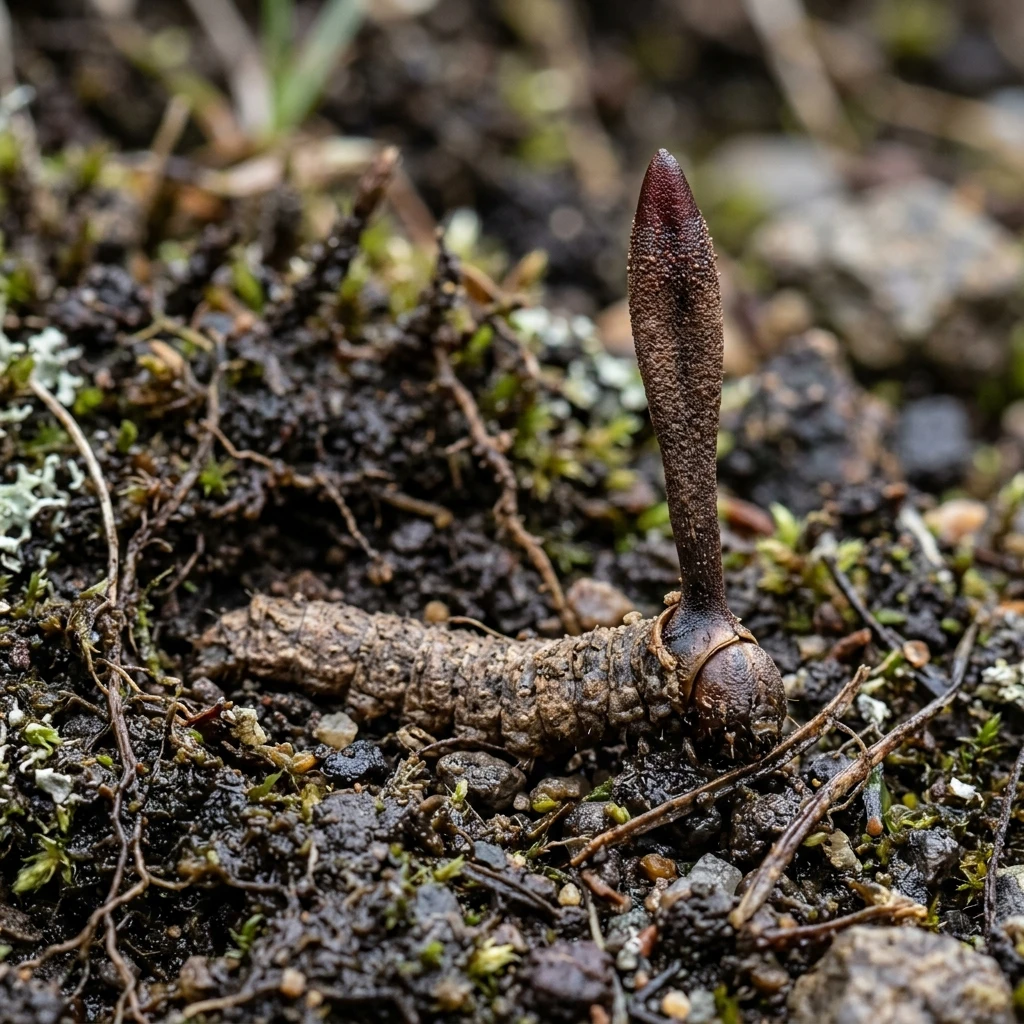
How to Identify Cordyceps
A slender, dark brown club-like shoot growing directly out of the head of a buried, mummified caterpillar host.
-
✔
Mummified Host: The base is a completely intact, golden-brown caterpillar body filled with hard white fungal mycelium.
-
✔
Slender Club Stroma: A single, upright, dark brown-to-black cylindrical shoot (stroma) emerging from the caterpillar's head.
-
✔
Rough Spore Zone: The upper swollen part of the stroma is covered in tiny, bumpy dots where spores are produced.
Complete Scientific Cultivation & Identification
Follow our professional mycological parameters and identification guidelines for safe foraging.
Common Diseases & Wild Contamination
Moisture Rotting
Symptoms: Symptoms: The hard caterpillar base turns soft, black, and grows white mold under damp conditions.
Sellers Adulteration
Symptoms: Symptoms: Unusual heaviness; metal wire or twigs found inside the caterpillar body when broken.
Frequently Asked Questions
Why is Cordyceps called 'Dong Chong Xia Cao'?
The name translates literally to 'Winter Worm, Summer Grass'. Fungal spores infect the caterpillar in winter (acting as a worm), and in summer a blade-like shoot grows out of its head (resembling grass).
What does Cordyceps taste like?
It has a highly unique, slightly sweet, savory, and nutty flavor with a deep earthy finish. Simmered in broths, it contributes a highly pleasant, rich umami depth.
How does Cordyceps boost athletic performance?
Cordyceps stimulates the production of ATP (adenosine triphosphate) in cells, which increases oxygen absorption and utilization, dramatically improving cardiovascular endurance and reducing fatigue.
How should dried Cordyceps be stored?
Store in a tightly sealed glass jar in a cool, dark place. Adding a food-grade silica gel pack helps absorb any residual moisture and prevents mold decay.