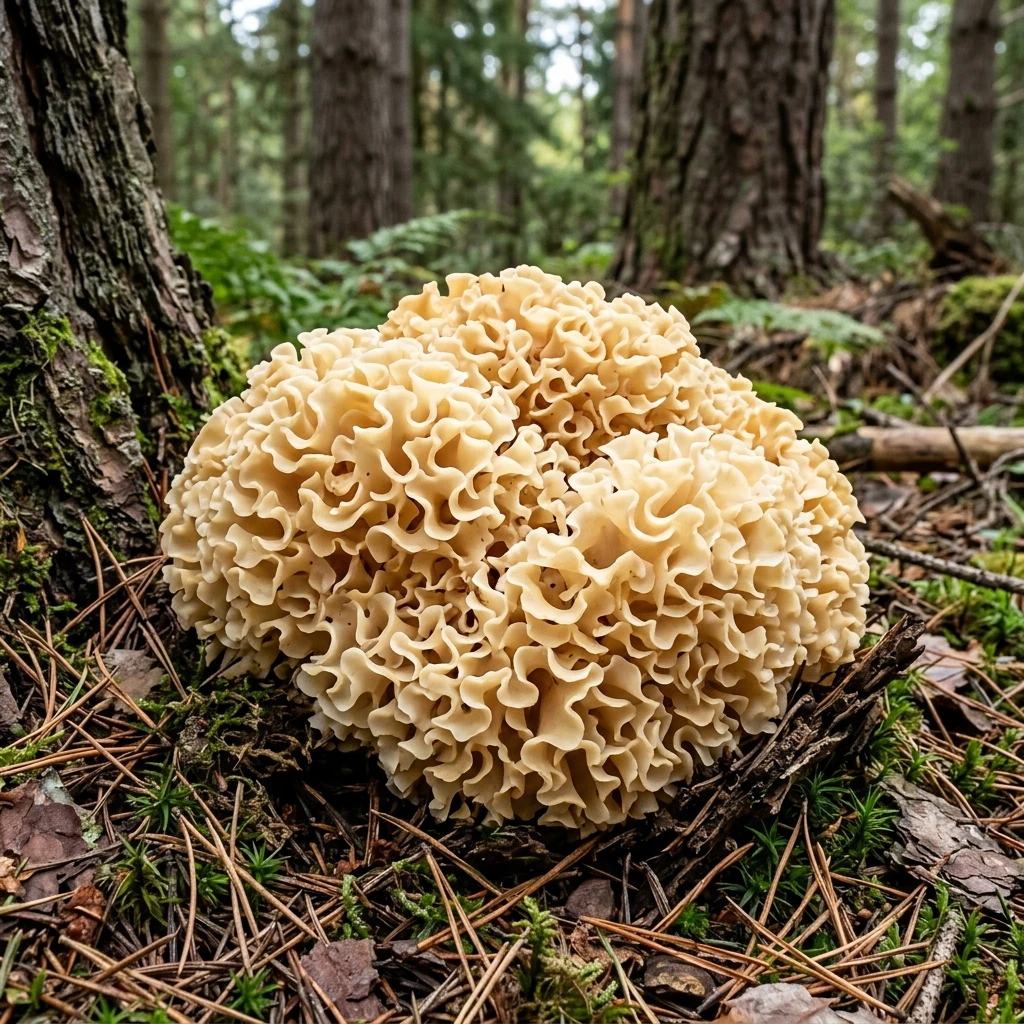
Cauliflower Fungus
Scientific Name: Sparassis crispa
The Cauliflower Fungus, also known as the Wood Cauliflower or Brain Fungus, is a choice, highly prized wild edible mushroom native to temperate coniferous forests across Europe and North America. Growing at the base of pine trees, it is a magnificent sight, appearing as a massive, circular, creamy-yellow ball composed of thousands of tightly folded, wavy leaf-like lobes resembling a giant cauliflower or a natural bath sponge. Highly celebrated by gourmet chefs for its exceptional crispy, crunchy texture and rich nutty flavor.
How to Identify
A massive, round yellowish-white ball made of curly, ribbon-like folded lobes, growing at the base of pine trees.
- Cauliflower Shape: A massive, rounded rosette measuring 15 to 40 cm in diameter, composed of countless curly, wavy, leaf-like lobes.
- Ribbon-like Lobes: Lobes are flat, thin, pliable, cream-to-pale-yellow, with slightly brown or curled margins.
- Thick Central Stalk: All curly lobes sprout from a massive, thick, white root-like central stalk buried in pine roots.
Detailed Mycology Profile & Safety Guide
Click on any dimension to expand detailed field guides, substrate requirements, and safety warnings.
Is your Cauliflower Fungus growing moldy or decaying?
Take a photo with the Plant AI app to instantly diagnose fungal diseases, green mold, or wood decay, and get expert botanical recommendations in 1 second.
Scan Mushroom NowLobes Browning (Aging)
Symptoms: The edges of the wavy lobes turn dark brown, dry, brittle, and develop a bitter smell.
Action: Action: This indicates the mushroom is past its prime. Discard brown, dry rosettes as they become tough and bitter. Only harvest fresh, elastic, creamy-yellow rosettes.
Hidden Dirt & Soil
Symptoms: Dense forest soil, pine needles, and beetles are deeply trapped inside the curly ribbon-like folds.
Action: Action: Submerge the entire mushroom upside down in a basin of warm water with 2 tablespoons of salt for 10 minutes. The salt will safely float out all insects and dirt.
Frequently Asked Questions
What does Cauliflower Fungus taste like?
It has a wonderful, delicate, sweet, and nutty flavor. Its greatest feature is its texture: even after extensive cooking, it remains incredibly crispy, crunchy, and elastic, making it a favorite for soups and stir-fries.
Are there any toxic look-alikes?
No. Its unique shape, resembling a giant bath sponge or cauliflower growing strictly at the base of conifer trees, makes it completely unmistakable and very safe for beginner foragers.
How do you clean all the dirt from the folds?
Because of its curly folds, it traps dirt easily. The best method is to soak the whole mushroom in warm salted water for 10 to 15 minutes. The salt will encourage insects to crawl out and dirt to settle, then rinse thoroughly.
Does it grow on the same tree every year?
Yes. The underground mycelium infects the pine roots and stays alive for years. If you harvest it carefully by cutting it above the rooting base, it will frequently grow back in the exact same spot next autumn.