Bleeding Tooth Fungus
Scientific Name: Hydnellum peckii
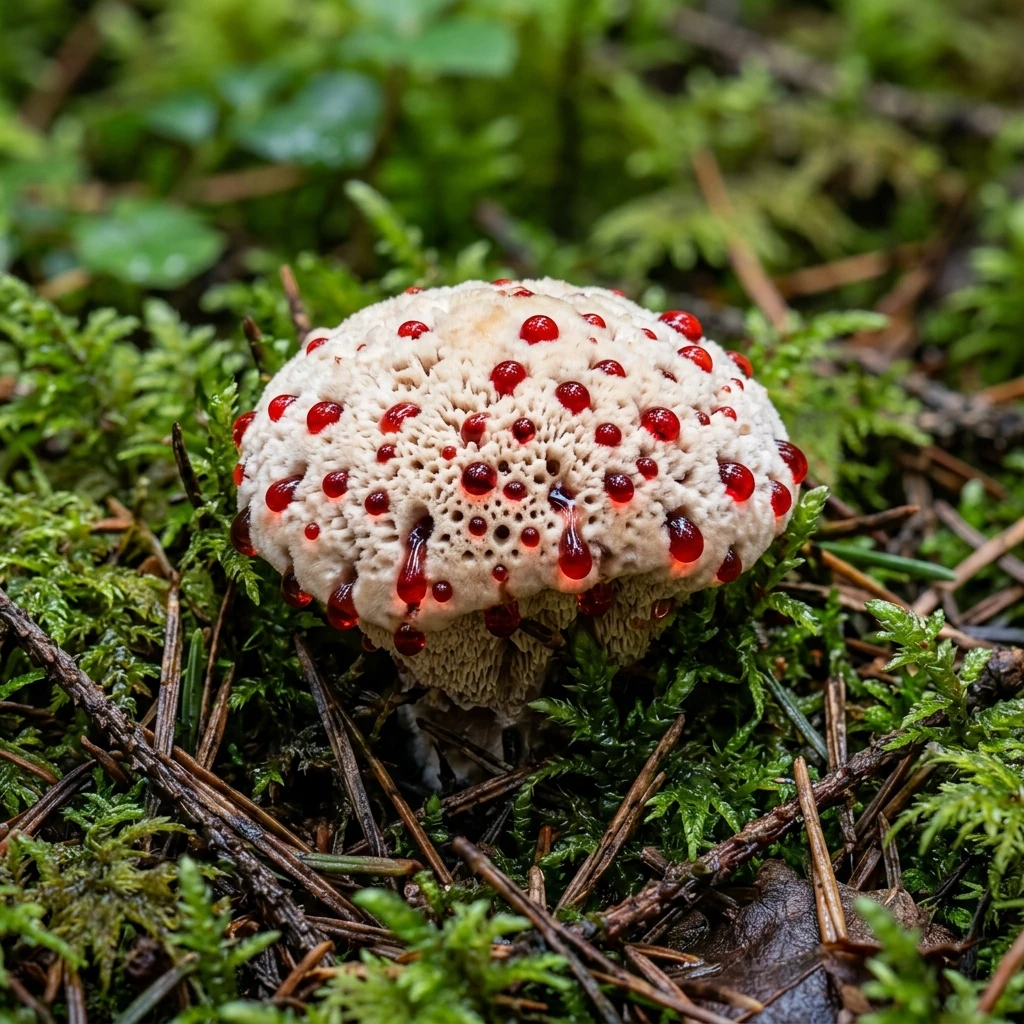
The Bleeding Tooth Fungus, also known as the Devil's Tooth or Strawberries and Cream, is a highly famous, strikingly bizarre, and inedible mycorrhizal wild fungus native to coniferous forests in North America and Europe. Celebrated globally for its astonishing appearance, the young, velvety white cap exudes brilliant, glistening droplets of thick, blood-red sap from its pores, looking exactly like fresh blood. Beneath its cap, it features tiny tooth-like spines instead of gills, representing a legendary subject in mycology.
How to Identify
A velvety white cap covered in large, glistening blood-red droplets, with tiny tooth-like spines underneath.
- Bleeding Red Sap: The young cap is soft, velvety white, covered in large, brilliant, blood-red droplets of thick, sticky sap.
- Tooth-like Spines: The underside features dense, tiny, tooth-like pinkish-brown spines (not gills) that run down the stem.
- Velvety Irregular Cap: The cap is irregular in shape, initially white and velvety like cotton, turning tough, woody, and brown with age.
Detailed Mycology Profile & Safety Guide
Click on any dimension to expand detailed field guides, substrate requirements, and safety warnings.
Is your Bleeding Tooth Fungus growing moldy or decaying?
Take a photo with the Plant AI app to instantly diagnose fungal diseases, green mold, or wood decay, and get expert botanical recommendations in 1 second.
Scan Mushroom NowDroplet Loss & Browning (Aging)
Symptoms: Slicing the mature cap shows a dry, tough, solid brown-to-black woody body with no red droplets left.
Action: Action: This is natural aging. The bleeding guttation only occurs in young, active specimens. As the fungus matures, it turns into a dry, tough, corky brown bracket. Proceed with photography only.
Soggy Mold
Symptoms: The velvety white cap turns gray-green, soggy, and is covered in fine white mold threads.
Action: Action: Discard heavily decayed specimens. Excessively wet autumn weather can cause older bleeding teeth to decay and grow mold. Protect the area from foot traffic.
Frequently Asked Questions
Why does the mushroom 'bleed'?
This process is called guttation. When the soil is very damp, the mushroom's mycelium absorbs water under high pressure. To release this pressure, the mushroom forces excess water out of the pores on its cap, which mixes with red pigments inside to form sticky, blood-red droplets.
Is the red liquid real blood?
No. The red liquid is a sap or latex rich in pigments and atromentin, a natural compound with powerful anticoagulant (blood-thinning) properties similar to heparin.
Is the Bleeding Tooth Fungus poisonous?
It is not known to be chemically poisonous to humans. However, it is considered completely inedible because it is as tough as cork and has an incredibly intense, burning, and acrid bitter taste.
What are the spines underneath the cap?
Instead of traditional gills or pores, this mushroom belongs to the tooth fungi family. It has thousands of tiny, downward-pointing, needle-like spines (teeth) that produce and release the brown spores.