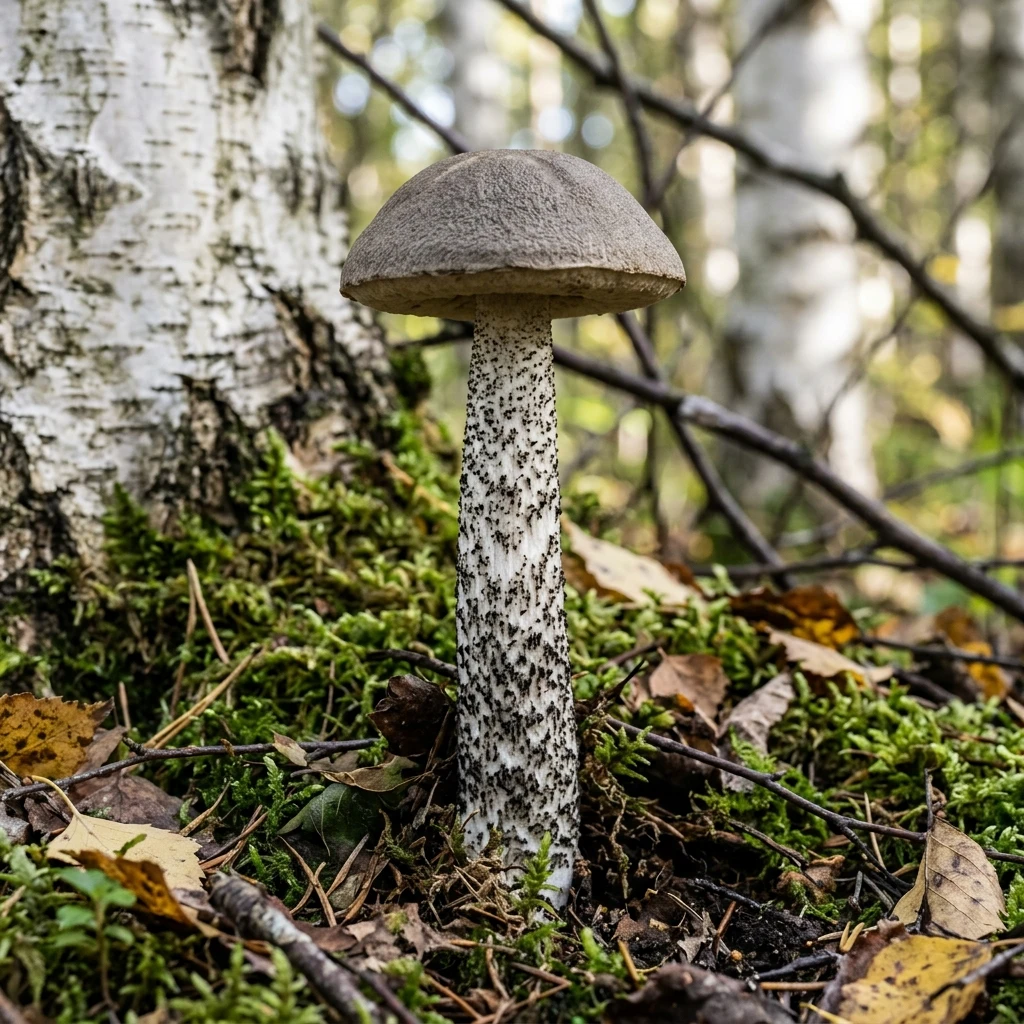
Birch Bolete
Scientific Name: Leccinum scabrum
The Birch Bolete, also known as the Common Scaber Stalk, is a highly common, popular, and choice wild edible mushroom native to temperate forests across Europe, North America, and Asia. It is a strict obligate mycorrhizal partner, growing exclusively in close proximity to Birch trees. Instantly recognizable by its pale-to-dark grey-brown cap, its remarkably long, slender stem covered in a highly dense, prominent, warty pattern of rough black scales (scabers), and its firm white flesh that does not change color significantly when cut, it represents a classic autumn foraging target.
How to Identify
A grey-brown cap on a remarkably long, slender white stem covered in dense, rough black-gray warty scales, growing strictly under birch trees.
- Birch Host Association: Strictly grows on the ground within a few meters of Birch trees (*Betula*), nestled in grass or moss.
- Black Scaber Stalk: A long, slender, tapering stem covered in highly detailed, warty, black-to-dark-gray rough scales (scabers) on a white background.
- Non-bruising White Flesh: The firm white flesh of the cap and stem remains white or turns very slowly pinkish-gray when cut, never blue.
Detailed Mycology Profile & Safety Guide
Click on any dimension to expand detailed field guides, substrate requirements, and safety warnings.
Is your Birch Bolete growing moldy or decaying?
Take a photo with the Plant AI app to instantly diagnose fungal diseases, green mold, or wood decay, and get expert botanical recommendations in 1 second.
Scan Mushroom NowSoggy Softness (Aging)
Symptoms: The grey-brown cap feels extremely soft, mushy, and holds water like a wet sponge.
Action: Action: Past its prime. The mushroom has completed its lifecycle. Do not harvest; leave it to release its spores in the birch needle soil.
Stem Gnat Tunneling
Symptoms: The long, slender stem base is riddled with tiny brown tunnels and feels soft.
Action: Action: Slice off the stem. Fungus gnats love *Leccinum* stems. Sauté only the firm, clean caps which are usually free of tunnels.
Frequently Asked Questions
Why is it called 'Birch Bolete'?
It is named 'Birch Bolete' because it is a strict symbiotic partner of Birch trees. It cannot grow, survive, or fruit without exchanging nutrients with the root systems of living birch trees.
What are the black spots on the stem?
These are called scabers. They are small, warty, rough scales composed of specialized pigmented cells. They are a defining characteristic of the genus *Leccinum*.
Why does the mushroom turn black when cooked?
This is a natural enzymatic reaction. Slicing and heating the flesh causes compounds to oxidize, turning the white cap flesh a dark grey-black in the frying pan. It is purely cosmetic and completely safe.
Is the stem edible?
Technically yes, but the stem is extremely fibrous, stringy, and tough, making it unpleasant to chew and difficult to digest. Most foragers discard the stems and only cook the tender caps.