Spider Plant Care & Identification Guide
Chlorophytum comosum, commonly known as the Spider Plant or Ribbon Plant, is a highly popular, graceful, and completely pet-friendly indoor classic. Native to the humid coastal regions of Southern Africa, it displays dense clumps of long, narrow, arching ribbon-like leaves that produce dangling offsets on long, slender stalks. Famous for its high adaptability and rapid offset production, it is one of the most efficient indoor air-purifying plants, naturally absorbing formaldehyde and xylene.




How to Identify Spider Plant
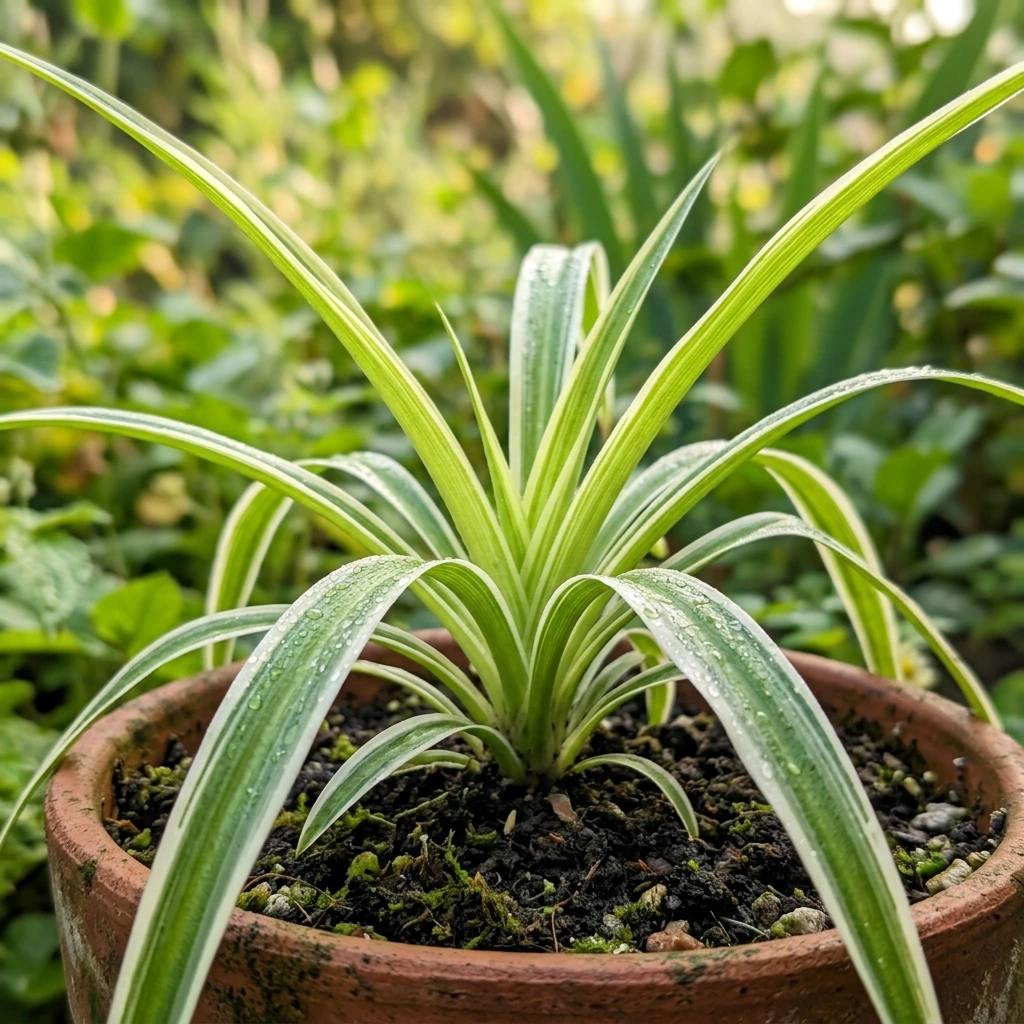
A graceful arching plant with long, narrow, ribbon-like leaves that produce dangling offsets on long, slender stalks.
-
✔
Key Visual Features: Dense clumps of graceful, arching, pale-green fronds with alternating small feather-like leaflets.
-
✔
Color Variations: Solid light green, or variegated with wide white/cream stripes down the center or outer margins.
-
✔
Common Confusions: Sometimes confused with ornamental grasses or Variegated Lilyturf (Liriope), but easily distinguished by its hanging baby plantlets.
Complete Care & Cultivation Guide
Follow our detailed scientific care guide to keep your Spider Plant thriving and gorgeous all year round.
Common Diseases & Treatment
Root Rot (Fungal)
Symptoms: Foliage turns pale and translucent; leaf bases rot and pull away easily from the soggy soil.
Bacterial Leaf Blight
Symptoms: Water-soaked lesions appear on the ribbon leaves, turning dark brown and spreading rapidly.
Frequently Asked Questions
Why are the leaf tips of my Spider Plant turning brown?
Brown tips are usually caused by fluoride or chlorine in tap water, or dry indoor air. Use filtered water or let tap water sit out for 24 hours before watering, and mist the plant occasionally.
How do I propagate the small baby plants (spiderettes)?
Simply snip the mature baby plant from the runner stem once it develops small root nodules, and place it in a glass of water or plant it directly into moist potting soil.
Are Spider Plants safe for cats?
Yes, they are 100% non-toxic to cats. In fact, Spider Plants contain mild hallucinogenic compounds that attract cats, who love to nibble and play with the hanging spiderettes.
How often should I repot my Spider Plant?
Spider Plants have fleshy, tuberous roots that grow very rapidly. Repot every 1 to 2 years, or when the roots start cracking the plastic pot or growing out of the drainage holes.