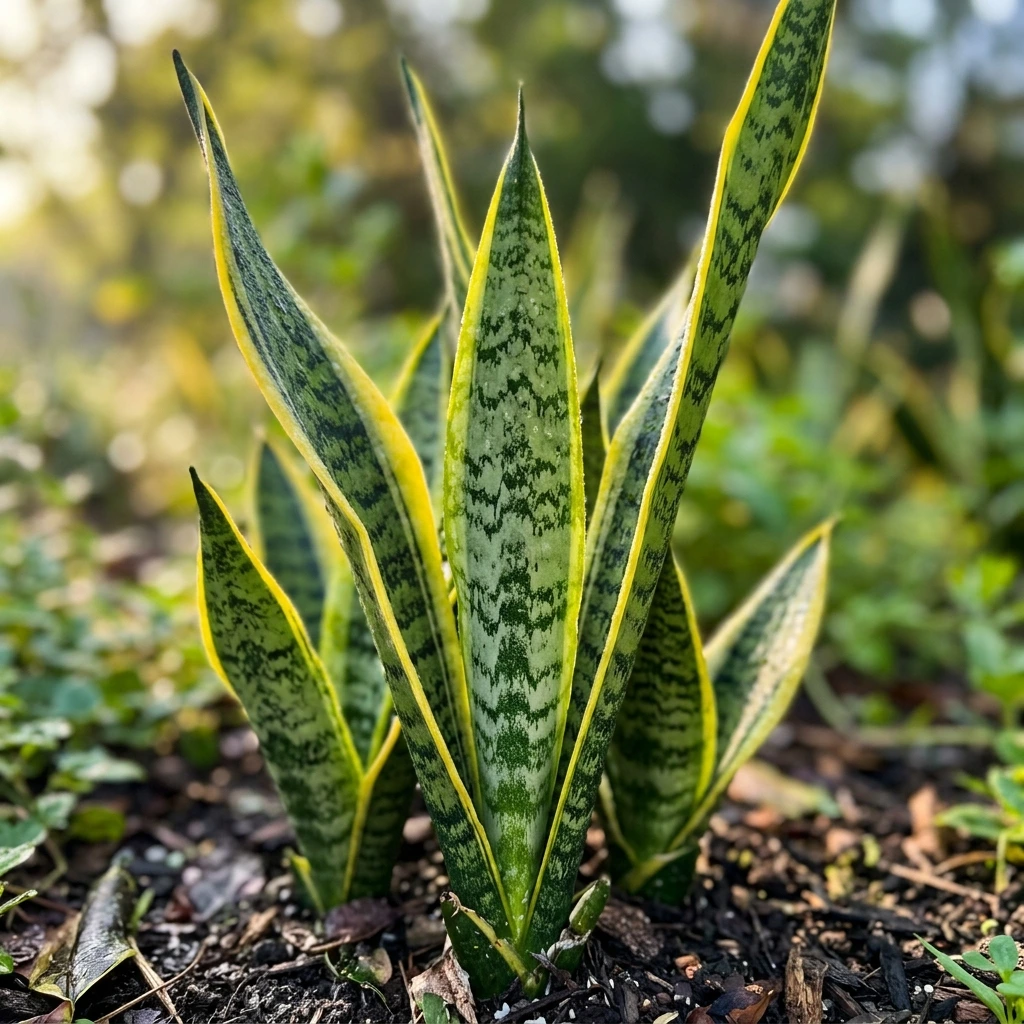
Dracaena trifasciata

Snake Plant Care & Identification Guide

Dracaena trifasciata, universally known as the Snake Plant or Mother-in-Law's Tongue, is the ultimate indestructible indoor classic. Native to the dry, rocky tropical regions of West Africa, this exceptionally hardy architectural succulent features stiff, upright, sword-shaped leaves decorated with dark green horizontal banding and bright cream-yellow margins. A legendary choice for beginners and low-light spaces, it is celebrated for its ability to tolerate extreme neglect while acting as a highly efficient air-purifying plant that produces oxygen at night.


Sunlight Icon
Sunlight Bright Indirect
Watering Icon
Watering Very Low
Soil Mix Icon
Soil Mix Sandy
Temperature Icon
Temperature 15°C - 29°C
Toxicity Warning Icon
Toxicity Toxic to Pets
Botanical macro photography of Snake Plant (Dracaena trifasciata) - Plant AI care database

How to Identify Snake Plant

A hardy structural succulent with stiff, upright, sword-shaped leaves featuring dark green banding and often bright yellow margins.

  • Key Visual Features: Stiff vertical blade-like leaves that grow in a rosette pattern directly from underground rhizomes.
  • Color Variations: Dark green with light grayish-green horizontal cross-banding; some varieties feature creamy yellow outer borders.
  • Common Confusions: Occasionally confused with other Dracaena species or upright Sansevieria varieties, but distinguished by its flat, thick sword-like leaves.
💡 Plant AI Tip: Not sure? Take a photo with Plant AI to identify your houseplants instantly.

Complete Care & Cultivation Guide

Follow our detailed scientific care guide to keep your Snake Plant thriving and gorgeous all year round.

The golden rule of Snake Plant care is to water very sparingly. Water deeply only when the potting soil is 100% dry throughout the container. Typically, this means watering once every 3 to 4 weeks in spring and summer, and reducing to once every 6 to 8 weeks in winter. Always check soil dryness using a wooden dowel. Overwatering is the number one cause of plant death, causing mushy root rot.
Snake Plants require minimal pruning. If a leaf becomes damaged, yellowed, or soft, prune it off cleanly at the base of the plant using sterilized sharp pruning shears. Avoid trimming only the tips of leaves, as cut leaf tips will never grow back and will develop unsightly dry brown scars. Wipe leaves with a damp cloth once a month to remove dust and maintain waxy gloss.
Snake Plants are light feeders that thrive in poor, low-nutrient soils. Feed them only once or twice during the active spring and summer growing season using a balanced cactus and succulent liquid fertilizer diluted to half strength. Do not fertilize during the autumn and winter months when the plant enters its dormant phase.
Snake Plants are incredibly adaptable and can tolerate a wide range of light conditions. They thrive in bright, indirect sunlight, but perform remarkably well in low-light corners where other houseplants would quickly wither. Avoid placing them in intense, direct afternoon sunlight for long periods, which can bleach or scorch the vertical leaves.
Plant Snake Plants in a sandy, highly porous, fast-draining potting soil with a slightly acidic to neutral pH of 5.5 to 7.5. The perfect soil mix consists of 50% coarse sand, pumice, or gravel, 30% organic potting soil, and 20% perlite to ensure rapid water drainage. Avoid peat-rich mixes, which retain far too much moisture.
Propagate Snake Plants easily by dividing the underground rhizomes in spring. Gently slide the plant out of its pot and cut the fleshy rhizomes connecting the clumps using a sterile knife, ensuring each division has healthy roots. Alternatively, propagate via leaf cuttings by inserting 3-inch leaf sections upright into moist cactus soil, though variegated varieties may lose their yellow margins this way.
Snake Plants thrive in standard warm indoor temperatures between 15°C and 29°C (59°F to 84°F). They are highly sensitive to frost and cold drafts. Ensure they are kept in rooms that stay above 10°C (50°F) during the winter, as freezing temperatures will cause the fleshy vertical leaves to turn soft, wrinkled, and watery.
Choose a heavy ceramic or terracotta container with bottom drainage holes to accommodate the plant's strong, expanding underground rhizomes and prevent top-heavy tipping. Snake Plants prefer to be slightly root-bound, so only repot every 2 to 3 years in a container that is 1 inch wider than the current pot.
Snake Plants are highly pest-resistant due to their thick, waxy, fibrous foliage. However, in poorly ventilated indoor areas, they can occasionally attract mealybugs or vine weevils. Dab pests off immediately using a cotton swab dipped in rubbing alcohol, or spray with insecticidal soap.
The absolute deadliest disease is root rot caused by soggy soil. Leaves will turn yellow at the base, become soft, wrinkled, and fall over. Treat immediately by cutting off all mushy leaves, washing away old soggy soil, treating remaining healthy roots with organic fungicide, and repotting in dry sandy soil.
Snake Plants are excellent additions to bedrooms because they perform Crassulacean Acid Metabolism (CAM), meaning they absorb carbon dioxide and release fresh oxygen during the night, unlike most plants which release CO2 at night. Keep them in a clean terracotta pot next to your bed to enjoy pure air and an indestructible touch of natural green.

Is your Snake Plant leaves turning yellow, dry or brown?

Keep your indoor garden vibrant. Take a photo with Plant AI to diagnose pests and leaf spot diseases instantly.

Diagnose My Plant

Common Diseases & Treatment

Root Rot (Overwatering)

Symptoms: Leaves turn mushy at the base, fall over, and emit a foul rot smell; root system turns brown and mushy.

Action: Drastically reduce watering. Remove the rotted leaves and repot the remaining healthy roots into dry cactus soil.

Red Leaf Spot

Symptoms: Small reddish-brown spots appear on the vertical leaves, which can swell and spread in humid conditions.

Action: Keep the foliage dry and apply a broad-spectrum copper fungicide spray. Improve air circulation.

Frequently Asked Questions

How often should I water my Snake Plant?

Water every 2 to 4 weeks, depending on light and temperature. Always ensure the soil is completely bone-dry throughout the pot before watering again. When in doubt, leave it dry!

Why is my Snake Plant drooping or falling over?

This is usually caused by overwatering, which leads to root rot at the base. Healthy leaves can also fall over if the plant is severely root-bound or kept in extremely low light for too long.

Does the Snake Plant purify indoor air?

Yes. Studies show that Snake Plants effectively filter toxins like benzene, formaldehyde, and xylene from indoor air, and they continue to release oxygen during the night.

Can I propagate a Snake Plant from leaf cuttings?

Yes. Cut a healthy leaf into 3-4 inch sections and insert them upright into moist, sandy soil. Note that variegated cultivars may lose their yellow margins when propagated this way.

No more dying plants. Grow healthy greens today!

Get Started for Free