Sago Palm Care & Identification Guide
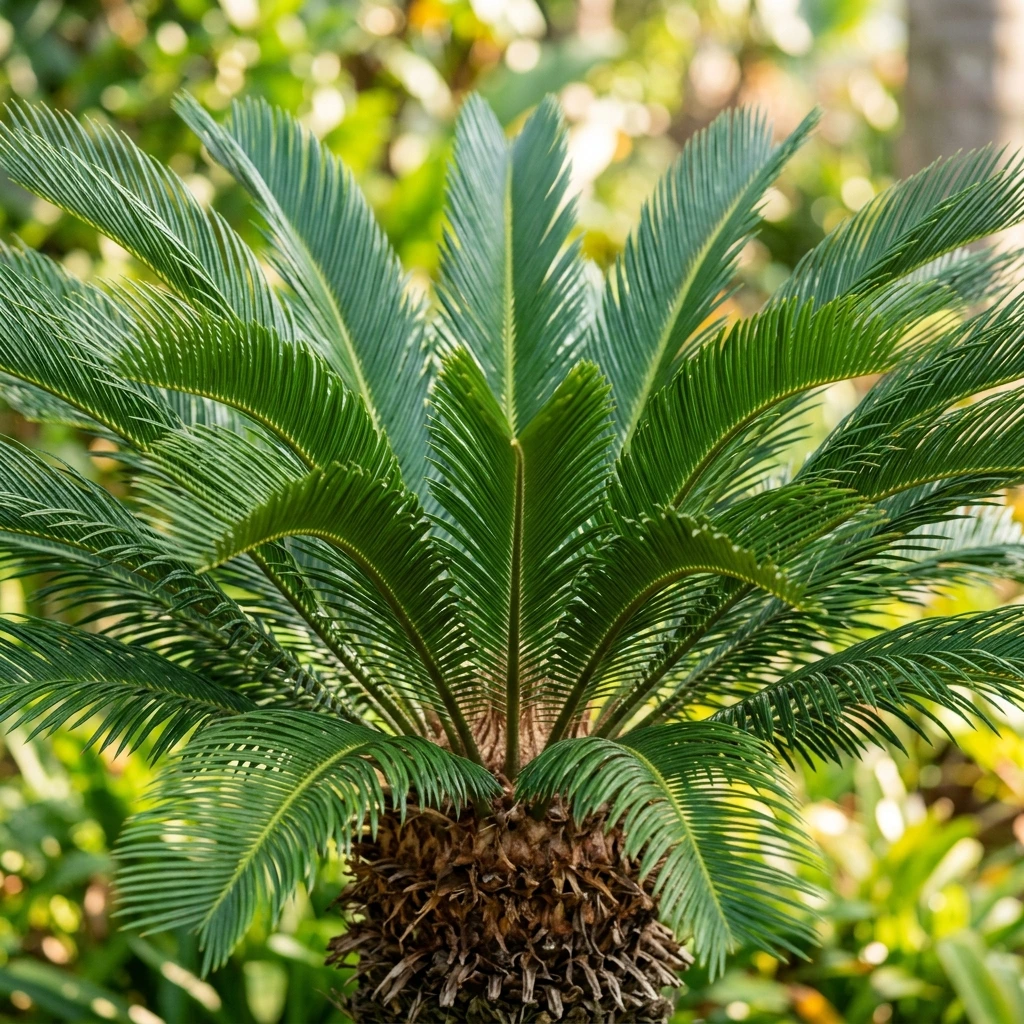
Despite its common name, the Sago Palm is not a true palm but a cycad—a living fossil that has existed since the prehistoric era of the dinosaurs, native to southern Japan. It features a rugged, woody, pineapple-like trunk topped with a crown of stiff, feather-like, deep-green fronds. Extremely slow-growing (only producing one flush of leaves per year), it is incredibly hardy and has high bonsai aesthetic appeal. It is widely celebrated by botanists for its distinct environmental adaptability and structural appeal.




How to Identify Sago Palm
A rugged, prehistoric cycad with a thick, woody, textured trunk and a crown of rigid, glossy, dark-green needle-like fronds.
-
✔
Key Visual Features: Thick, scaly trunk; stiff pinnate leaves with sharply pointed, narrow leaflets that curl slightly downward at the margins.
-
✔
Color Variations: Glossy, dark forest-green mature fronds; bright chartreuse new leaf flushes; dark brown fibrous trunk.
-
✔
Common Confusions: Often confused with true ferns or palms, but Sago Palm has rigid, sharp, plastic-like leaflets and a thick woody trunk unlike any palm.
Complete Care & Cultivation Guide
Follow our detailed scientific care guide to keep your Sago Palm thriving and gorgeous all year round.
Common Diseases & Treatment
Cycad Aulacaspis Scale
Symptoms: White, snowy crust covers the undersides of the leaves and trunk; leaves turn yellow and die.
Phytophthora Root Rot
Symptoms: Center crown becomes soft, mushy, or turns yellow/brown; leaves wilt and pull out easily.
Frequently Asked Questions
Why are the leaves of my Sago Palm turning bright yellow?
Sago Palm leaves turn yellow due to overwatering, nitrogen or potassium deficiency, or scale insects. Ensure you are letting the soil dry completely. If the soil is fine, feed with a slow-release cycad/palm fertilizer high in manganese and nitrogen.
How fast do Sago Palms grow?
Extremely slowly! Indoors, a Sago Palm may only produce one new set of leaves (a flush) per year, and its woody trunk increases in height by just 1 inch annually. Patience is key.
How toxic is the Sago Palm to pets?
It is extremely toxic. All parts of Cycas revoluta contain cycasin, which causes acute liver failure, internal bleeding, and death. The seeds (nuts) contain the highest concentration of the toxin. Keep this plant completely out of homes with dogs, cats, or small children.
What is a leaf 'flush' and how do I care for it?
A flush is when a Sago Palm produces a new ring of leaves all at once. The new leaves are soft and light green. Keep the plant in strong, uniform light during a flush; otherwise, the leaves will stretch unevenly toward the light and become permanently deformed.