Prayer Plant Care & Identification Guide
The Prayer Plant is a spectacular indoor treasure famous for its flat, oval leaves featuring a stunning herringbone pattern of bright red veins and lime-green borders. Named for its unique sleeping movement (nyctinasty), its leaves fold upward at night like hands in prayer. Native to Brazilian rainforests. It is widely celebrated by botanists for its distinct environmental adaptability and structural appeal.





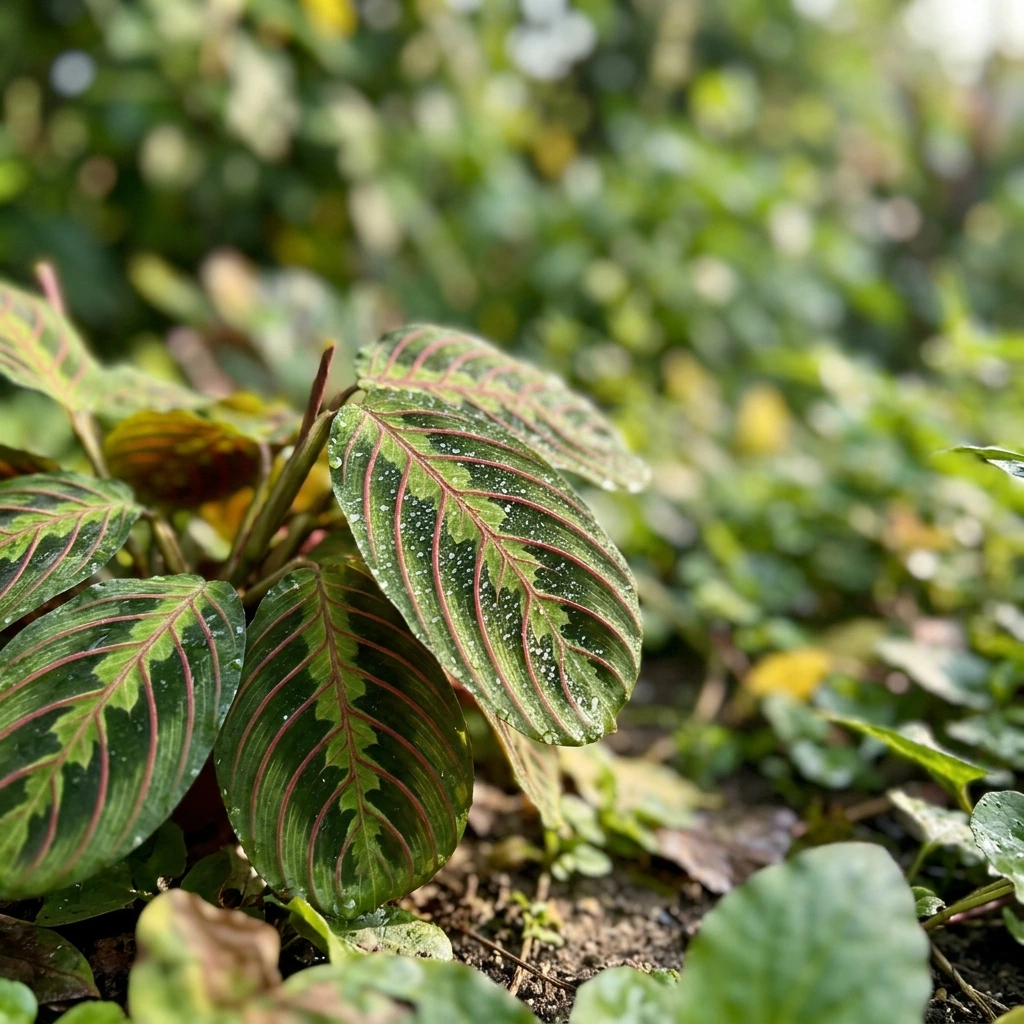
How to Identify Prayer Plant
A low-growing plant with flat, velvety, oval leaves decorated with dramatic red veins and a light-green central band.
-
✔
Key Visual Features: Elliptical leaves with a dark green background, neon-red herringbone veins, a lime-green central splash, and a deep purple underside.
-
✔
Color Variations: Deep green, bright neon-red, lime-green, and rich maroon-purple underneath.
-
✔
Common Confusions: Sometimes confused with Calathea species, but Maranta leuconeura grows closer to the ground and features a distinctive vine-like branching habit.
Complete Care & Cultivation Guide
Follow our detailed scientific care guide to keep your Prayer Plant thriving and gorgeous all year round.
Common Diseases & Treatment
Tap Water Fluoride Toxicity
Symptoms: Leaf margins and tips turn yellow-brown, shrivel, and dry out rapidly despite moist soil.
Fungal Leaf Spot (Helminthosporium)
Symptoms: Small, water-soaked spots appear on the leaves, turning into dark brown circular patches.
Frequently Asked Questions
Why do my Prayer Plant leaves fold up at night?
This is a natural biological behavior called nyctinasty (sleeping movement). The plant folds its leaves up at night to conserve moisture and lowers them during the day to capture light.
Why are the tips of my Prayer Plant leaves turning brown?
This is usually caused by low humidity (below 50%) or chlorine/fluoride in tap water. Use distilled or rainwater, and place a humidifier near the plant.
How do I propagate my Prayer Plant?
Propagate by taking stem cuttings in spring. Cut a stem just below a node, place the cutting in moist peaty soil or water, and keep it warm under filtered light.
Is the Prayer Plant safe for cats and dogs?
Yes! Maranta leuconeura is 100% non-toxic and completely safe for cats, dogs, and children. It is the perfect choice for pet-owners.