Polka Dot Plant Care & Identification Guide
The Polka Dot Plant is a highly vibrant, dwarf herbaceous plant native to Madagascar. Loved for its exceptionally colorful, splashy foliage, it features small, delicate green leaves that are heavily mottled and painted with vivid pink, rose, red, or white dots and blotches. It is a highly popular accent plant that adds an instant pop of color to terrariums and indoor windowsill gardens. It is widely celebrated by botanists for its distinct environmental adaptability and structural appeal.




How to Identify Polka Dot Plant
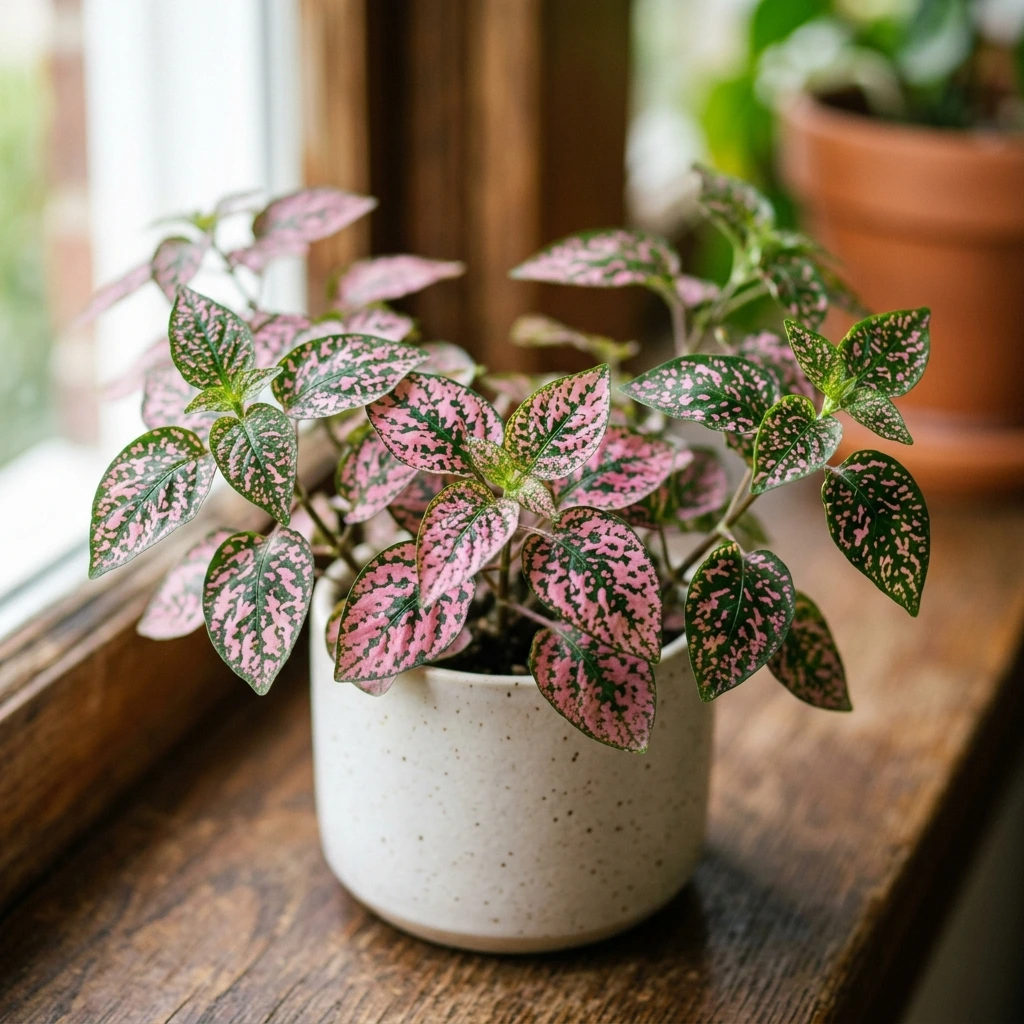
A small, colorful bushy plant with delicate green leaves densely painted and splashed with vivid pink dots.
-
✔
Key Visual Features: Herbaceous, dwarf growth habit; thin, delicate ovate leaves heavily splashed and speckled with contrasting colors.
-
✔
Color Variations: Dark green base leaves densely speckled with hot pink, rose-red, lavender, or creamy-white spots.
-
✔
Common Confusions: Sometimes confused with Fittonia (Nerve Plant), but Polka Dot Plant has random splashed dot patterns rather than a neat, structured mosaic net of veins, and its leaves are much thinner.
Complete Care & Cultivation Guide
Follow our detailed scientific care guide to keep your Polka Dot Plant thriving and gorgeous all year round.
Common Diseases & Treatment
Leggy Stretching (Etiolation)
Symptoms: Stems grow extremely long, thin, and floppy; leaves become sparse and lose their bright pink color.
Powdery Mildew
Symptoms: A dusty, white powdery coating develops on the colorful leaf surfaces, causing curling and drop.
Frequently Asked Questions
Why is my Polka Dot Plant losing its bright pink spots and turning solid green?
This is a direct reaction to insufficient light. To maintain the bright, vivid pink variegation, the plant needs bright, indirect sunlight. If kept in a dark corner, it produces more chlorophyll to capture light, causing the pink spots to fade into solid green. Move it to a brighter windowsill!
How do I keep my Polka Dot Plant bushy and prevent it from getting leggy?
The secret to a bushy Polka Dot Plant is regular pinching! Use your fingers or scissors to pinch off the top two leaves of each growing stem once a month during spring and summer. This forces the plant to branch out horizontally instead of growing tall and floppy.
Why is my Polka Dot Plant completely wilted and lying flat on its side?
Just like the Zebra Plant, the Polka Dot Plant is a 'fainting plant' when dry. If you miss a watering, it will wilt dramatically. Do not panic—water it thoroughly immediately, and it will pump water back into its leaves and stand upright within an hour.
Is the Polka Dot Plant safe for cats?
Yes, the Polka Dot Plant is entirely non-toxic to cats and dogs. It is a highly safe, colorful houseplant that adds high aesthetic value without any chemical risks to your household animals.