Peperomia Caperata 'Schumi Red' Care & Identification Guide
Peperomia caperata 'Schumi Red', famously known as the Emerald Ripple Peperomia 'Schumi Red', is a highly compact, breathtaking tropical houseplant native to Brazil. It is coveted for its dense mound of deeply crinkled, corrugated, heart-shaped leaves in a striking, deep metallic reddish-purple to near-black color. The unique textured leaf surface catches light beautifully. In summer, it produces strange, slender, upright tail-like flower spikes (spadixes) that rise elegantly above the dark red canopy. It is widely celebrated by botanists for its distinct environmental adaptability and structural appeal.





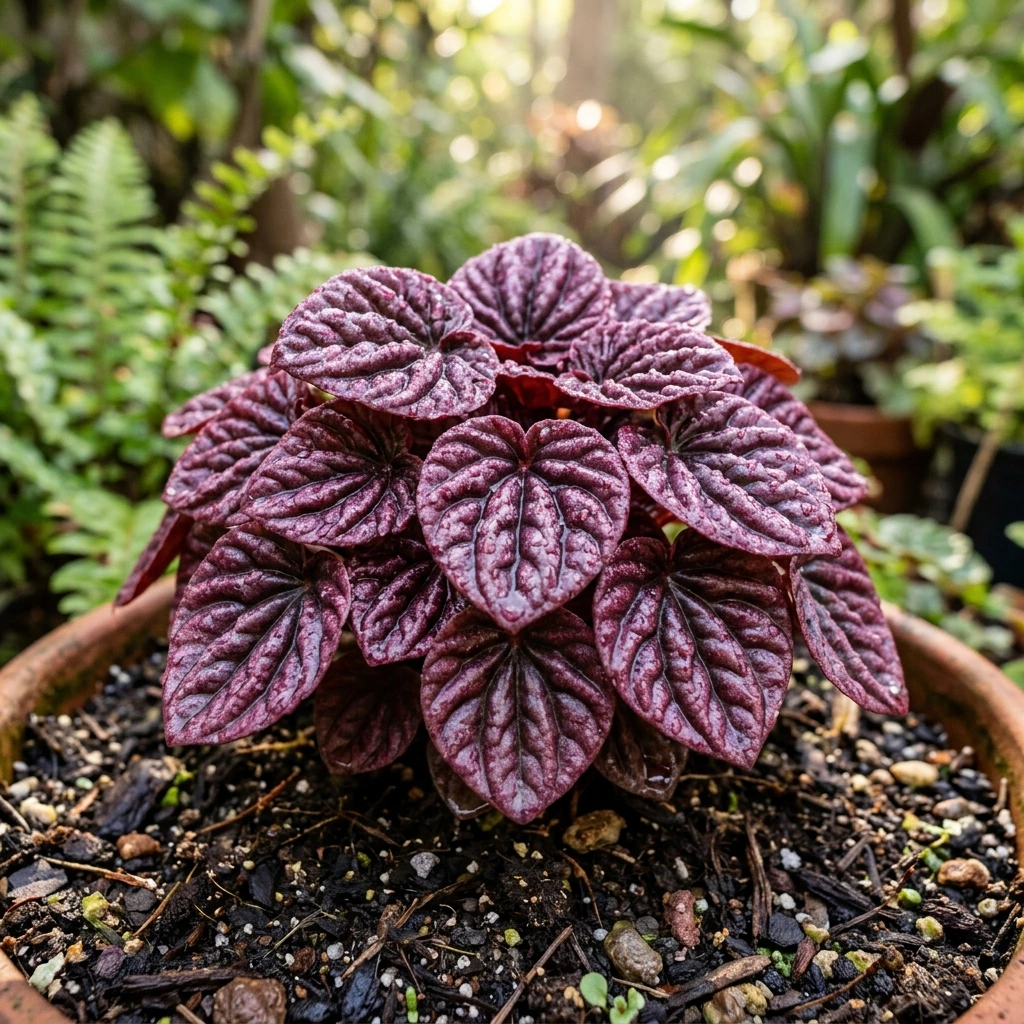
How to Identify Peperomia Caperata 'Schumi Red'
A highly compact tropical foliage plant forming a tight dome of deeply crinkled, heart-shaped leaves in a metallic dark reddish-purple hue.
-
✔
Key Visual Features: Deeply puckered or corrugated (bullate) heart-shaped leaves; compact mounding habit; reddish, slender leaf stems (petioles); slender, upright tail-like flower spikes.
-
✔
Color Variations: Intense metallic dark-red, deep purple, or burgundy upper leaf surfaces; lighter reddish-maroon undersides.
-
✔
Common Confusions: Often confused with other Peperomia caperata cultivars like 'Red Luna' or 'Rosso', but 'Schumi Red' has a significantly more compact shape, broader heart-shaped leaves, and a uniform deep burgundy-red coloration on both the top and bottom of the leaves, unlike the green-topped 'Rosso'.
Complete Care & Cultivation Guide
Follow our detailed scientific care guide to keep your Peperomia Caperata 'Schumi Red' thriving and gorgeous all year round.
Common Diseases & Treatment
Stem Rot (Overwatering)
Symptoms: Stems turn black and mushy at the soil line, causing the leaves to collapse.
Fungal Leaf Spot
Symptoms: Brownish-black sunken patches appear on the deeply rippled leaves, especially in high humidity and low ventilation.
Frequently Asked Questions
Why is my Peperomia 'Schumi Red' losing its dark red color?
A lack of bright, indirect light causes the leaves to fade to a dull greenish-bronze. Move the plant closer to an east or north-facing window to restore its vibrant dark red metallic hue.
How often should I water my Schumi Red Peperomia?
Water only when the top 50-75% of the soil feels dry. Peperomias act like semi-succulents, storing water in their thick leaves and stems; overwatering is their biggest killer.
What are the weird tail-like things growing on my Peperomia?
Those are its unique flowers, called spadixes! While not traditional blossoms, these slender, unscented spikes are a sign of a healthy, mature plant.
Is the Peperomia 'Schumi Red' safe for pets?
Yes! Peperomia caperata is completely non-toxic and pet-friendly, making it 100% safe for cats and dogs.