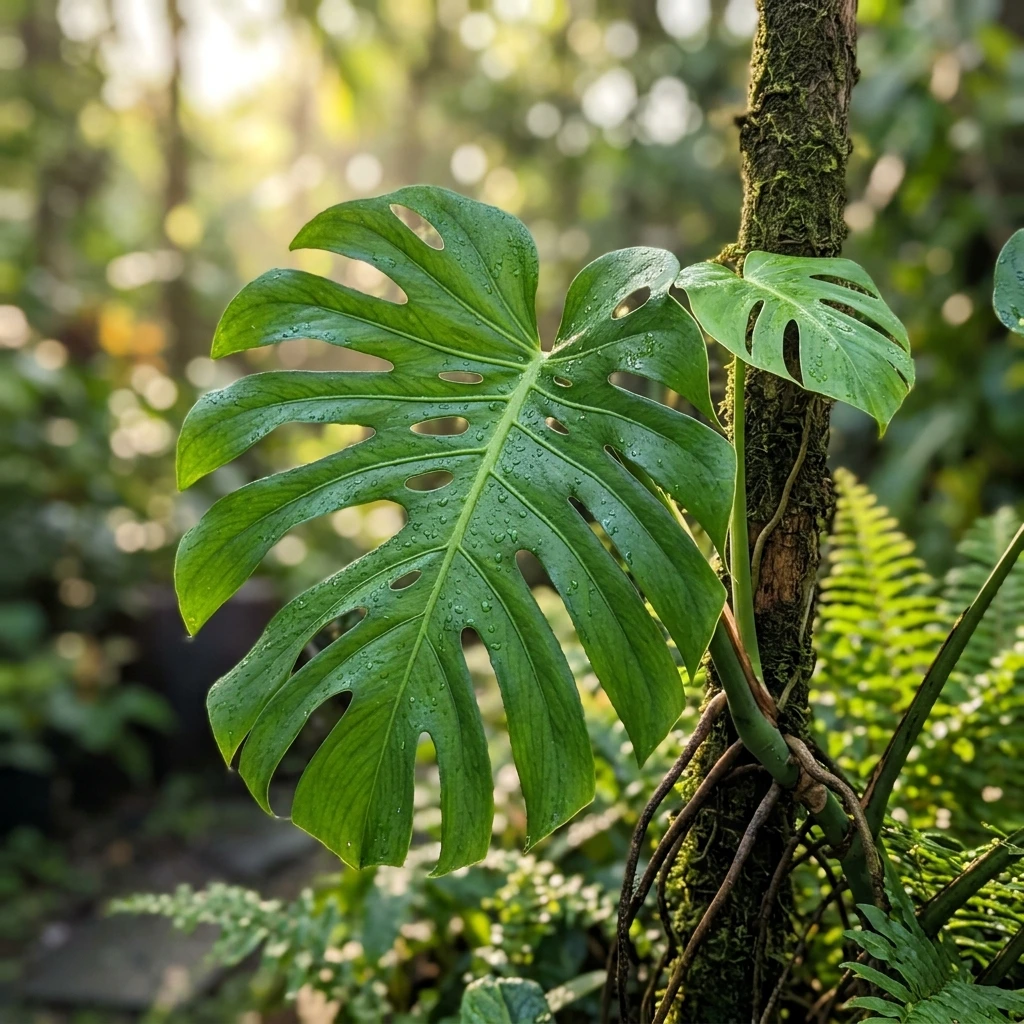
Monstera deliciosa

Monstera Care & Identification Guide

Monstera deliciosa, popularly known as the Swiss Cheese Plant, is the undisputed king of modern interior foliage design. Originally native to the dense, warm rainforests of southern Mexico and Central America, this spectacular climbing evergreen vine is world-famous for its massive, glossy green, heart-shaped leaves that develop dramatic, architectural splits and holes (fenestrations) as the plant matures. Utilizing thick, robust aerial roots to climb upward in search of sunlight canopy, it brings a rich, tropical drama and structural grandeur into modern indoor spaces while acting as a highly efficient natural air filter.


Sunlight Icon
Sunlight Bright Indirect
Watering Icon
Watering Moderate
Soil Mix Icon
Soil Mix Peaty
Temperature Icon
Temperature 18°C - 30°C
Toxicity Warning Icon
Toxicity Highly Toxic
Botanical macro photography of Monstera (Monstera deliciosa) - Plant AI care database

How to Identify Monstera

Monstera deliciosa is characterized by its large, glossy, heart-shaped green leaves that develop dramatic splits and holes (fenestrations) as the plant matures.

  • Key Visual Features: Heart-shaped juvenile leaves progressing to deeply fenestrated mature leaves, growing on thick green climbing vines.
  • Color Variations: Deep rich green; variegated cultivars (like 'Albo' or 'Thai Constellation') exhibit striking white or cream patches.
  • Common Confusions: Often confused with Monstera adansonii (which has smaller leaves with closed holes) or Philodendron bipinnatifidum (which has deeply lobed but unsplit leaves).
💡 Plant AI Tip: Not sure? Take a photo with Plant AI to identify your houseplants instantly.

Complete Care & Cultivation Guide

Follow our detailed scientific care guide to keep your Monstera thriving and gorgeous all year round.

Monstera deliciosa prefers a moderate watering routine. Water thoroughly until water drains out of the bottom holes only when the top 2 to 3 inches of the potting mix feels completely dry. Typically, this translates to watering once every 7 to 10 days in spring and summer, and reducing to once every 14 to 20 days in winter. Never allow the pot to sit in standing water, as lack of root oxygen rapidly causes Pythium root rot. If leaves develop yellow margins and droop, check for soil sogginess.
Prune your Monstera in spring or early summer during its active growth phase to control its size or shape. Use sharp bypass pruning shears sterilized with rubbing alcohol. Make clean cuts just below an aerial node where a leaf meets the main stem; this stimulates branching. Trim off any old, naturally yellowing lower leaves at the stem base. Do not cut off healthy aerial roots; instead, gently tuck them back into the pot soil or train them onto a moss pole for support.
Feed your Monstera monthly during spring and summer to support its rapid leaf expansion. Use a balanced 20-20-20 liquid organic fertilizer or a high-nitrogen foliage fertilizer diluted to half strength. Flush the potting soil thoroughly with plain lukewarm water once a month to wash away any built-up mineral salts that can burn leaf tips. Do not apply fertilizer during the winter dormant phase.
Monsteras thrive in bright, consistent, indirect sunlight. They require at least 6 hours of bright light daily. Placing them near an east-facing or west-facing window is ideal. Avoid harsh, direct afternoon sunlight, which easily burns the foliage, causing bleached or dark brown scorched spots. If kept in low light, the plant will grow leggy and stop producing its signature leaf splits and fenestrations.
Plant Monsteras in a highly porous, chunky, peat-rich, well-aerating soil mix with an acidic to neutral pH of 5.5 to 7.0. A perfect soil recipe consists of 40% organic peat moss or coco coir, 30% chunky orchid bark for aeration, 20% coarse perlite to facilitate rapid drainage, and 10% worm castings for natural slow-release nutrients. Avoid heavy, dense garden soil, which traps moisture.
Propagate Monsteras easily using stem cuttings in spring. Select a healthy vine section that has at least one node, one active aerial root, and one leaf. Cut cleanly 1/2 inch below the node. Place the cutting in a jar of clean room-temperature water or plant it directly in a moist mix of half peat moss and half perlite. Roots will emerge in 3 to 4 weeks. If propagating in water, change the water weekly.
Monsteras thrive in warm tropical indoor temperatures between 18°C and 30°C (64°F to 86°F). They are highly sensitive to sudden cold drops. Keep them away from drafty windows, air conditioning vents, and heaters. Ensure winter temperatures never drop below 12°C (54°F), as cold air will stunt growth and cause dark black spots to form on the leaves.
Choose a large container that is 2 to 3 inches wider than the current root ball. The pot must have multiple large bottom drainage holes. Terracotta or heavy ceramic pots are recommended to prevent the top-heavy climbing plant from tipping over. Insert a sturdy moss pole or cedar trellis into the center of the pot at planting time to provide the aerial roots with climbing support. Repot every 1 to 2 years.
Monsteras can occasionally attract indoor pests. Inspect leaves regularly for small, cottony mealybugs hiding in leaf joints, spider mites spinning fine webs under dusty leaves, and flat scale insects on stems. Treat infestations immediately by wiping both sides of the leaves with organic neem oil solution or insecticidal soap once every 7 days for 3 to 4 weeks.
The deadliest disease is root rot caused by overwatering. It causes leaves to turn yellow, stems to turn mushy at the base, and roots to turn black and slimy. Fungal leaf spot can also cause brown circles with yellow halos. Treat leaf spots by improving air circulation and spraying with organic copper fungicide. Treat root rot by repotting in dry soil after cutting away decayed roots.
The secret to massive, deeply split Monstera leaves is keeping the foliage dust-free. Large leaves easily collect dust, which blocks sunlight and stunts growth. Once a month, gently wipe both sides of each leaf with a soft, damp microfiber cloth. This also acts as an excellent preventative check for pests and keeps your Monstera looking exceptionally glossy and vibrant.

Is your Monstera leaves turning yellow, dry or brown?

Keep your indoor garden vibrant. Take a photo with Plant AI to diagnose pests and leaf spot diseases instantly.

Diagnose My Plant

Common Diseases & Treatment

Root Rot (Pythium)

Symptoms: Leaves turn soft, yellow, and droop; potting mix emits a musty odor and roots turn black and mushy.

Action: Repot immediately in fresh, fast-draining soil. Cut off any decayed roots and stems with sterilized shears.

Leaf Spot (Fungal)

Symptoms: Brown spots surrounded by yellow halos spread across leaf surfaces, especially in high humidity.

Action: Improve ventilation, avoid wetting the leaves directly, and treat the foliage with organic copper fungicide spray.

Frequently Asked Questions

Why are my Monstera leaves not splitting?

The most common reason is inadequate light. Move your Monstera to a brighter spot with plenty of indirect sunlight. Immature plants also do not split; fenestrations develop as the plant matures.

Should I cut off the Monstera's aerial roots?

Do not cut them off, as they help support the climbing plant and absorb moisture. Instead, tuck them back into the pot's soil or train them onto a moss pole for stability.

How do I clean my Monstera leaves?

Wipe both sides of the large leaves gently with a damp microfiber cloth once a month. This removes dust, improves photosynthesis, and deters pests like spider mites.

How often should I fertilize my Monstera?

Feed it monthly during the active spring and summer growing season with a balanced liquid organic houseplant fertilizer diluted to half strength. Do not fertilize in winter.

No more dying plants. Grow healthy greens today!

Get Started for Free