English Ivy Care & Identification Guide
English Ivy is a classic, hardy evergreen climbing vine famous for its lush, lobed leaves. Excellent for hanging baskets or climbing up walls, it brings a rich, historic charm. However, care should be taken to control its rapid growth and protect curious pets. It is widely celebrated by botanists for its distinct environmental adaptability and structural appeal.





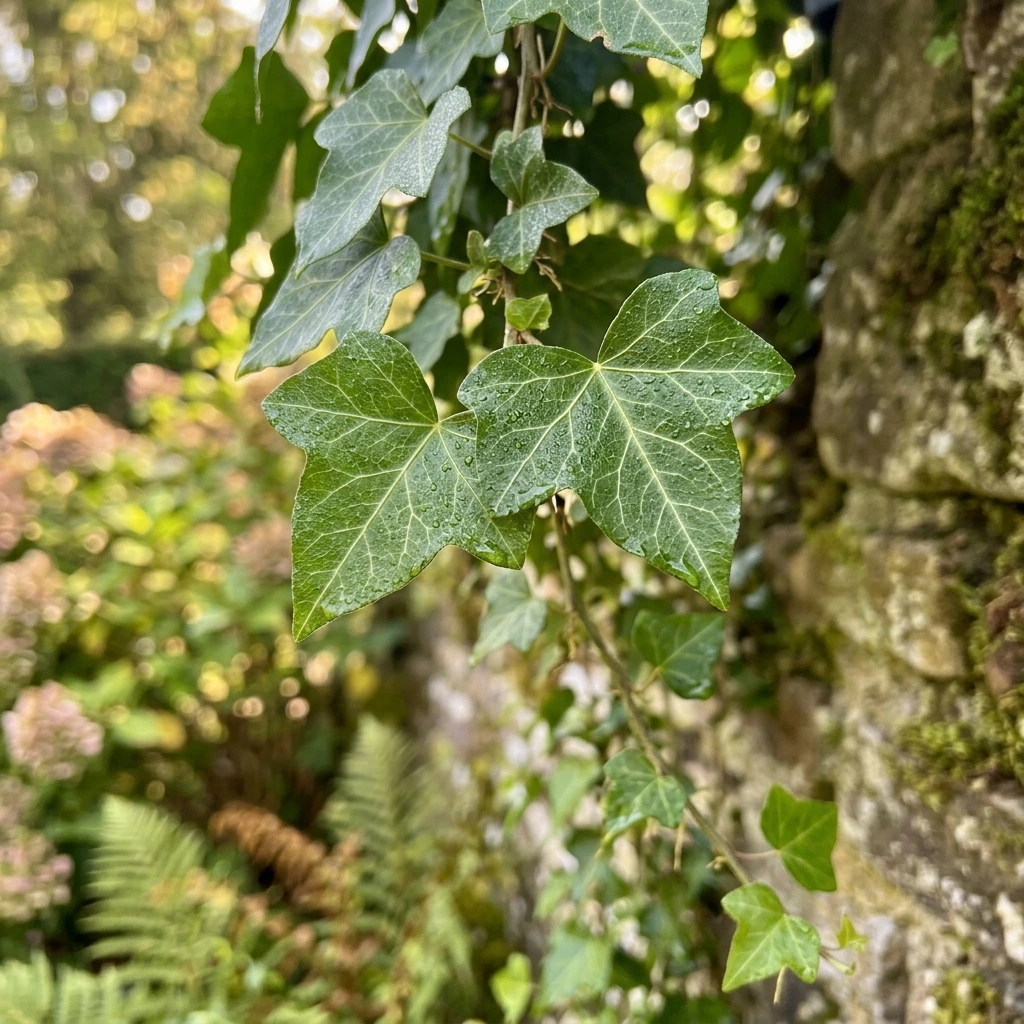
How to Identify English Ivy
Hedera helix is characterized by its woody trailing or climbing stems, carrying leathery, lobed leaves that form a dense, glossy green curtain.
-
✔
Key Visual Features: Three-to-five-lobed glossy leaves alternate along tough, flexible green or woody climbing vines.
-
✔
Color Variations: Rich forest green; variegated cultivars exhibit striking white, cream, or golden-yellow margins.
-
✔
Common Confusions: Occasionally confused with Algerian Ivy (which has much larger leaves) or Swedish Ivy (which has rounder, scalloped leaves and lacks climbing aerial roots).
Complete Care & Cultivation Guide
Follow our detailed scientific care guide to keep your English Ivy thriving and gorgeous all year round.
Common Diseases & Treatment
Root Rot (Fungal)
Symptoms: Leaves turn yellow, brown, and drop off; roots turn mushy and black while potting mix stays waterlogged.
Red Spider Mites
Symptoms: Fine webs appear on leaf undersides; leaves develop dusty yellow speckles and turn dry.
Frequently Asked Questions
Why is my English Ivy losing its green-and-white variegation?
Variegation requires bright, indirect light. In low-light environments, the plant produces more chlorophyll to absorb energy, causing variegated spots to fade back to solid green.
Will English Ivy damage my home's interior walls if it climbs?
Yes. Its climbing aerial roots produce a strong adhesive substance that can damage drywall, wood, and paint when removed. It is safer to grow it on an indoor trellis or in hanging baskets.
How do I control the rampant growth of my English Ivy?
Regular pruning in spring and summer is key. Simply snip the trailing stems back to your desired length. You can water-propagate these cuttings easily to start new plants.
Why are my English Ivy leaves drying out despite regular watering?
This is often caused by low humidity, especially during dry winter months. Mist the foliage weekly or place the pot on a tray of wet pebbles to boost moisture.