Cobra Lily Care & Identification Guide
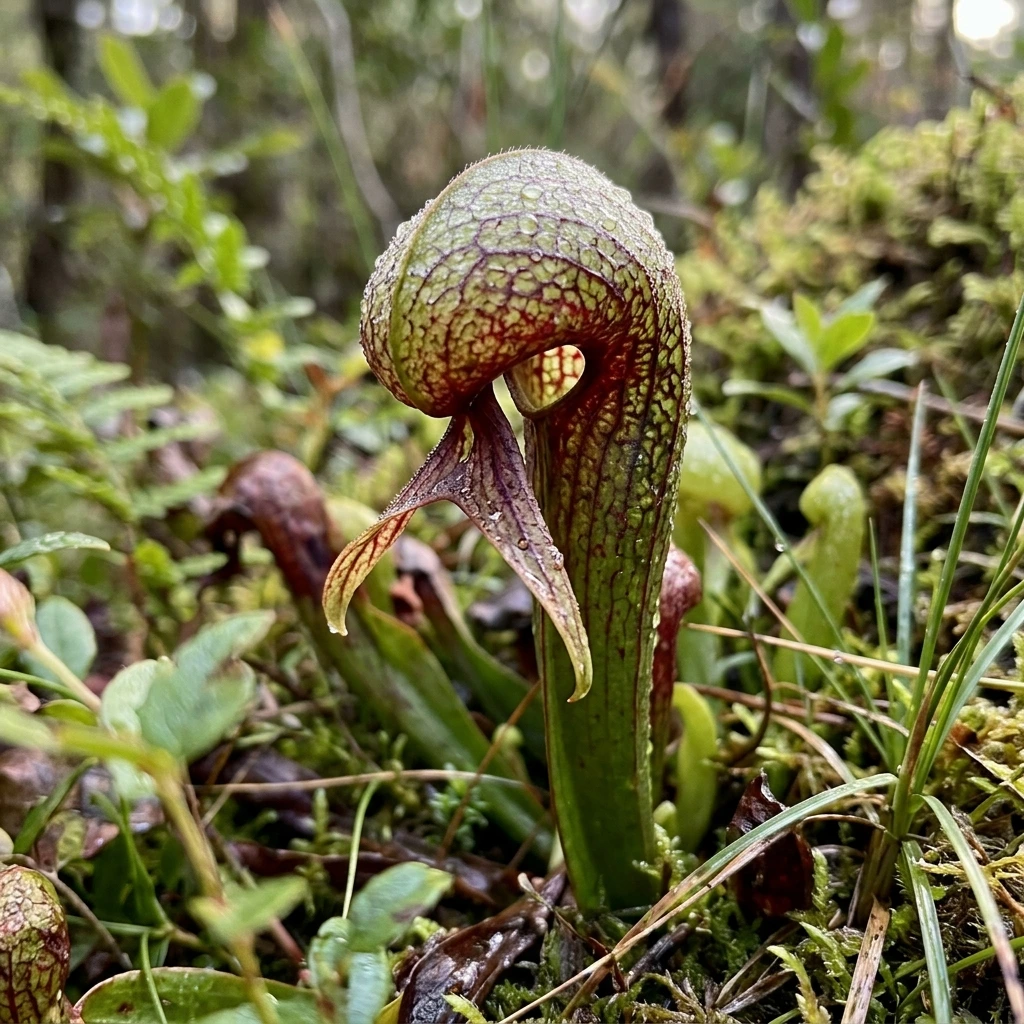
Darlingtonia californica, known as the Cobra Lily or Cobra Plant, is a stunning, complex carnivorous plant native to the cold, nutrient-poor bogs of Northern California and Oregon. It produces spectacular, upright tubular pitchers resembling a rearing cobra with a flared hood and a prominent, split fanged leaf. The hood has translucent patches (fenestrations) that confuse trapped insects, directing them downward into the trap. It is widely celebrated by botanists for its distinct environmental adaptability and structural appeal.





How to Identify Cobra Lily
A magnificent, bizarre carnivorous plant with tall, hooded tubular pitchers resembling a rearing cobra with a split, tongue-like leaf.
-
✔
Key Visual Features: Upright, hollow tubular leaves terminating in a rounded, translucent-spotted hood with a downward-facing entry hole and a split, fan-shaped appendage (fangs).
-
✔
Color Variations: Light green to yellowish-green pitchers, often heavily veined with red or purple under intense light; white translucent window patches on the hood.
-
✔
Common Confusions: Distinguished from Sarracenia by its unique rounded dome hood with translucent window patches and the prominent downward-forked fangs at the opening.
Complete Care & Cultivation Guide
Follow our detailed scientific care guide to keep your Cobra Lily thriving and gorgeous all year round.
Common Diseases & Treatment
Root Cook (Warm Roots)
Symptoms: Pitchers suddenly collapse, turn brown from the base, and the plant dies rapidly due to warm root temperatures.
Dormancy Rot
Symptoms: Rhizome turns black and mushy during winter due to excessively wet, stagnant conditions under low temperatures.
Frequently Asked Questions
Why is the Cobra Lily considered a difficult plant to grow?
Cobra Lilies require cold roots. In their native mountain bogs, cold water constantly bathes their roots. Indoors, their roots will rot if the soil temperature exceeds 21°C (70°F). Use ice cubes made of distilled water to keep roots cool.
How does the Cobra Lily trap insects?
Insects enter the pitcher through an opening underneath the hood. Once inside, they are confused by false skylights (translucent leaf spots) and try to fly out through them, eventually exhausting themselves and falling into the digestive pool.
Does Darlingtonia californica require a winter dormancy?
Yes, Cobra Lilies are temperate plants and absolutely require 3-4 months of cold winter dormancy (below 10°C / 50°F) to survive long-term. Keep them in a cold garage or greenhouse during winter.
Is the Cobra Lily toxic to cats and dogs?
It is non-toxic to pets. However, the pitchers are structurally fragile, and the digestive liquid inside could cause minor stomach irritation if consumed. Keep this rare, delicate plant out of pet reach.