Calathea Care & Identification Guide
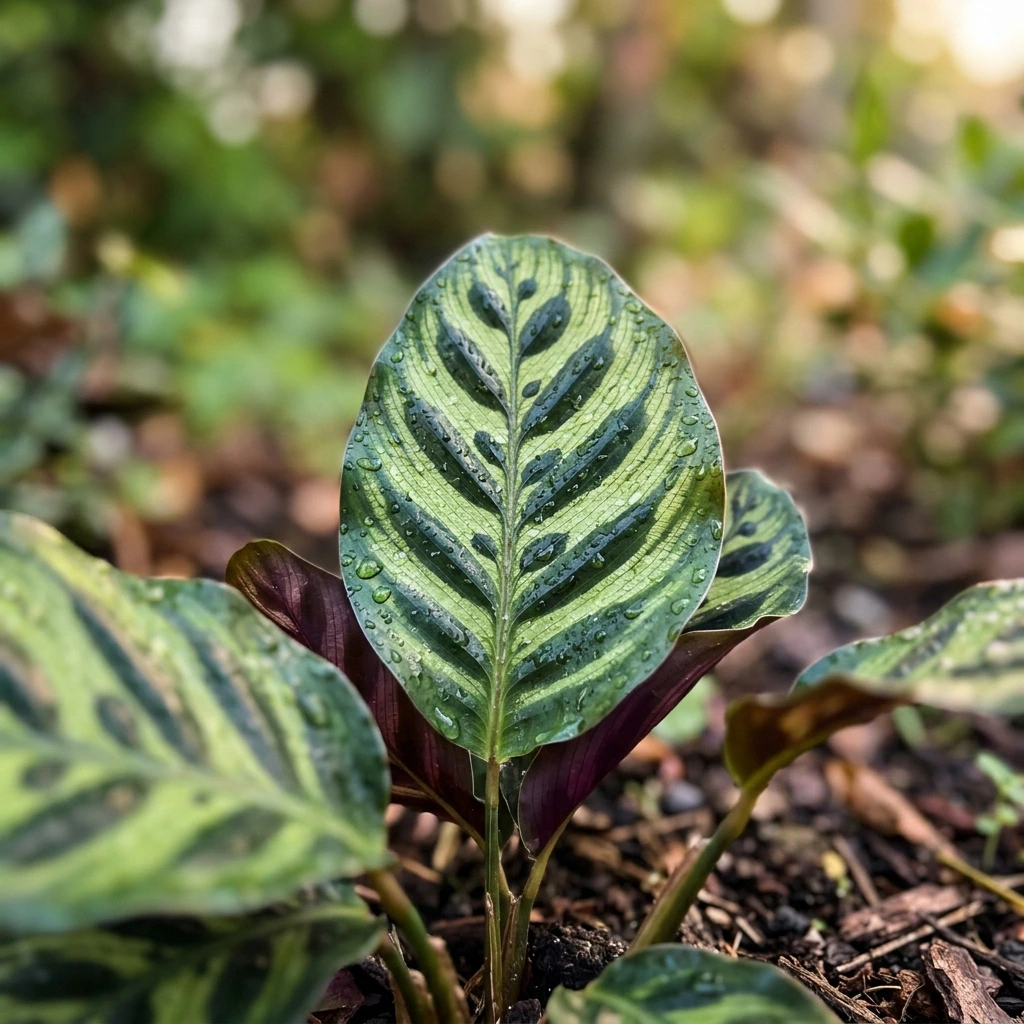
The Calathea, or Peacock Plant, is a breathtaking foliage masterpiece from the tropical forests of Brazil. Famous for its thin, paper-like leaves decorated with an intricate dark-green feather pattern that mimics a peacock's tail, it features a striking deep purple underside that glows under light. Highly safe and pet-friendly. It is widely celebrated by botanists for its distinct environmental adaptability and structural appeal.





How to Identify Calathea
An elegant, upright foliage plant with thin, oval leaves featuring a stunning, translucent dark-green feather pattern on a pale green background.
-
✔
Key Visual Features: Upright leaves growing on slender pinkish stems; leaf tops show dark green feather patches, while leaf bottoms show a mirrored deep-maroon pattern.
-
✔
Color Variations: Pale grayish-green, dark forest green, with a rich maroon-purple leaf underside.
-
✔
Common Confusions: Sometimes confused with Calathea orbifolia or Calathea picturata, but distinguished by the delicate, translucent peacock-feather pattern.
Complete Care & Cultivation Guide
Follow our detailed scientific care guide to keep your Calathea thriving and gorgeous all year round.
Common Diseases & Treatment
Leaf Curling (Dryness)
Symptoms: Leaves curl inward tightly into tubes; leaf margins turn dry, crispy, and brown.
Spider Mites (Low Humidity)
Symptoms: Fine webbing beneath leaves; leaves look dusty, pale, and lose their dark green luster.
Frequently Asked Questions
Why is my Calathea leaf color fading?
If your Peacock Plant is in too much light, the delicate green patterns will bleach and fade. Move it slightly away from the window to a spot with soft, filtered indirect light.
What water is best for Calathea?
Goeppertia makoyana is highly sensitive to minerals. Always use rainwater, distilled water, or reverse osmosis water. Using cold tap water will quickly brown the leaf edges.
Is Calathea pet friendly?
Yes! The Peacock Plant is completely non-toxic and safe for dogs, cats, and all domestic pets. It is safe even if a curious cat nibbles on its leaves.
Why do my Calathea leaves stand up at night?
Calathea leaves have a joint-like organ (pulvinus) at the base of the leaf stalk. It reacts to light changes, making the leaves stand up vertically at night and open during the day.