Alocasia Polly Care & Identification Guide
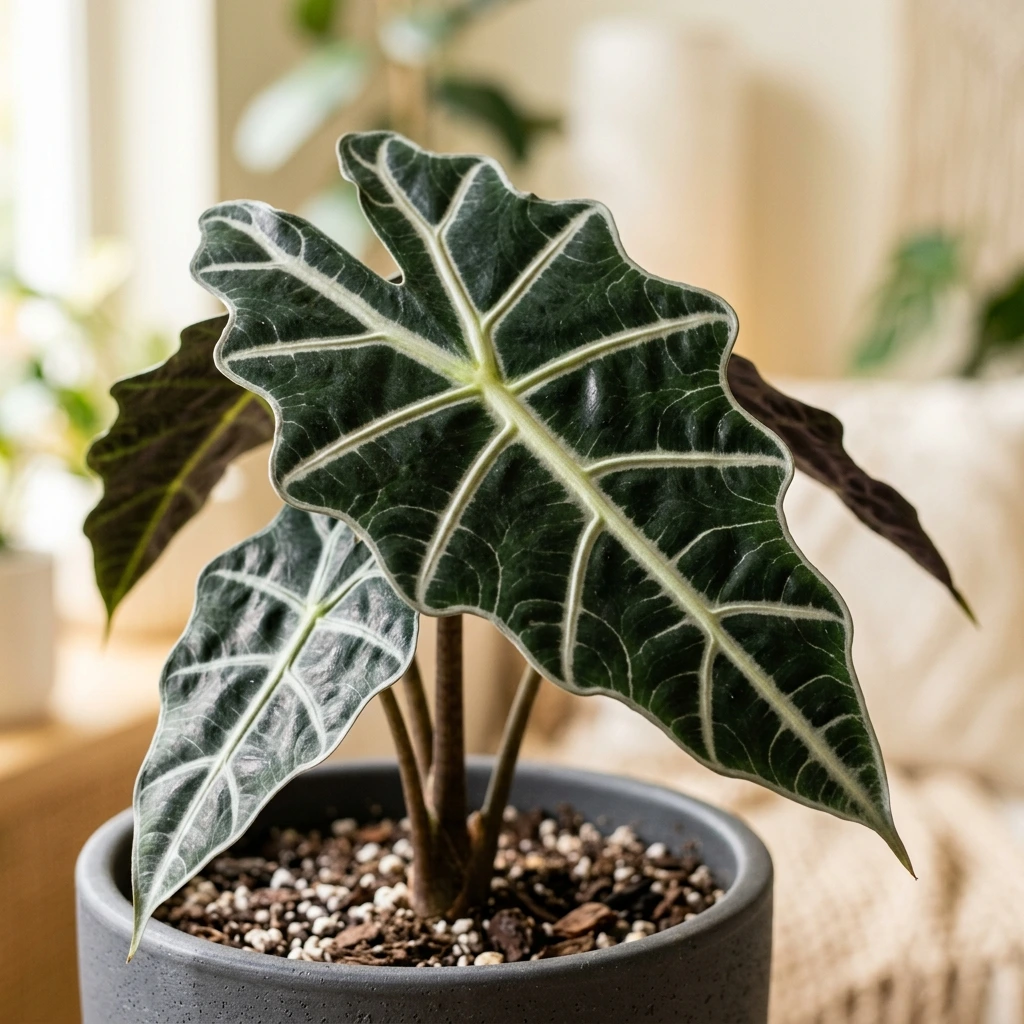
Alocasia Polly, also known as the African Mask Plant, is a stunning, highly graphic tropical hybrid. A true masterpiece of foliage design, it features arrow-shaped, wavy-edged leaves of an intense, near-black dark green, dramatically highlighted by thick, raised, icy-white veins. It is a highly popular, statement-making houseplant that craves humidity and warm temperatures. It is widely celebrated by botanists for its distinct environmental adaptability and structural appeal.




How to Identify Alocasia Polly
A striking, graphic houseplant with near-black arrow-shaped leaves dramatically accented by raised white veins.
-
✔
Key Visual Features: Arrowhead or shield-shaped leaves with highly scalloped, wavy margins; deep purple undersides.
-
✔
Color Variations: Near-black, metallic dark forest-green upper leaf; thick, raised ivory-white veins; dark purple leaf underside.
-
✔
Common Confusions: Can be confused with other Alocasia hybrids like Alocasia Frydek, but Alocasia Polly has scalloped, wavy leaf margins and a glossy, near-black leaf surface, while Frydek has smooth margins and velvet-textured leaves.
Complete Care & Cultivation Guide
Follow our detailed scientific care guide to keep your Alocasia Polly thriving and gorgeous all year round.
Common Diseases & Treatment
Spider Mites
Symptoms: Dusty look on the leaf undersides, pale yellow speckling, and fine webbing at the leaf joints.
Corm Rot (Rhizoctonia)
Symptoms: Leaves turn yellow, droop, and the base corm feels soft and mushy.
Frequently Asked Questions
Why are the edges of my Alocasia Polly leaves curling and turning brown?
This is a classic sign of dry air. Alocasia Polly requires high relative humidity (above 50%). Use a room humidifier or group it with other plants. Avoid dry drafts from heaters or air conditioners.
How often should I water my Alocasia Polly?
Water when the top 1 inch of soil feels dry. Never let the soil dry out completely, but never let it sit in soggy water, which causes the underground corm to rot. Drainage is key.
Why is my Alocasia Polly losing all its leaves in winter?
If the temperature drops below 15°C (59°F) or light levels decrease, Alocasia Polly will enter winter dormancy. The leaves will turn yellow and die. Do not throw the pot away! Keep the soil almost dry and warm, and it will regrow in spring.
Is Alocasia Polly safe for pets?
No, Alocasia x Amazonica is highly toxic to dogs and cats due to calcium oxalate crystals. It causes severe oral irritation, burning, drooling, and vomiting if chewed. Keep it high on a shelf away from pets.