Air Plant Care & Identification Guide
Air Plants are extraordinary, soil-free epiphytes native to forests and deserts of Central and South America. They do not require soil to grow, absorbing moisture and nutrients directly from the air through specialized powdery leaf scales called trichomes. They are highly popular for minimalist and modern terrarium designs, displaying a rootless, sculptural aesthetic. It is widely celebrated by botanists for its distinct environmental adaptability and structural appeal.





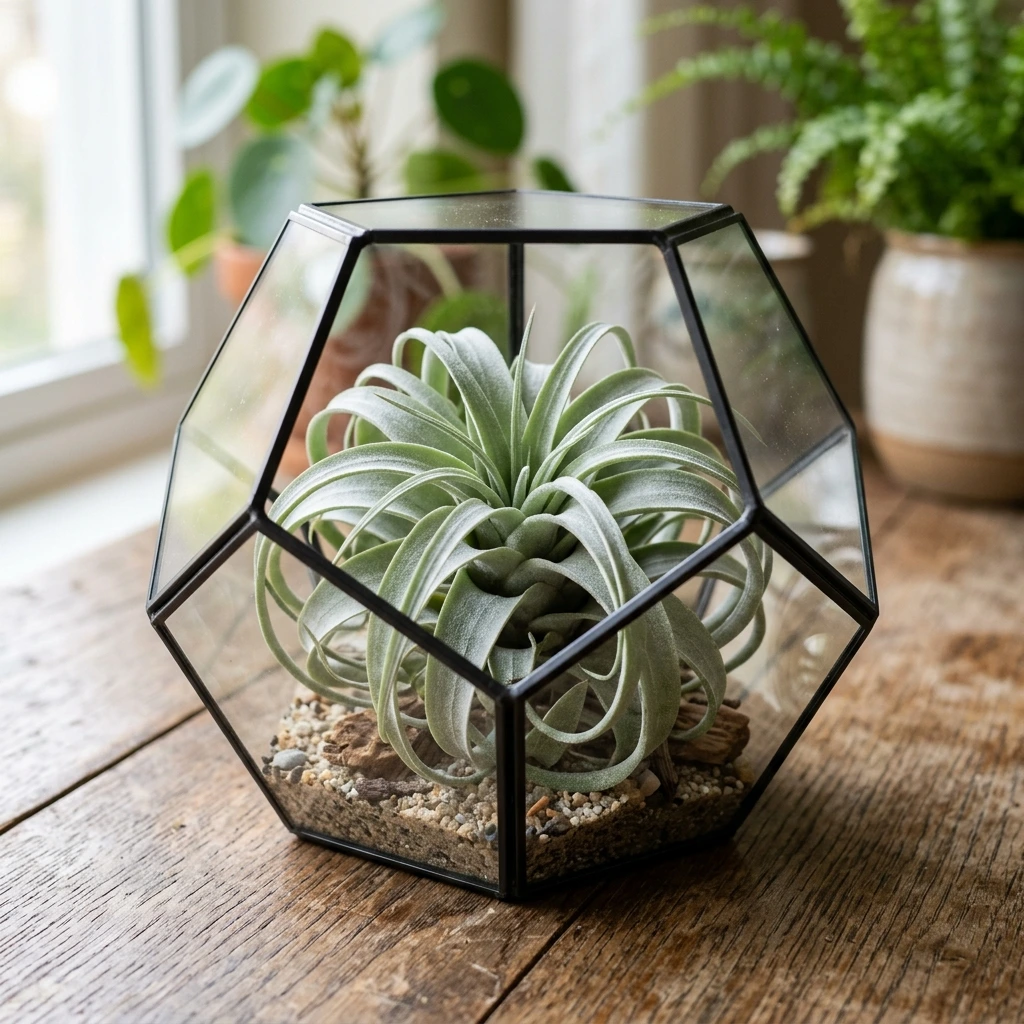
How to Identify Air Plant
A rootless, free-living rosette of narrow, curved silvery-green leaves covered in fine powdery fuzz.
-
✔
Key Visual Features: Absence of root systems; rosette of narrow, channeled leaves covered in microscopic silvery-white scales (trichomes).
-
✔
Color Variations: Silvery-gray, pale green, or chalky-blue foliage; blushing center turns vivid classroom crimson or pink before blooming.
-
✔
Common Confusions: Easily distinguished from all other houseplants due to its completely rootless, soil-free growth habit.
Complete Care & Cultivation Guide
Follow our detailed scientific care guide to keep your Air Plant thriving and gorgeous all year round.
Common Diseases & Treatment
Wet Crown Rot
Symptoms: The center of the rosette turns brown, soft, slimy, and inner leaves pull out easily with a gentle tug.
Dehydration Leaf Curling
Symptoms: Leaves become thin, highly curled or rolled inward, and leaf tips turn dry and crispy brown.
Frequently Asked Questions
Why is my Air Plant turning black and falling apart at the base?
This is Crown Rot, the number one killer of Air Plants. It happens when water pools in the center rosette after watering. To prevent this, always shake the plant vigorously upside down after soaking, and leave it to dry completely upside down in a drafty area for at least 4 hours before returning it to its display container.
Why are the center leaves of my Air Plant turning bright red?
This is called 'blushing'! It is a beautiful natural phenomenon that happens when the Air Plant is about to bloom. The central leaves turn bright red or pink to attract pollinators to the tiny purple or yellow flowers that will soon emerge from the center.
Do Air Plants need fertilizer if they don't grow in soil?
Yes, they benefit greatly from nutrition. Add a specialized, bromeliad-safe, urea-free liquid fertilizer (Air Plant Fertilizer) to their soaking water once a month at a quarter-strength. This encourages faster growth, blushing, and blooming.
Is Tillandsia safe for homes with curious cats?
Yes, Tillandsia is 100% non-toxic and pet-safe. However, cats love their grass-like shape and bouncy texture, so keep them secure in terrariums or wall hangers to prevent them from becoming cat chew toys.