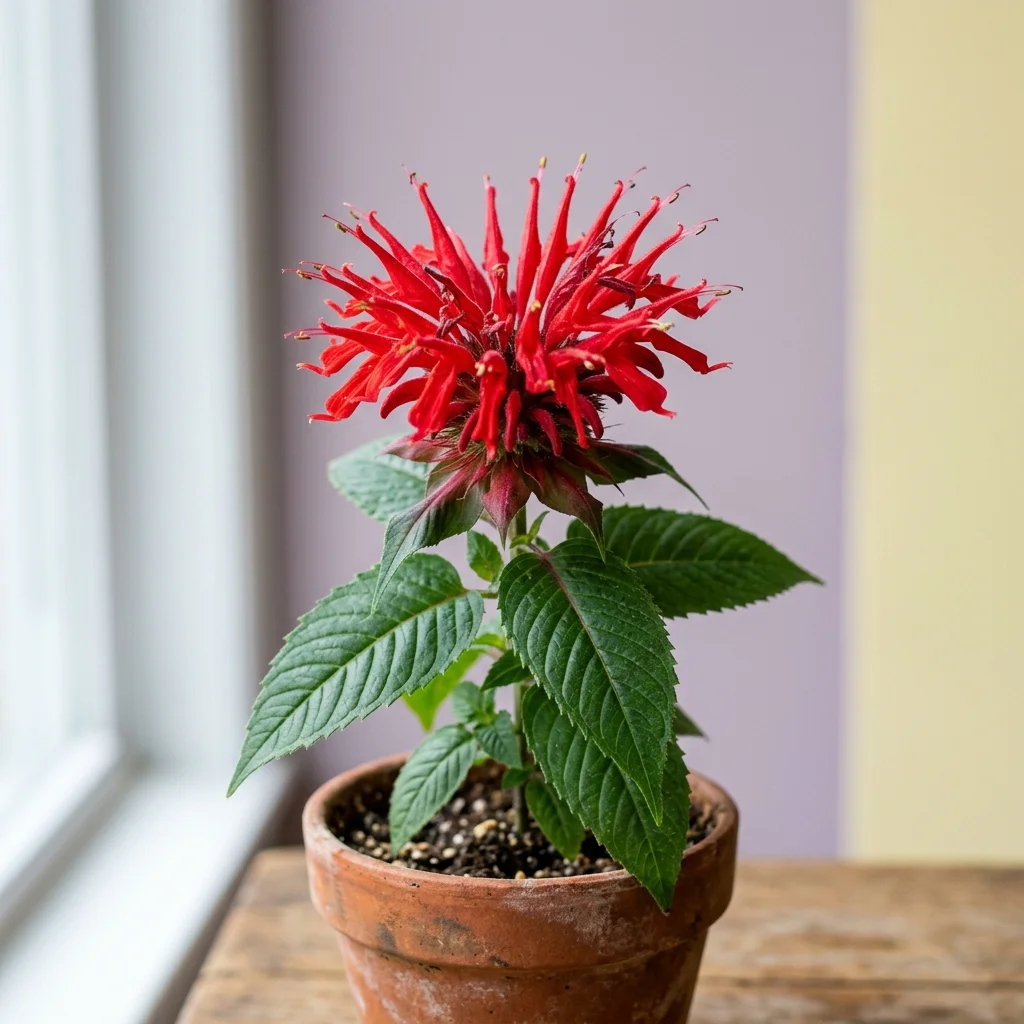
Monarda didyma

Bee Balm Care & Identification Guide

Bee Balm (Monarda didyma) is an elegant, highly fragrant ornamental specimen that brings a constant natural air freshener directly to modern living areas. Featuring intensely aromatic leaves that release essential oils when gently brushed, it performs beautifully in clay containers. It demands bright indirect light and porous perlite mixes to grow compact, bushy, and colorful.


Sunlight Icon
Sunlight Bright Filtered to Direct Sun
Watering Icon
Watering Moderate (dry top 2 inches of soil)
Soil Mix Icon
Soil Mix Lightweight, sandy fast-draining potting mix
Temperature Icon
Temperature 15°C - 25°C
Toxicity Warning Icon
Toxicity Mildly toxic (essential oils can irritate pets)
Botanical macro photography of Bee Balm (Monarda didyma) - Plant AI care database

How to Identify Bee Balm

Bee Balm (Monarda didyma) is a remarkable botanical species widely appreciated for its unique aesthetic and structural appeal. Recognizing its definitive visual traits is key to distinguishing it from other similar plants.

  • Key Visual Features: Key Visual Features: Dense clusters of waxy fan-shaped, starry, or deeply lobed leaves, exuding intense fragrance when brushed.
  • Color Variations: Color Variations: Silvery-green, vibrant lime green, deep forest bronze, or beautifully variegated gold margins.
  • Common Confusions: Common Confusions: Sometimes mistaken for ornamental indoor shrubs, but immediately recognized by their powerful, soothing aromatic oils.
💡 Plant AI Tip: Not sure? Take a photo with Plant AI to identify your houseplants instantly.

Complete Care & Cultivation Guide

Follow our detailed scientific care guide to keep your Bee Balm thriving and gorgeous all year round.

Water moderately. Allow the top 2 inches of the container soil to dry out completely before watering deeply. Potted aromatic herbs are sensitive to overwatering, which causes leaf yellowing and a loss of signature fragrance. Ensure excellent pot drainage.
Pinch growing stems regularly to promote a compact, bushy habit and prevent woody leggy growth. Gently wipe waxy leaves with a damp cloth once a month to remove household dust and clear the waxy leaf pores, maximizing aromatic release.
A very light feeder. Feed once in mid-spring and again in mid-summer with a half-strength organic balanced houseplant fertilizer. Excess nutrients compromise leaf scent concentration.
Thrives in bright, filtered to direct sunlight near a south or west-facing window, needing at least 5 to 6 hours of light daily. Insufficient light leads to pale, scentless foliage.
Requires a lightweight, loose, highly draining soil mix consisting of 40% peat moss, 30% perlite, and 30% coarse sand, with a pH of 6.0 to 7.0 to prevent soggy soil stagnation.
Propagate easily via softwood stem cuttings taken in spring or summer. Insert cuttings directly into a moist sand-perlite mix, keep in bright indirect light, and mist regularly until roots form in 2 to 3 weeks.
Thrives in warm indoor temperatures of 18°C to 27°C. Highly sensitive to frost and cold drafts; keep in rooms that stay above 12°C during winter and avoid placing near heating vents.
Choose medium-sized ceramic or terracotta pots with large drainage holes. Repot every 2 years in spring to provide fresh potting mix and prune circling roots.
Prone to whiteflies and mealybugs in stagnant air. Dab mealybugs off with alcohol-dipped swabs and spray with insecticidal soap every 7 days until clear.
Vulnerable to leaf spot and root rot in waterlogged pots. Ensure excellent drainage, provide good room ventilation, and avoid wetting the foliage.
Brush past or gently rub the leaves of these potted aromatics as you walk by to release their essential oils into the indoor air, acting as an organic, natural room deodorizer.

Is your Bee Balm leaves turning yellow, dry or brown?

Keep your indoor garden vibrant. Take a photo with Plant AI to diagnose pests and leaf spot diseases instantly.

Diagnose My Plant

Common Diseases & Treatment

Root Rot (Overwatering)

Symptoms: Leaves turn soft and yellow at the base, shrivel and drop prematurely, accompanied by a mushy root system and foul soil odor.

Action: Drastically cut watering. Remove mushy leaves, wash away old soggy soil, prune rotten black roots, and repot in dry succulent mix with drainage holes.

Foliage Rust

Symptoms: Small powdery orange or brown pustules appear on the linear leaves under humid, poorly ventilated indoor conditions.

Action: Isolate the plant, prune infected leaves, and spray with a copper-based organic fungicide. Improve indoor ventilation.

Frequently Asked Questions

How often should I water my potted Bee Balm?

Water deeply only when the soil has dried out to the required depth. Ensure your pot has drainage holes, and never let the container sit in stagnant water trays, which will trigger root rot.

What is the best way to prune Bee Balm on a windowsill?

Regularly pinch back the top 2 inches of growing stems to encourage bushier, lateral branching. Immediately pinch off any flower buds to prevent bolting, which strips leaves of flavor.

Why is my Bee Balm losing its intense flavor and aroma?

Flavor loss is usually caused by over-fertilization. Heavy synthetic feeding rapidly grows watery leaves while diluting the essential oils. Use light liquid compost tea diluted to quarter strength.

Can I propagate Bee Balm from leaf or stem cuttings?

Yes! Culinary and aromatic herbs propagate easily by taking a 4-inch softwood stem cutting, stripping lower leaves, and keeping the cut node submerged in water until roots form in 1-2 weeks.

No more dying plants. Grow healthy greens today!

Get Started for Free