Japanese Blood Grass Care & Identification Guide
Japanese Blood Grass 'Rubra' is a striking ornamental grass, famous for its erect, linear green leaves whose tips morph into an incredibly intense, translucent ruby-red and crimson color. The color intensifies under strong backlighting in late summer, bringing a dramatic, fiery accent to garden borders and minimalist planters.





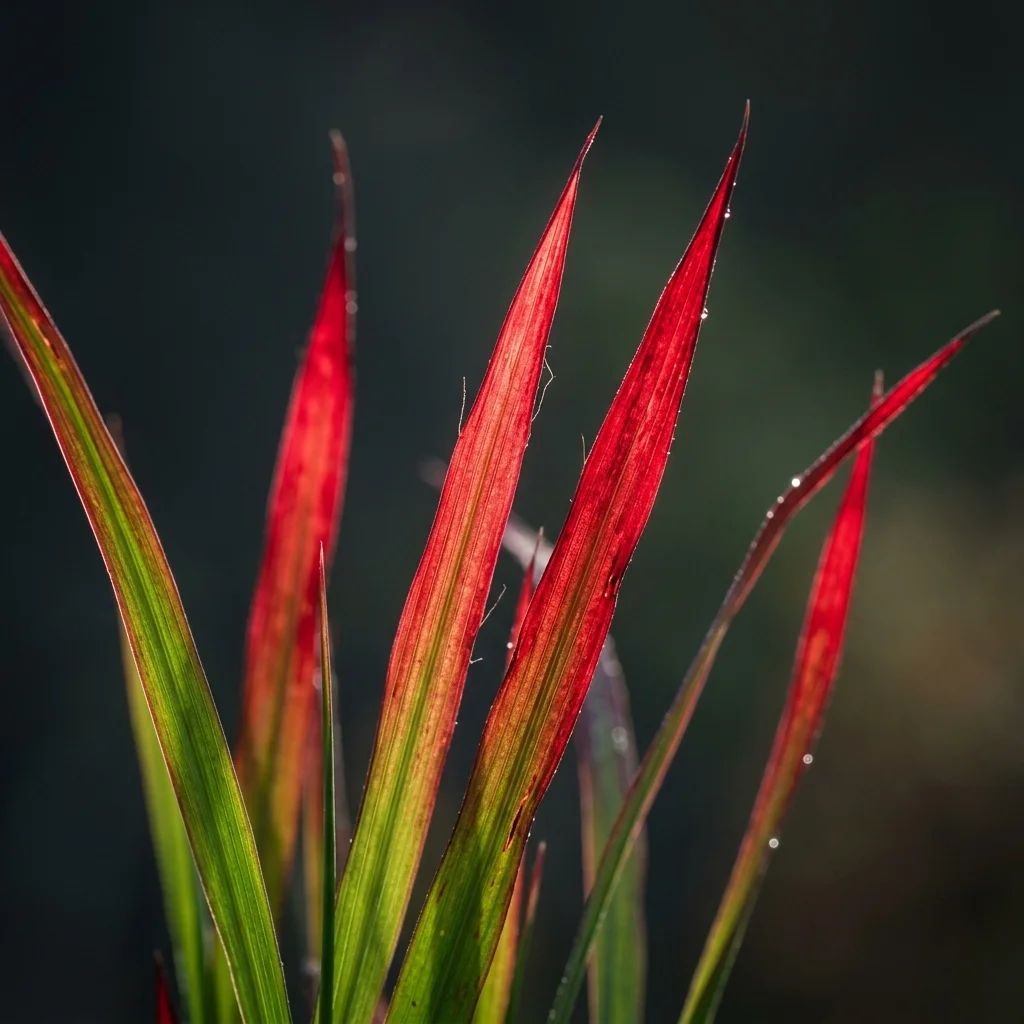
How to Identify Japanese Blood Grass
Japanese Blood Grass (Imperata cylindrica 'Rubra') is a remarkable botanical species widely appreciated for its unique aesthetic and structural appeal. Recognizing its definitive visual traits is key to distinguishing it from other similar plants.
-
✔
Key Visual Features: Key Visual Features: Dense arching clumps of narrow linear foliage, topped in summer by feathery, bottle-brush, or metallic flower panicles.
-
✔
Color Variations: Color Variations: Blue-grey blades, warm golden stripes, pink-flushed panicles, or waxy emerald foliage.
-
✔
Common Confusions: Common Confusions: Resembles wild lawn weeds when small, but recognized by their tight, neat clumping growth and showy tall flower spikes.
Complete Care & Cultivation Guide
Follow our detailed scientific care guide to keep your Japanese Blood Grass thriving and gorgeous all year round.
Common Diseases & Treatment
Root Rot (Overwatering)
Symptoms: Leaves turn soft and yellow at the base, shrivel and drop prematurely, accompanied by a mushy root system and foul soil odor.
Foliage Rust
Symptoms: Small powdery orange or brown pustules appear on the linear leaves under humid, poorly ventilated indoor conditions.
Frequently Asked Questions
Why is my Japanese Blood Grass not turning red?
The intense red coloration is a response to direct sunlight. If planted in too much shade, the leaves will remain green or turn a dull lime-green. Ensure the plant receives at least 6 hours of full sun to stimulate the deep crimson pigmentation.
Is Japanese Blood Grass considered invasive?
The wild species (Imperata cylindrica) is a highly aggressive runner classified as a federal noxious weed in the US. However, the cultivated clone 'Rubra' (often sold as 'Red Baron') has lost much of its vigor and spreads slowly. However, if any green reverted shoots appear, dig them out immediately, as they can revert to the aggressive wild form.
How does Japanese Blood Grass spread?
It spreads via short, underground rhizomes to form a dense colony. Because 'Rubra' is sterile and rarely produces flowers, it does not spread via wind-dispersed seeds, making it safe to grow in contained garden beds.
When should I cut back Japanese Blood Grass?
Cut the entire plant back to the ground in late winter or early spring. This removes the brown, dead winter foliage and makes room for the fresh, green leaf shoots with bright red tips to emerge cleanly.