Giant Reed Care & Identification Guide
Giant Reed 'Variegata' is a colossal, highly dramatic warm-season wetland grass, prized for its massive, corn-like broad arching leaves painted in exceptionally vivid cream-white and green longitudinal stripes. Reaching heights of 8 to 12 feet, it serves as a spectacular, tropical visual screen and windbreak.





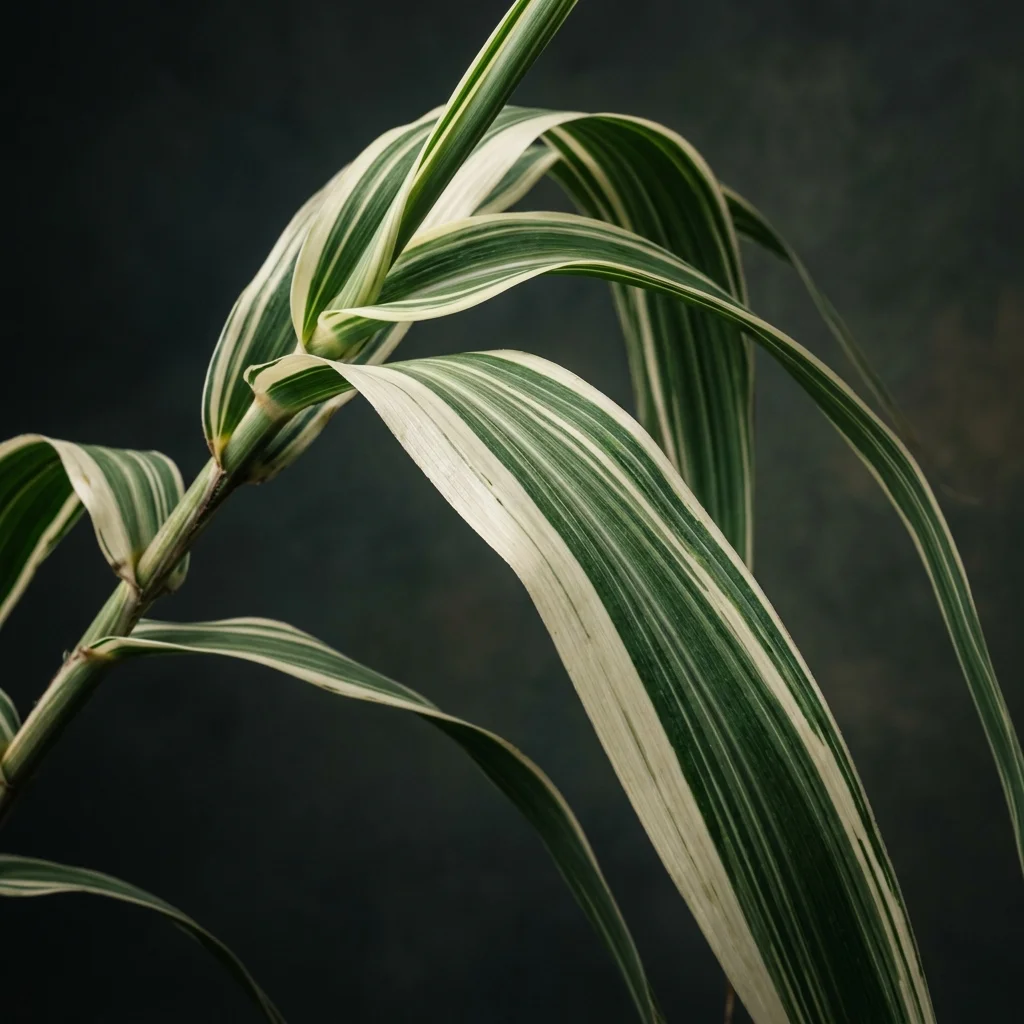
How to Identify Giant Reed
Giant Reed (Arundo donax 'Variegata') is a remarkable botanical species widely appreciated for its unique aesthetic and structural appeal. Recognizing its definitive visual traits is key to distinguishing it from other similar plants.
-
✔
Key Visual Features: Key Visual Features: Towering culms with wooden nodes and dry leaf sheaths, producing clusters of elegant drooping narrow leaves.
-
✔
Color Variations: Color Variations: Solid forest green, lemon-yellow canes with dark pinstripes, or beautifully variegated green-and-white foliage.
-
✔
Common Confusions: Common Confusions: Reeds can resemble running bamboo, but can be distinguished by their soft herbaceous canes that do not turn fully into wood.
Complete Care & Cultivation Guide
Follow our detailed scientific care guide to keep your Giant Reed thriving and gorgeous all year round.
Common Diseases & Treatment
Root Rot (Overwatering)
Symptoms: Leaves turn soft and yellow at the base, shrivel and drop prematurely, accompanied by a mushy root system and foul soil odor.
Powdery Mildew
Symptoms: A dusty white or gray powdery coating spreads across the broad leaves, causing distorted growth in stagnant rooms.
Frequently Asked Questions
How does Arundo donax 'Variegata' compare to standard Giant Reed?
The variegated cultivar 'Variegata' is significantly less vigorous and shorter than the species Giant Reed, which can reach 20 feet and is invasive in some regions. The cream-white stripes make the variegated form much more ornamental and slower-growing, making it safer for gardens.
Is Variegated Giant Reed invasive?
While the species Arundo donax is a highly aggressive weed in California and the South, the variegated cultivar 'Variegata' is much less aggressive and spreads slowly. However, it should still be monitored in sensitive riparian zones and is best contained in large, enclosed planters.
Can I grow Giant Reed in dry soil?
Yes! Once its massive root rhizomes are established, Arundo donax is surprisingly drought-hardy and can thrive in average garden soils. However, it grows fastest and looks most vibrant when planted in moist, damp, or wet locations near water.
What are the stalks of Giant Reed used for historically?
Historically, the strong, hollow woody canes have been used for thousands of years to craft musical woodwind instruments, including the reeds for clarinets, oboes, and bagpipes, as well as building material, fishing rods, and walking sticks.