Watermelon Peperomia Care & Identification Guide
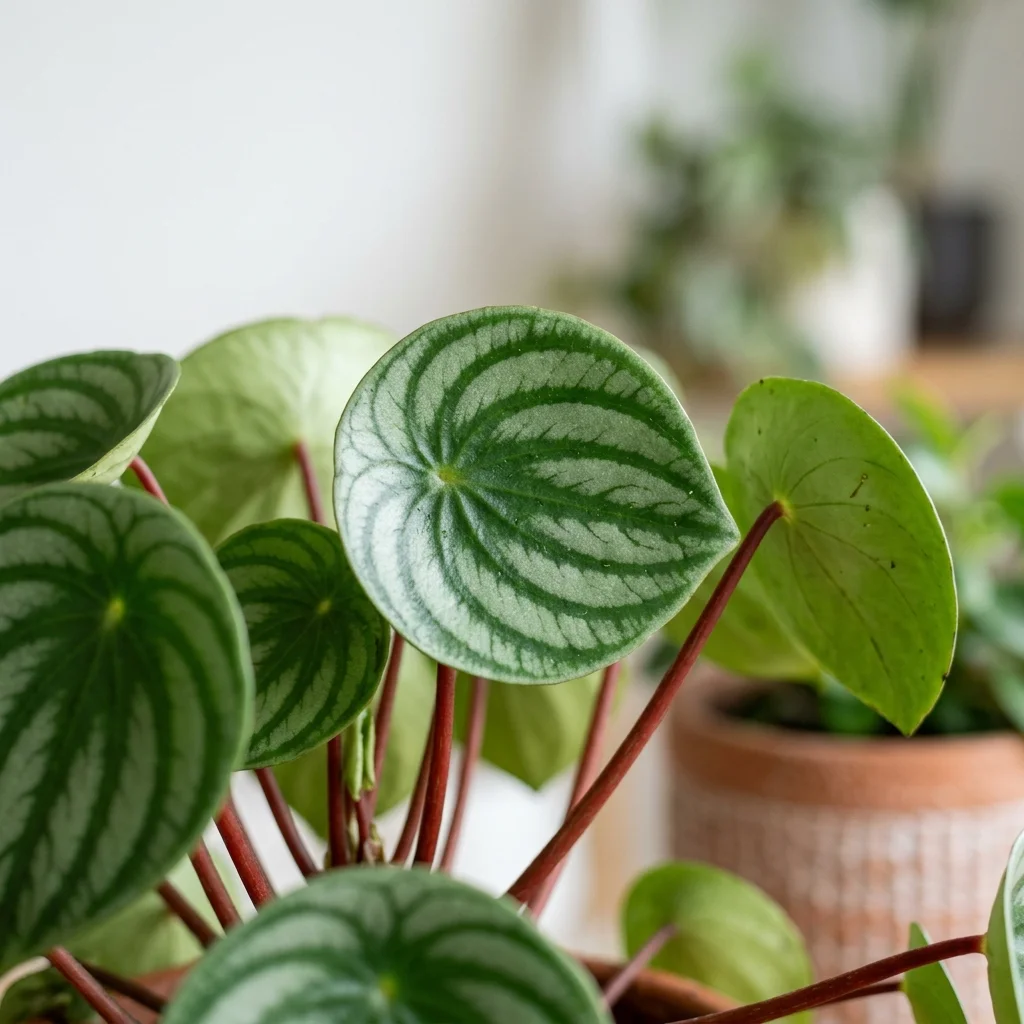
Peperomia argyreia, famously known as the Watermelon Peperomia, is an adorable tropical gem prized for its incredibly realistic foliage. Mimicking the exact striping of a watermelon rind, its thick, peltate leaves feature alternating bands of metallic silver and deep green, supported by bright red leaf stems, creating a premium tabletop designer statement.





How to Identify Watermelon Peperomia
Watermelon Peperomia (Peperomia argyreia) is a remarkable ornamental species widely appreciated for its unique aesthetic and structural foliage. Recognizing its definitive visual traits is key to distinguishing it from other similar plants.
-
✔
Key Visual Features: Rounded, thick leaves patterned with alternating metallic silver and dark green stripes resembling a watermelon rind, supported by red stems.
-
✔
Color Variations: Concentric bands of dark green and reflective silver-white on top; leaf undersides are pale green; stems are bright red.
-
✔
Common Confusions: Confused with Pilea peperomioides (which has solid green leaves, not striped) or Peperomia polybotrya.
Complete Care & Cultivation Guide
Follow our detailed scientific care guide to keep your Watermelon Peperomia thriving and gorgeous all year round.
Common Diseases & Treatment
Root Rot
Symptoms: Leaves yellow and stems turn mushy near soil; roots turn black and mushy.
Foliage Blight
Symptoms: Brown water-soaked spots expand on the striped leaves under high humidity.
Frequently Asked Questions
Why are the leaves of my Watermelon Peperomia cracking?
Cracking or splitting is usually due to sudden shifts in watering or low humidity. Maintain consistent moderate watering and boost humidity.
How do I propagate a Watermelon Peperomia?
Cut a healthy leaf in half horizontally, place the cut edge into moist soil, keep it warm and humid, and new plantlets will sprout in 4-6 weeks.
Does Watermelon Peperomia flower?
Yes, it produces unique, thin green spike-like flowers that look like rat tails, which can be snipped off to preserve leaf energy.
Is Watermelon Peperomia safe for cats?
Yes, Peperomia argyreia is completely safe, non-toxic, and friendly for cats, dogs, and all other household pets.