Goeppertia rufibarba

Velvet Calathea Care & Identification Guide

Goeppertia rufibarba, commonly known as the Velvet Calathea or Furry Feather, is a unique tactile sensation of the tropical forest. Famous for its long, lance-shaped wavy leaves, the entire plant—leaves, stems, and leaf backs—is covered in a soft, velvety red-brown fuzz, adding a warm, luxurious textural experience to modern interiors.


Sunlight Icon
Sunlight Medium Indirect to Shade
Watering Icon
Watering Moderate
Soil Mix Icon
Soil Mix Well-draining Humus-rich
Temperature Icon
Temperature 18°C - 24°C
Toxicity Warning Icon
Toxicity Non-Toxic to Pets
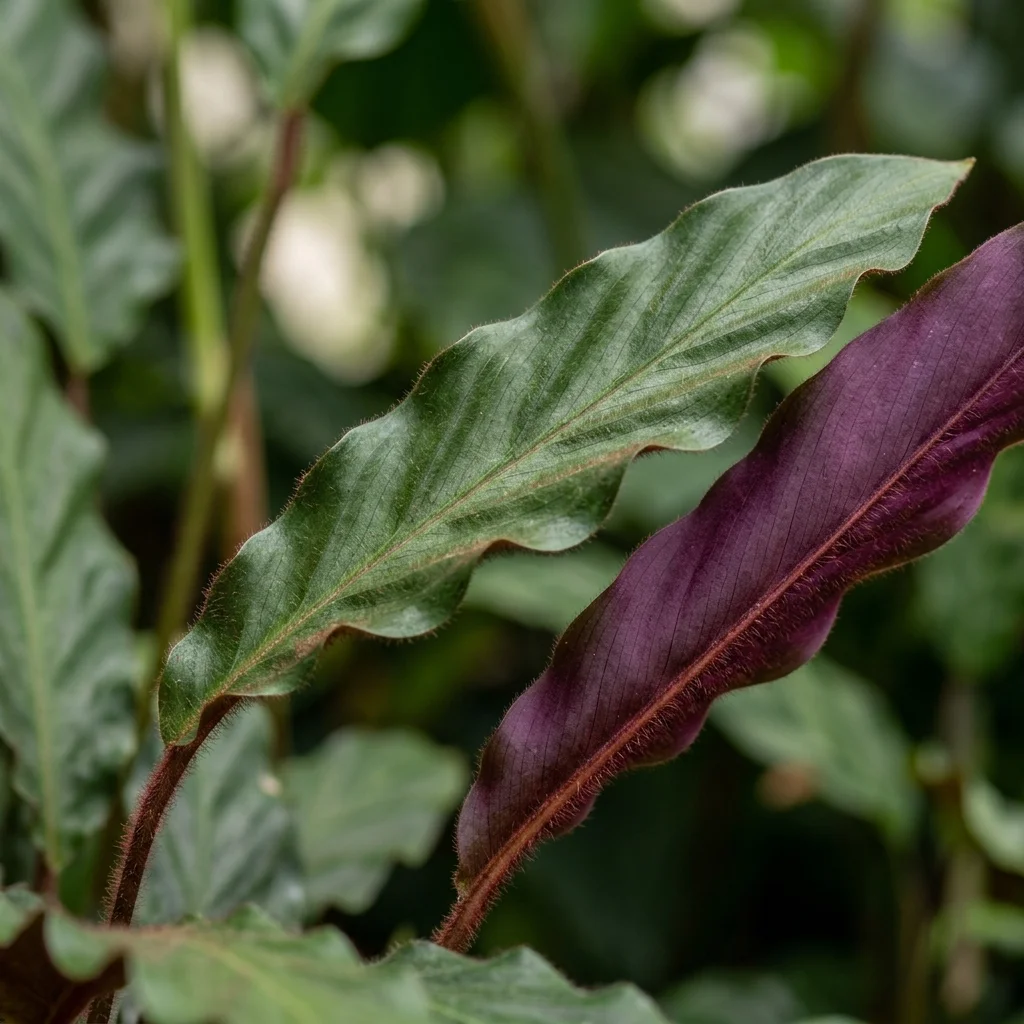
Botanical macro photography of Velvet Calathea (Goeppertia rufibarba) - Plant AI care database

How to Identify Velvet Calathea

Velvet Calathea (Goeppertia rufibarba) is a remarkable ornamental species widely appreciated for its unique aesthetic and structural foliage. Recognizing its definitive visual traits is key to distinguishing it from other similar plants.

  • Key Visual Features: Long, narrow, wavy-edged lanceolate leaves; covered in soft, velvety red-brown hairs on stems and purple leaf undersides.
  • Color Variations: Dark olive-green leaf tops; deep reddish-purple leaf backs and stems; covered in fine, soft red-brown fuzz.
  • Common Confusions: Confused with Calathea lancifolia (Rattlesnake, which is spotted and hairless) or Calathea zebrina (striped and hairless).
💡 Plant AI Tip: Not sure? Take a photo with Plant AI to identify your houseplants instantly.

Complete Care & Cultivation Guide

Follow our detailed scientific care guide to keep your Velvet Calathea thriving and gorgeous all year round.

Water when the top inch of soil is dry. It prefers consistently moist, aerated soil. Avoid dry-out and soggy root conditions.
Prune old, dry lower leaves at the base in spring using sharp, sterilized shears. Clean blade between cuts.
Apply a highly diluted organic liquid fertilizer (1/4 strength) once a month in spring and summer. Skip winter feeding.
Thrives in medium indirect light to partial shade. More tolerant of slightly lower light than highly patterned Calatheas.
Humus-rich, porous, fast-draining mix: 40% coco peat, 30% perlite, 20% organic compost, and 10% charcoal (pH 6.0-6.8).
Propagated by division in spring. Gently separate rhizomes, ensuring each clump has a strong root network and multiple wavy leaves.
Warm tropical conditions (18°C-24°C). Protect from winter drafts, open windows, and dry air from heaters.
Repot every 2 years into a pot 1-2 inches wider with excellent drainage holes. Prefers slightly tight, cozy containers.
Susceptible to spider mites and mealybugs. Due to the velvet fuzz, avoid oil-heavy sprays; use systemic granules or mild soap.
Vulnerable to root rot and fungal leaf spot if soil remains waterlogged or if leaves are sprayed with heavy water.
Unlike other glossy Calatheas, avoid wiping leaves with wet cloths; instead, use a soft, dry duster to clean dust from the fuzzy leaves.

Is your Velvet Calathea leaves turning yellow, dry or brown?

Keep your indoor garden vibrant. Take a photo with Plant AI to diagnose pests and leaf spot diseases instantly.

Diagnose My Plant

Common Diseases & Treatment

Fuzzy Leaf Rust (Fungal)

Symptoms: Small orange-brown pustules hide under the velvety purple hairs on the undersides of the leaves.

Action: Prune infected leaves immediately, improve airflow, avoid misting, and spray with organic copper fungicide.

Root Rot

Symptoms: Wavy leaves look limp and dry despite wet soil; stems turn mushy and dark at the soil line.

Action: Trim decayed roots, sanitize container, and repot instantly in fresh, fast-draining chunky peat-bark mix.

Frequently Asked Questions

Why is my Velvet Calathea hairy?

The fine hairs (trichomes) are a natural adaptation to collect moisture in the tropical rainforest understory and protect leaves from pests.

Why are the leaves of my Velvet Calathea turning brown?

Brown crispy leaf margins are caused by low humidity (under 50%) or chemical salts in tap water. Boost humidity and use filtered water.

Can Velvet Calathea grow in low light?

Yes! It is highly adaptable and can tolerate lower light levels than many other Calatheas, making it excellent for shaded corners.

Is Velvet Calathea toxic to cats?

No, Goeppertia rufibarba is completely safe, non-toxic, and friendly for cats, dogs, and other household pets.

No more dying plants. Grow healthy greens today!

Get Started for Free