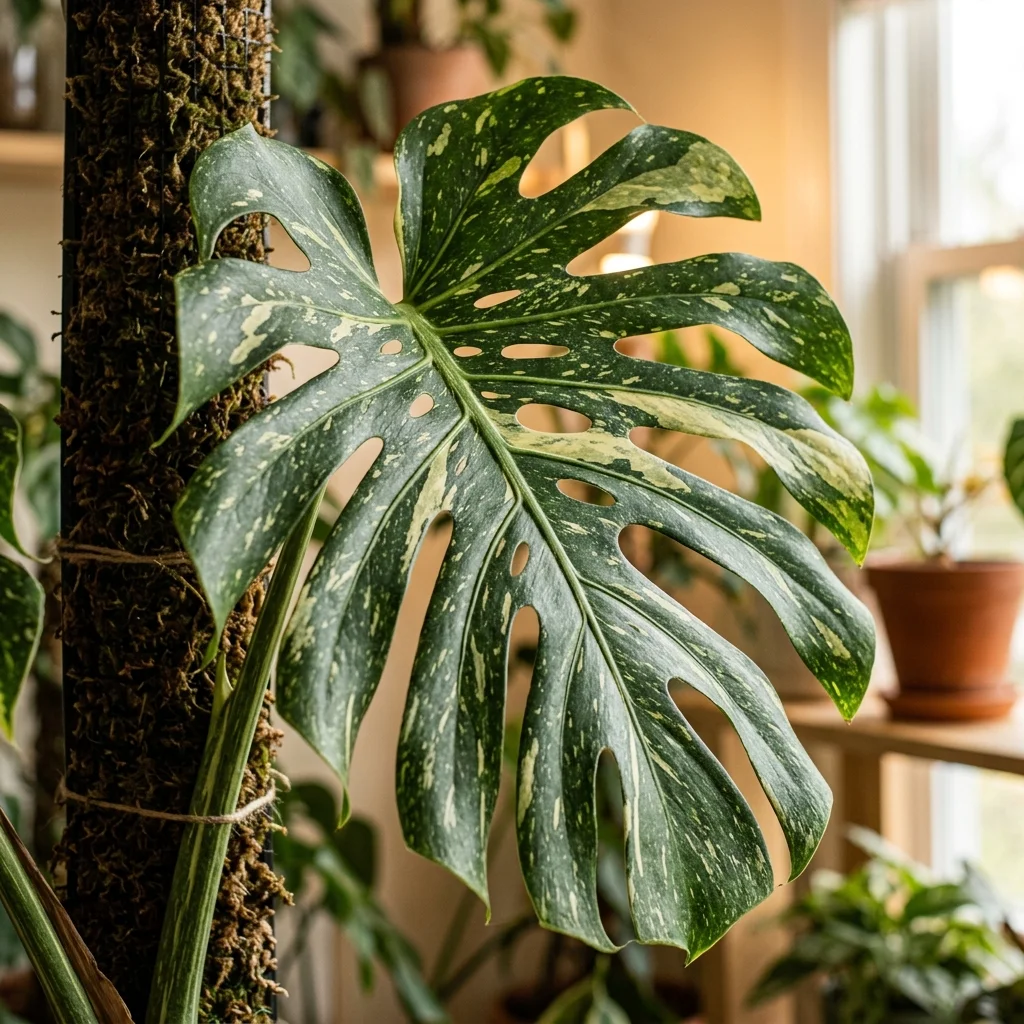
Monstera deliciosa 'Thai Constellation'

Thai Constellation Monstera Care & Identification Guide

Monstera deliciosa 'Thai Constellation' is the crown jewel of modern houseplants. Artfully engineered in a laboratory in Thailand, this stable hybrid features large heart-shaped leaves speckled and marbled with creamy-yellow to white variegation resembling a starry night sky, making it a premium statement.


Sunlight Icon
Sunlight Bright Indirect (High Intensity)
Watering Icon
Watering Moderate to Low
Soil Mix Icon
Soil Mix Premium Chunky Aroid Mix
Temperature Icon
Temperature 18°C - 28°C
Toxicity Warning Icon
Toxicity Highly Toxic to Pets
Botanical macro photography of Thai Constellation Monstera (Monstera deliciosa 'Thai Constellation') - Plant AI care database

How to Identify Thai Constellation Monstera

Thai Constellation Monstera (Monstera deliciosa 'Thai Constellation') is a remarkable ornamental species widely appreciated for its unique aesthetic and structural foliage. Recognizing its definitive visual traits is key to distinguishing it from other similar plants.

  • Key Visual Features: Large heart-shaped fenestrated leaves displaying stable speckled, splashed, and marbled creamy-yellow variegation.
  • Color Variations: Grassy emerald green leaves marbled with creamy-white to yellow patches; variegation is genetically stable and won't revert.
  • Common Confusions: Confused with Monstera deliciosa 'Albo' (which has pure white variegation that is unstable and prone to reverting).
💡 Plant AI Tip: Not sure? Take a photo with Plant AI to identify your houseplants instantly.

Complete Care & Cultivation Guide

Follow our detailed scientific care guide to keep your Thai Constellation Monstera thriving and gorgeous all year round.

Let the top 2-3 inches of soil dry completely. It is highly prone to root rot due to non-chlorophyll sectors; avoid overwatering.
Prune lower leaves only when old or damaged. Cut above a node using sterilized loppers; propagate with extreme care.
Apply high-quality organic foliage fertilizer diluted to half strength monthly during active spring and summer growth.
Requires high-intensity bright indirect light to support variegated sectors. Avoid hot direct afternoon sun which burns yellow parts.
Premium chunky, well-aerating mix: 30% peat moss, 30% orchid bark, 20% perlite, 10% charcoal, and 10% worm castings. pH 5.5-6.5.
Propagated via stem cuttings with nodes in sterile media like damp sphagnum moss or perlite under highly humid conditions.
Consistent warm temperatures (18°C-28°C). Protect from winter temperatures below 15°C and drafty locations.
Choose heavy ceramic pots with ample drainage. Insert a sturdy moss pole to support its massive climbing vines.
Prone to thrips, spider mites, and mealybugs. Inspect new leaf sheaths regularly and spray with neem oil solution.
Highly vulnerable to root rot and bacterial leaf spot. Avoid waterlogging and ensure excellent air movement.
Variegated leaves lack chlorophyll, meaning this plant grows slower than standard Monsteras. Be patient and keep soil airy.

Is your Thai Constellation Monstera leaves turning yellow, dry or brown?

Keep your indoor garden vibrant. Take a photo with Plant AI to diagnose pests and leaf spot diseases instantly.

Diagnose My Plant

Common Diseases & Treatment

Root Rot (Fungal)

Symptoms: Variegated leaves turn soft, yellow, and droop; central stem becomes mushy near base.

Action: Repot instantly in highly porous, bark-rich potting mix, pruning away rotten root ends.

Bacterial Leaf Spot

Symptoms: Brown spots with translucent yellow borders spread rapidly across cream-colored sectors.

Action: Prune infected leaves, isolate the plant, improve airflow, and spray with organic copper fungicide.

Frequently Asked Questions

Is the variegation on Thai Constellation stable?

Yes! Unlike 'Albo', the variegation on 'Thai Constellation' is a stable genetic trait and will not revert to solid green.

Why are the white/cream parts of my Thai Constellation turning brown?

Cream sectors lack chlorophyll and are highly sensitive to dry air and direct sun. Boost humidity and dapple harsh sunlight.

Why does Thai Constellation grow so slowly?

Because of its high variegation, it has less chlorophyll to photosynthesize, resulting in a naturally slower growth rate.

Is Thai Constellation toxic to cats?

Yes, like standard Monsteras, it contains calcium oxalate crystals and is highly toxic to cats and dogs if chewed.

No more dying plants. Grow healthy greens today!

Get Started for Free