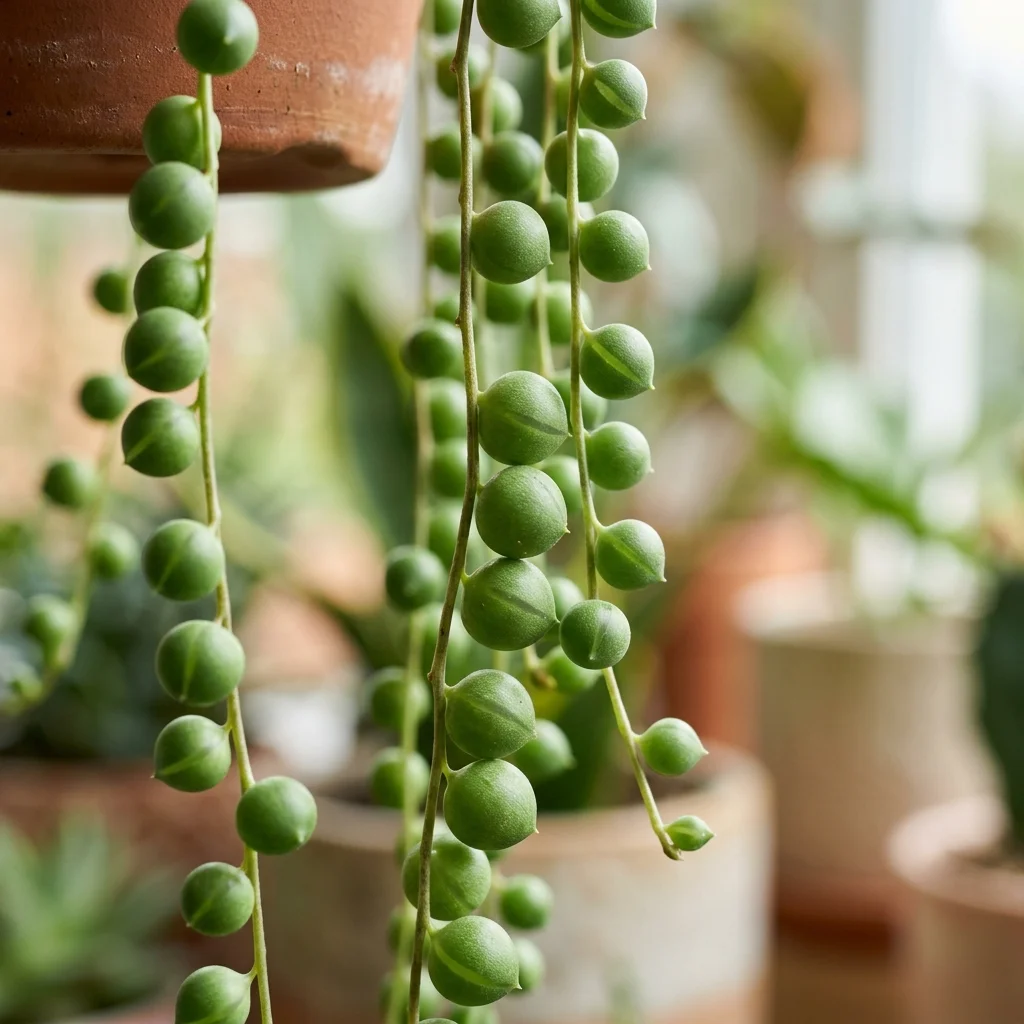
Curio rowleyanus

String of Pearls Care & Identification Guide

Senecio rowleyanus (syn. Curio rowleyanus), the famous String of Pearls, is a highly unique, whimsical trailing succulent native to Southwest Africa. Prized for its long, thread-like cascading stems draped with perfectly round, bead-like green leaves that resemble pearls, it creates a magnificent spilling display that is a must-have for modern succulent collectors.


Sunlight Icon
Sunlight Bright Light with Morning Sun
Watering Icon
Watering Low
Soil Mix Icon
Soil Mix Gritty Cacti/Succulent Mix
Temperature Icon
Temperature 18°C - 27°C
Toxicity Warning Icon
Toxicity Toxic to Cats & Dogs
Botanical macro photography of String of Pearls (Curio rowleyanus) - Plant AI care database

How to Identify String of Pearls

String of Pearls (Curio rowleyanus) is a remarkable ornamental species widely appreciated for its unique aesthetic and structural foliage. Recognizing its definitive visual traits is key to distinguishing it from other similar plants.

  • Key Visual Features: Cascading thread-like green stems lined with spherical, green bead-like leaves, each featuring a translucent 'leaf window'.
  • Color Variations: Uniform pale to deep pea-green pearls; stems are thin and pale green; tiny white-cinnamon compound flowers in winter.
  • Common Confusions: Confused with String of Tears or String of Beads (which have teardrop-shaped or oval leaves rather than perfectly spherical pearls).
💡 Plant AI Tip: Not sure? Take a photo with Plant AI to identify your houseplants instantly.

Complete Care & Cultivation Guide

Follow our detailed scientific care guide to keep your String of Pearls thriving and gorgeous all year round.

Water extremely sparingly. Allow the soil to dry out completely between waterings. Spherical leaves store water; highly sensitive to overwatering.
Trim trailing stems using sharp scissors if they become leggy or too long. Coil trimmed stems back onto the soil to make the top fuller.
Feed with half-strength succulent fertilizer once every 4-6 weeks in spring and summer. Do not fertilize in winter.
Requires abundant bright indirect light and loves a few hours of direct morning sun. Avoid harsh, intense direct afternoon sun.
Extremely porous, gritty succulent mix: 1 part potting soil, 1 part coarse sand, and 1 part pumice or perlite.
Very easy to propagate from stem cuttings. Lay the cuttings on moist succulent soil, pressing the nodes down slightly.
Thrives in warm, dry conditions (18°C-27°C). Protect from cold drafts and freezing temperatures below 10°C, which can rot stems.
Repot rarely, only when completely necessary. Has a very shallow root system and prefers terracotta pots with ample drainage.
Prone to mealybugs and aphids. Treat immediately with insecticidal soap or dab pests with an alcohol-dipped cotton swab.
Extremely susceptible to root rot and stem rot if watered too frequently or kept in heavy, water-retaining soils.
Always water from the bottom or avoid splashing water directly onto the pearls to prevent fungal decay and surface rot.

Is your String of Pearls leaves turning yellow, dry or brown?

Keep your indoor garden vibrant. Take a photo with Plant AI to diagnose pests and leaf spot diseases instantly.

Diagnose My Plant

Common Diseases & Treatment

Root Rot

Symptoms: Pearls turn yellow, translucent, and mushy near the soil base; stems shrivel and break off easily.

Action: Immediately cut off healthy trailing stems to propagate, discard the rotten roots and heavy soil, and start fresh.

Stem Shrivel

Symptoms: Stems turn brown, dry out, and shrivel up, causing the healthy pearls below to wither and die.

Action: Check the soil moisture. This is usually caused by dry rot due to prolonged underwatering, or stem damage. Prune and re-root.

Frequently Asked Questions

Why are my pearls shriveling and turning brown?

Pearls will shrivel if they are severely underwatered (consuming their stored moisture) or if their roots have rotted, preventing water absorption.

How do I make my String of Pearls fuller on top?

Coil some of the long trails back onto the top of the potting soil. The nodes will touch the soil, grow roots, and send out fresh new shoots.

What is the 'window' on the pearls for?

The translucent band on each round leaf is a 'window' that allows light to enter the interior of the leaf for photosynthesis, an adaptation to bright arid environments.

Is String of Pearls toxic to cats?

Yes! Senecio rowleyanus contains pyrrolizidine alkaloids which are toxic to cats, dogs, and humans, causing vomiting and skin irritation.

No more dying plants. Grow healthy greens today!

Get Started for Free