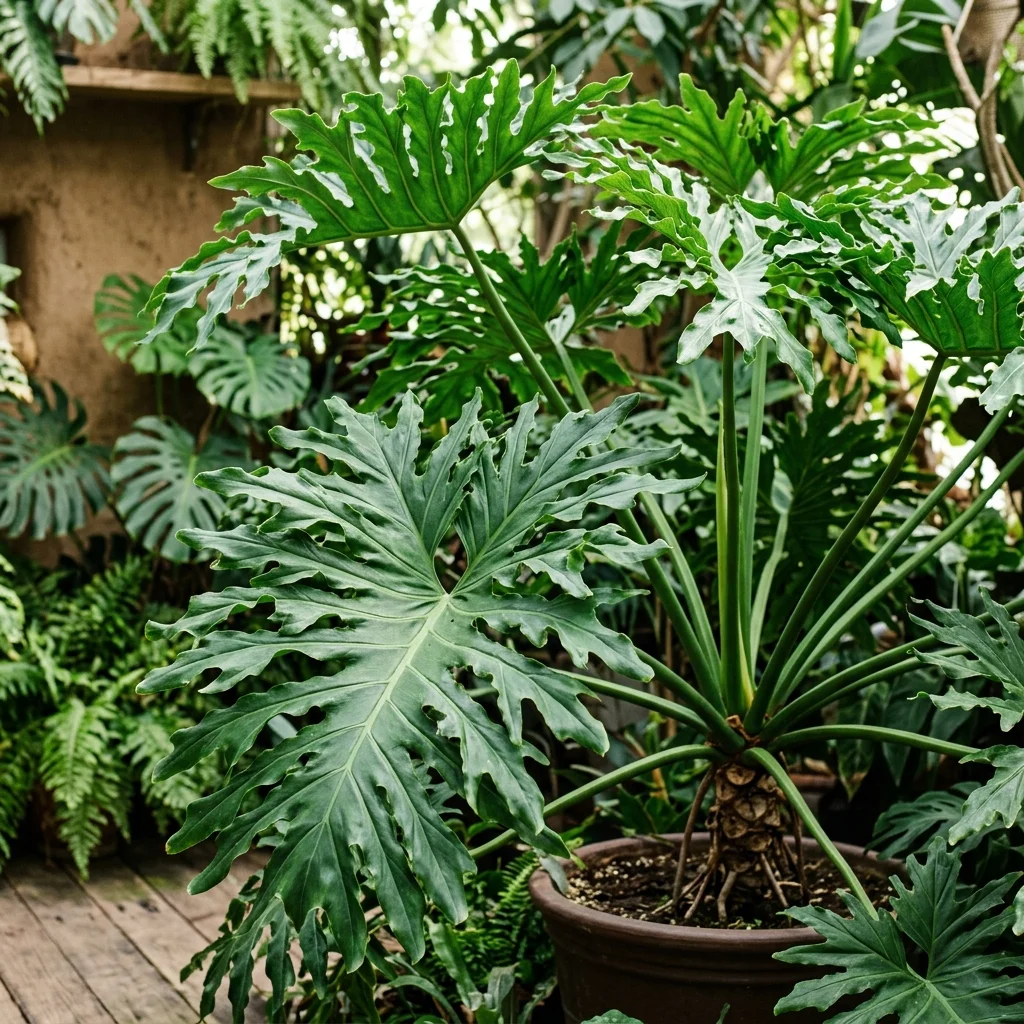
Thaumatophyllum bipinnatifidum

Split Leaf Philodendron Care & Identification Guide

Thaumatophyllum bipinnatifidum, formerly known as Philodendron selloum, is a massive, spectacular tropical plant famous for its deeply lobed, ruffled leaves. Growing from a sturdy, tree-like central trunk, it commands attention in modern spaces, offering a bold architectural silhouette and jungle-like grandeur.


Sunlight Icon
Sunlight Bright Indirect to Full Sun
Watering Icon
Watering Moderate
Soil Mix Icon
Soil Mix Rich Organic Well-draining
Temperature Icon
Temperature 18°C - 32°C
Toxicity Warning Icon
Toxicity Toxic to Pets
Botanical macro photography of Split Leaf Philodendron (Thaumatophyllum bipinnatifidum) - Plant AI care database

How to Identify Split Leaf Philodendron

Split Leaf Philodendron (Thaumatophyllum bipinnatifidum) is a remarkable ornamental species widely appreciated for its unique aesthetic and structural foliage. Recognizing its definitive visual traits is key to distinguishing it from other similar plants.

  • Key Visual Features: Huge, deeply lobed, ruffled dark green leaves growing on long, thick petioles from a woody, tree-like central stem.
  • Color Variations: Shiny, rich, deep emerald green leaves with prominent pale yellow veins.
  • Common Confusions: Confused with Monstera deliciosa (which has leaf holes/fenestrations, whereas Selloum has deeply cut lobed margins but no enclosed holes).
💡 Plant AI Tip: Not sure? Take a photo with Plant AI to identify your houseplants instantly.

Complete Care & Cultivation Guide

Follow our detailed scientific care guide to keep your Split Leaf Philodendron thriving and gorgeous all year round.

Water thoroughly when the top 2 inches of soil feel dry. Squeeze the soil; it prefers consistent moisture but hates soggy conditions.
Prune old, naturally yellowing lower leaves at the stem base using sharp, sterilized bypass loppers. Wear gloves to avoid sap.
Apply balanced liquid houseplant food at half strength once every 4 weeks in spring/summer. Do not fertilize in winter.
Thrives in bright indirect light and tolerates direct morning sun. Avoid hot direct afternoon sun, which scorches leaves.
Rich, well-aerating organic mix: 50% peat moss, 30% organic compost/compost bark, and 20% coarse perlite. pH 5.6-7.0.
Propagated by separating offshoots from the woody base during repotting, or by growing from seed in warm conditions.
Prefers warm temperatures (18°C-32°C). Extremely cold-sensitive; protect from frost and temperatures below 12°C.
Requires large, heavy pots to support its massive, wide-spreading canopy. Repot every 2 years as it grow rapidly.
Susceptible to spider mites, thrips, and aphids. Clean leaves regularly and apply insecticidal soap spray.
Vulnerable to bacterial blight and root rot if soil is heavy and overwatered in containers without drainage.
Provide plenty of physical space. A single mature plant can easily spread 5-6 feet wide, making it a stellar floor specimen.

Is your Split Leaf Philodendron leaves turning yellow, dry or brown?

Keep your indoor garden vibrant. Take a photo with Plant AI to diagnose pests and leaf spot diseases instantly.

Diagnose My Plant

Common Diseases & Treatment

Bacterial Blight (Erwinia)

Symptoms: Wet, rapidly spreading dark spots on leaves that emit a rotting, fishy odor.

Action: Cut off infected foliage immediately, disinfect tools, reduce humidity, and avoid wetting leaves.

Root Rot (Fungal)

Symptoms: Leaves turn soft yellow and stems droop; roots turn black and mushy.

Action: Repot instantly in a fresh, highly porous, fast-draining potting soil, trimming away soft decayed roots.

Frequently Asked Questions

Why is my Selloum growing long, leggy stems?

Leggy growth with long petioles is a clear sign of inadequate light. Move your plant to a brighter location with bright, indirect sunlight.

What is the difference between Selloum and Monstera?

Monstera deliciosa has fenestrations (enclosed holes) in its leaves, while Selloum has deeply lobed, ruffled edges but no enclosed holes.

Does Selloum grow a woody trunk?

Yes! As Selloum grows, lower leaves drop off, leaving distinctive circular eye-like scars on a sturdy, thick, woody tree-like trunk.

Is Thaumatophyllum bipinnatifidum toxic to pets?

Yes, it contains calcium oxalate crystals. It is toxic to pets, causing swelling of the mouth and throat if chewed; keep out of reach.

No more dying plants. Grow healthy greens today!

Get Started for Free