Satin Pothos Care & Identification Guide
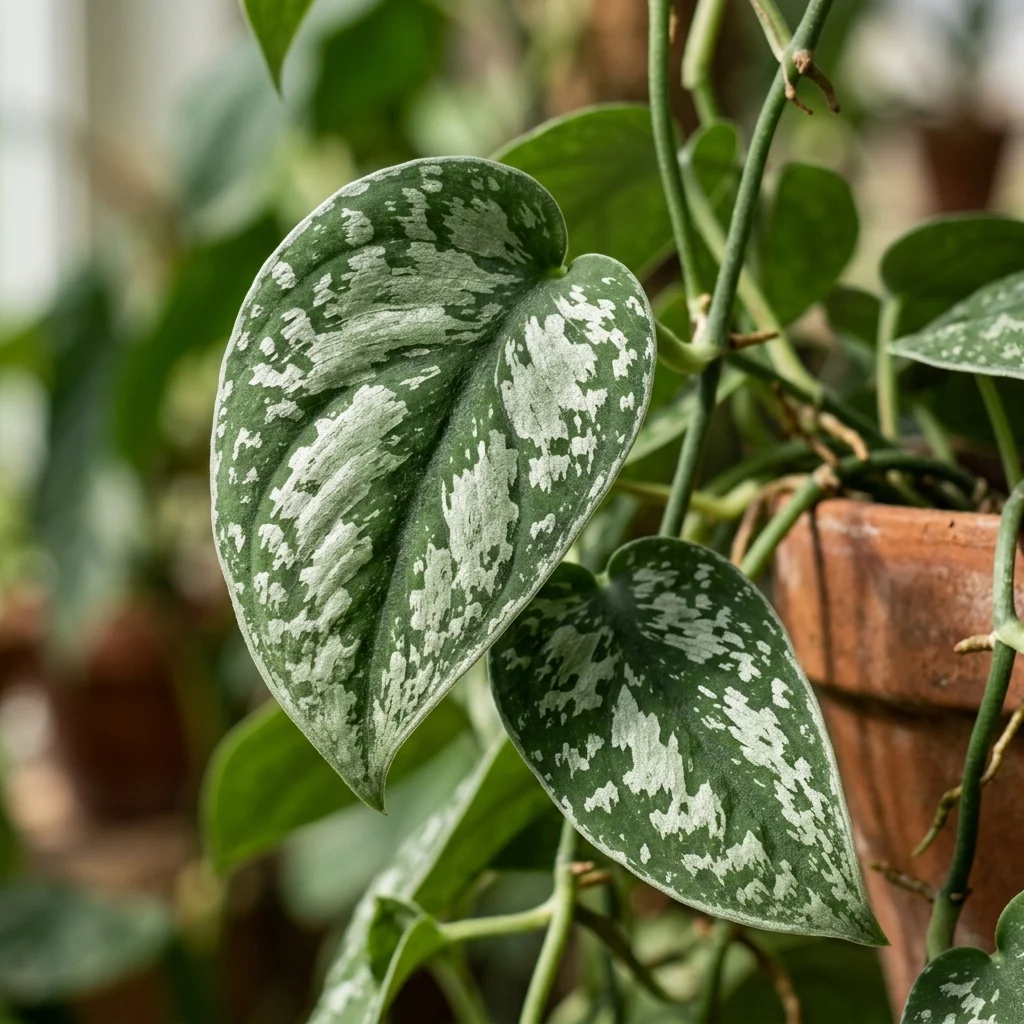
Scindapsus pictus, commonly known as the Satin Pothos or Silver Pothos, is a breathtaking trailing tropical native. Prized for its thick, velvety matte-green leaves decorated with striking metallic silver splotches and borders, it has a luxurious, shimmering texture that cascades elegantly from hanging pots.





How to Identify Satin Pothos
Satin Pothos (Scindapsus pictus) is a remarkable ornamental species widely appreciated for its unique aesthetic and structural foliage. Recognizing its definitive visual traits is key to distinguishing it from other similar plants.
-
✔
Key Visual Features: Asymmetrical, thick, matte-green leaves speckled and bordered with shimmering metallic silver patches along trailing vines.
-
✔
Color Variations: Deep olive-green matte leaves with contrasting reflective silver splashes; cultivars like 'Exotica' have larger silver areas.
-
✔
Common Confusions: Confused with standard Pothos (Epipremnum), but distinguished by its thick, velvety, asymmetrical leaves and metallic silver variegation.
Complete Care & Cultivation Guide
Follow our detailed scientific care guide to keep your Satin Pothos thriving and gorgeous all year round.
Common Diseases & Treatment
Root Rot
Symptoms: Thick leaves turn soft yellow and fall; stems turn mushy and dark; roots turn black and stringy.
Fungal Leaf Spot
Symptoms: Dark brown spots with yellow borders form on the velvety silver-green leaf surfaces.
Frequently Asked Questions
Why are the leaves of my Satin Pothos curling?
Leaf curling is a clear sign of thirst or low humidity. Check the soil; if it is dry, water thoroughly. If soil is wet, curling indicates root damage.
Is Satin Pothos a true Pothos?
No, it belongs to the Scindapsus genus, while true Pothos belongs to Epipremnum. However, they share similar trailing habits and care requirements.
How do I make my Satin Pothos grow faster?
Provide plenty of bright indirect light, maintain high humidity (above 50%), and train it onto a moss pole which encourages climbing and larger leaf growth.
Is Satin Pothos toxic to cats?
Yes, like Epipremnum, it contains calcium oxalate crystals. It is toxic to dogs and cats, causing oral irritation and vomiting.