Golden Pothos Care & Identification Guide
Epipremnum aureum, famously known as Golden Pothos or Devil's Ivy, is the undisputed champion of low-maintenance indoor greenery. Renowned for its heart-shaped, glossy green leaves splashed with golden-yellow variegation, this highly resilient trailing vine climbs or cascades effortlessly, making it the perfect, purifying starter plant for modern spaces.





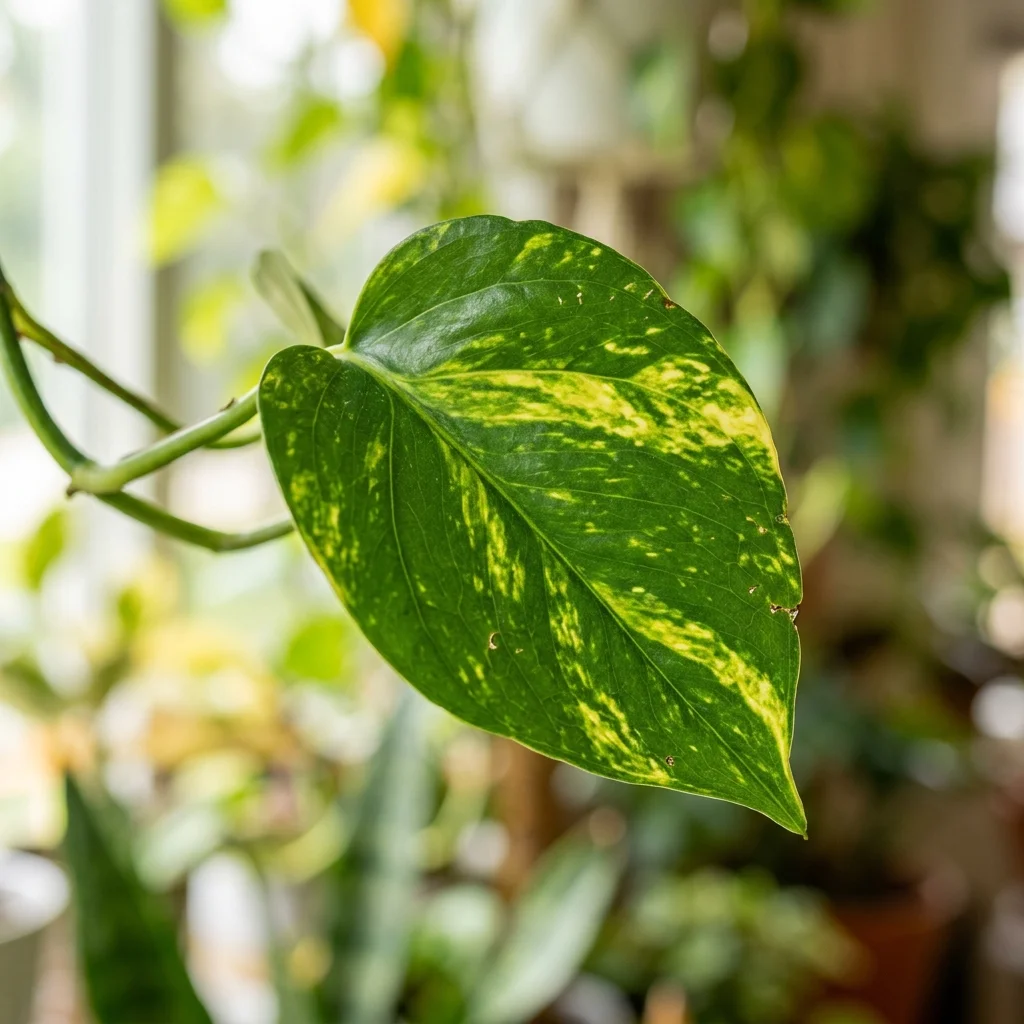
How to Identify Golden Pothos
Golden Pothos (Epipremnum aureum) is a remarkable ornamental species widely appreciated for its unique aesthetic and structural foliage. Recognizing its definitive visual traits is key to distinguishing it from other similar plants.
-
✔
Key Visual Features: Heart-shaped, glossy green leaves marked with irregular splashes of golden-yellow, growing on flexible trailing or climbing vines.
-
✔
Color Variations: Bright emerald green leaves marbled with golden-yellow or creamy-white streaks; variegation increases under brighter light.
-
✔
Common Confusions: Confused with Heartleaf Philodendron (which has thin paper-like cataphylls, sheath scars, and more pronounced leaf tips).
Complete Care & Cultivation Guide
Follow our detailed scientific care guide to keep your Golden Pothos thriving and gorgeous all year round.
Common Diseases & Treatment
Root Rot (Pythium)
Symptoms: Leaves yellow and stems turn mushy near base; soil emits a foul odor and roots turn black.
Bacterial Leaf Spot
Symptoms: Water-soaked spots with yellow halos expand rapidly on the heart-shaped leaves.
Frequently Asked Questions
Why is my Golden Pothos losing its golden variegation?
A lack of light is the main cause. In dark spaces, Pothos produces more chlorophyll (turning solid green) to capture light. Move it to a brighter spot.
How often should I water my Golden Pothos?
Only water when the top 2-3 inches of soil are dry. Typically this is once every 7-10 days in spring/summer, and once every 2 weeks in winter.
Can Golden Pothos climb walls?
Yes, it has aerial roots that can cling to textured walls, moss poles, or wooden trellises, which will actually cause the leaves to grow much larger.
Is Golden Pothos safe for cats and dogs?
No, it contains insoluble calcium oxalate crystals. It is toxic to cats and dogs, causing severe mouth irritation, drooling, and vomiting.